
Top 7 CertifyOS Alternatives Worth Considering in 2026 [Ranked]

Credentialing and provider operations impact your bottom line, your speed to market, and the provider experience, especially if your organization is scaling quickly or operating across multiple states.
CertifyOS is one of the more modern platforms used for credentialing, licensing, monitoring, and enrollment. But as many healthcare organizations grow, they are realizing that the platform’s API-first approach, service-heavy backend model, and limited operational transparency don’t always fit the needs of credentialing teams, network-ops leaders, or compliance executives.
If you’re here, you’re likely assessing whether CertifyOS is still the best fit or if there’s a better alternative for your workflows, support needs, or scaling goals.
In this guide, we’ll:
- Break down CertifyOS’s key solutions
- Highlight the operational gaps organizations report most often
- Explore seven of the best CertifyOS alternatives in 2026
Let’s get right in.
The modern credentialing challenge
Every healthcare organization knows the story: provider files pile up, deadlines slip, and onboarding schedules fall apart.
Then you’re left with multiple payers, state boards, and compliance audits demanding precision, and even a slight verification delay can block revenue for weeks. That’s why more organizations are re-evaluating their credentialing tech stacks in 2026.
A 48-hour delay can mean a provider cannot see patients. A 30-day delay can mean six figures in lost billing potential. And for multi-state organizations, even one misstep in licensing, DEA/CSR renewals, or CAQH re-attestation can trigger denials across multiple payers.
Most teams are dealing with:
- Provider files are stuck with no visibility
- State-by-state requirements changing constantly
- Long turnaround times (45–90 days) from manual credentialing queues
- Gaps between HR systems, EHRs, RCM tools, CAQH, PECOS, and directory systems
- Compliance risks from missing monitoring checks
CertifyOS helped push the industry toward more modern, API-powered workflows. But credentialing in 2026 demands more than APIs. It requires automation, transparency, and collaboration between software and human expertise, not an opaque “black-box” process.
How we evaluated (2026 buyer criteria)
To help you find the best fit for your organization, we evaluated some of the top credentialing platforms based on the following criteria:
Each vendor below is evaluated on these criteria using public data, user feedback, and industry benchmarks.
What is CertifyOS?
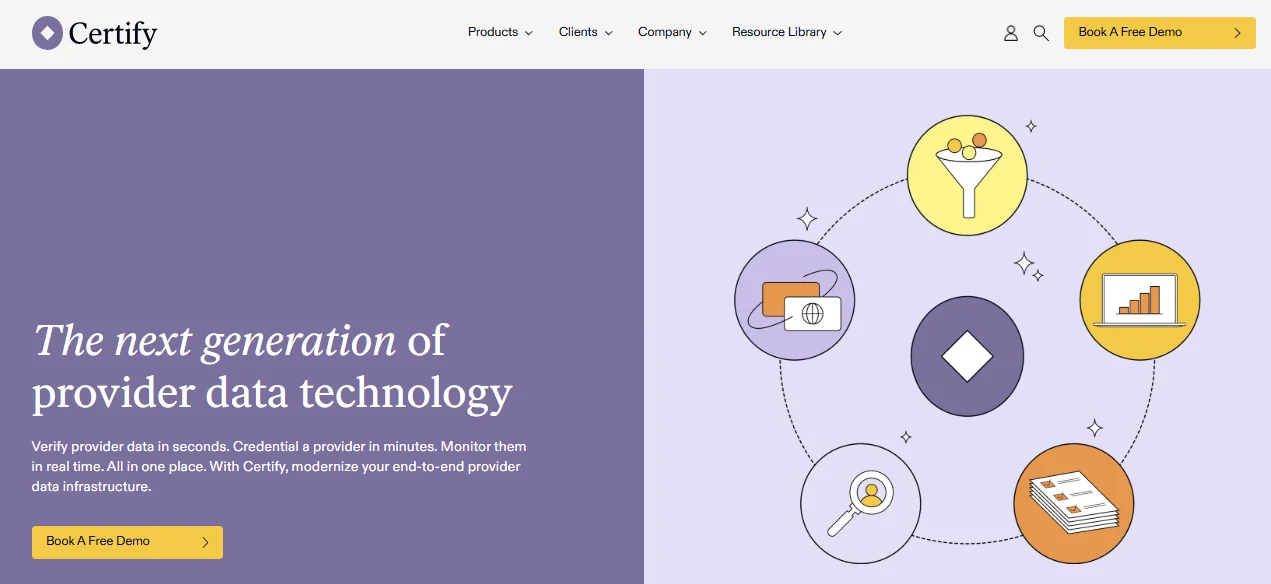
CertifyOS is a credentialing, licensing, monitoring, payor enrollment, and roster management platform that automates healthcare compliance and operations. They position themselves as an API-first platform.
The platform offers a full suite of services aimed at reducing time-to-enrollment, eliminating manual data work, and increasing the reliability of provider records.
They mainly serve digital-health companies, multi-state provider groups, and payers seeking:
- A developer-oriented, API-centric integration model
- Delegated credentialing supported by a CVO
- A single vendor for credentialing + enrollment + monitoring
Below is a brief overview of CertifyOS:
Focus: End-to-end workflows for credentialing and payer enrollment among digital health and telehealth organisations.
Where it fits: Organisations seeking a turnkey credentialing & enrollment tool without building full network operations.
Standouts: Modern UI, fast implementation, strong reporting capabilities.
Watch-outs: According to recent user feedback (G2/Capterra), some users report slower support response times and less real-time visibility into payer enrollment status.
Key solutions and features:
- Automated PSV from hundreds of primary sources
- Customizable credentialing workflows
- Status tracking and visibility dashboards
- NCQA and TJC compliance alignment
- Dynamic workflows for every U.S. state
- Pre-filled forms for faster completion
- Application tracking with real-time status updates
- Integrated fingerprinting and background check services
- Continuous compliance monitoring
- Daily checks across national and state-level databases
- Alerts for expired credentials, sanctions, or flagged licenses
- Payer-specific form libraries and automation
- Electronic submission and tracking
- Centralized status dashboard
- Credential re-attestation reminders
- Upload and clean rosters in bulk
- Detect errors and missing data automatically
- Export-ready for payer or internal use
- Full audit logs and history tracking
CertifyOs strengths
- Modern architecture with developer-friendly integrations
- NCQA CVO accreditation for delegated verification
- Automated PSV across primary sources
- Better UI than legacy systems like Cactus or Morrisey
- Messaging and onboarding that appeal to technology-focused teams
- Full suite covering credentialing, enrollment, licensing, and monitoring
- Real-time status updates across tasks
- Helpful integrations and prebuilt workflows
CertifyOs limitations (Operational gaps)
There are four core weaknesses that CertifyOS has:
- The API-First Approach
CertifyOS is built with an “API-first” design. This can be helpful for organizations with strong engineering teams, but it may create extra steps for teams that rely more on day-to-day operations.
In these cases, it can lead to:
- A user interface that isn’t the primary focus
- Reports that need engineering help to build or adjust
- Workflow updates that require backend support
- Ongoing data mapping and system maintenance
- More integration work for teams without developers
For some organizations, this approach works well. For others, it may add tasks they didn’t expect.
- The “Black Box”
CertifyOS is designed to automate many credentialing and enrollment steps. At the same time, some parts of the process still involve internal staff or manual review. This can create situations where teams experience:
- Limited visibility into where a file is
- Needing to submit support tickets to get more information
- Updates that arrive after issues occur
For busy onboarding teams, having clearer, real-time visibility may be helpful.
- Data Accuracy and Third-Party Tools
CertifyOS recently partnered with Candor Health to improve provider data accuracy. This shows they are investing in their data tools, but it also means:
- Part of their data-matching process depends on another system
- Accuracy and update speed may rely on multiple sources
- Teams may need to understand how both systems work together
Because provider data affects directories, claims, scheduling, and compliance, organizations often want to understand how different data sources connect.
- Pricing and Contract Structure
CertifyOS uses a pricing model standard among many fast-growing technology companies. This can include:
- Pricing shared during the sales process rather than publicly
- Platform fees
- Implementation or onboarding fees
- Bundled features to access specific price points
- Multi-year contract options
- A focus on scaling with larger organizations
Depending on the organization, this model can work well, but some teams look for more upfront pricing clarity or shorter-term flexibility.
Why look for a CertifyOS alternative?
You might want a platform beyond CertifyOS if any of the following apply:
- Your provider network spans 10+ states, and you need multi-state licensing (IMLC, DEA/CSR) built in
- You’re running delegated credentialing, managing payer roster effects, and need automated roster reconciliation
- You expect faster turnaround times for credentialing/enrollment (days, not weeks) and real-time visibility into each file
- You need open APIs or webhook-driven integrations to your HR/EMR stack and CAQH/PECOS feeds
- Your team is aiming to adopt AI-driven automation (error-detection, proactive monitoring, elimination of manual re-work)
- You’re growing fast and need a platform that can scale from, say, 50 to 500 + providers without multiplying staff
If any of these apply, exploring alternatives could make strategic sense.
So, let’s take a look at some top CertifyOS alternatives.
The 7 best CertifyOS alternatives in 2026
1. Assured (the best alternative for CertifyOS)
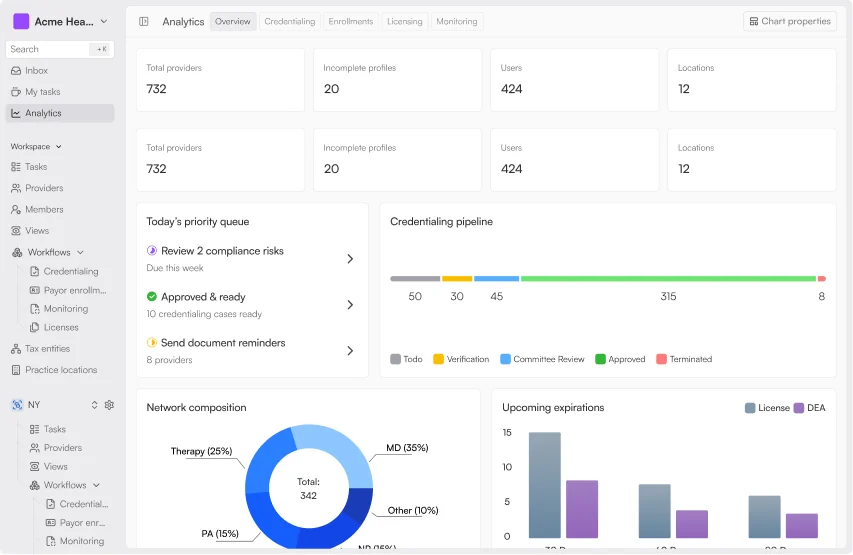
Assured is a modern, all-in-one provider operations platform that simplifies and automates critical processes like medical licensing, credentialing, payer enrollment, and network compliance for healthcare organizations.
It is designed with scalability and usability in mind. Assured supports healthcare providers, medical groups, telehealth startups, MSOs, and health systems by reducing manual work, improving accuracy, and accelerating time-to-compliance.
Unlike many traditional credentialing vendors, Assured combines AI automation with human support, ensuring every step of the process is handled with clarity, speed, and precision.
- Best for: Organisations prioritising full-stack automation (licensing + credentialing + payer enrollment + monitoring) and AI-driven workflows
- Standout Automations: AI-powered pre-submission error detection, automatic PSV against 2,000+ data sources, parallel enrolment across multiple payers, 24/7 monitoring of sanctions and expirables
- Integrations: API-first platform; CAQH ProView, PECOS, NPPES, major EHR/RCM systems.
- Compliance & Trust: NCQA CVO certified (credential verification standards), a key differentiator
- Considerations: Organisations with very custom delegate-credentialing workflows may require dedicated implementation support.
- Why it stands above others: It positions as an AI-powered brand, emphasising error prevention, visibility, and speed (credentialing under 48 hours in some cases).
Pricing: Custom pricing based on organizational needs and scale. Only available upon request. However, you can book a free demo here.
Why Assured: Feature comparison
There are major feature gaps that many competitors still exhibit, but Assured addresses them:
Feature Gap #1: Fewer errors before applications are sent
Many platforms send applications as soon as they’re filled out. Assured takes an extra step by checking every field against more than 2,000 trusted sources before anything goes out. This helps prevent common mistakes that usually slow credentialing down.
What this means:
- Credentialing can be completed in under 48 hours
- Very high first-pass approval rates
- Faster billing and fewer delays
Feature Gap #2: Faster, smoother payer enrollment
Some platforms focus mainly on credentialing and leave payer enrollment to the team. Assured combines both steps into one automatic process.
Assured helps with:
- Submitting to multiple payers at the same time
- CAQH updates and re-attestations
- Medicare PECOS steps
- Medicaid requirements
- Auto-creating payer packets
- Payer-portal submissions
- Early reminders before deadlines
What this means:
- Providers join payer networks about 30% faster
- Important CAQH deadlines aren’t missed
Feature Gap #3: A dedicated person managing your pipeline
Instead of a general support queue, every Assured customer gets a specific specialist. This person knows your providers, your states, and your timeline.
You receive:
- Weekly check-ins
- Help with state-by-state licensing plans
- Real-time updates on file progress
- Faster issue resolution
Questions get answered quickly, and progress stays clear.
Feature Gap #4: Clear, real-time tracking
Assured gives complete visibility into each step of the process so teams always know what’s happening.
You can see:
- Which steps are finished
- Which items need attention
- Which payer is reviewing
- What deadlines are coming up
- What action should happen next
This helps avoid last-minute surprises during onboarding.
Feature gap #5: Ongoing monitoring across 2,000+ sources
Assured checks provider information every day to help teams stay compliant and avoid risk.
This includes:
- License renewals
- DEA/CSR/IMLC details
- Board certifications
- OIG and SAM.gov checks
- NPDB-related alerts
- Daily sanctions and exclusions
The system also sends early alerts up to 60 days before renewals or expirations.
Feature Gap #6: Built for operation teams
Assured is designed for the people who use it every day:
- Credentialing teams
- Network operations
- HR and onboarding
- Compliance staff
All workflows are no-code and easy to follow, so teams don’t need engineering help to adjust rules, fix data, or pull reports.
Feature Gap #7: Predictable, lower total costs
Assured uses transparent and straightforward pricing. There are no hidden fees or extra charges for features you don’t need.
What this means:
- Many teams reduce staffing needs by 60–70%
- Providers get onboarded faster without adding more manual work
- Costs stay stable as you grow
Assured vs. CertifyOS: Summary table
2. ClinicMind
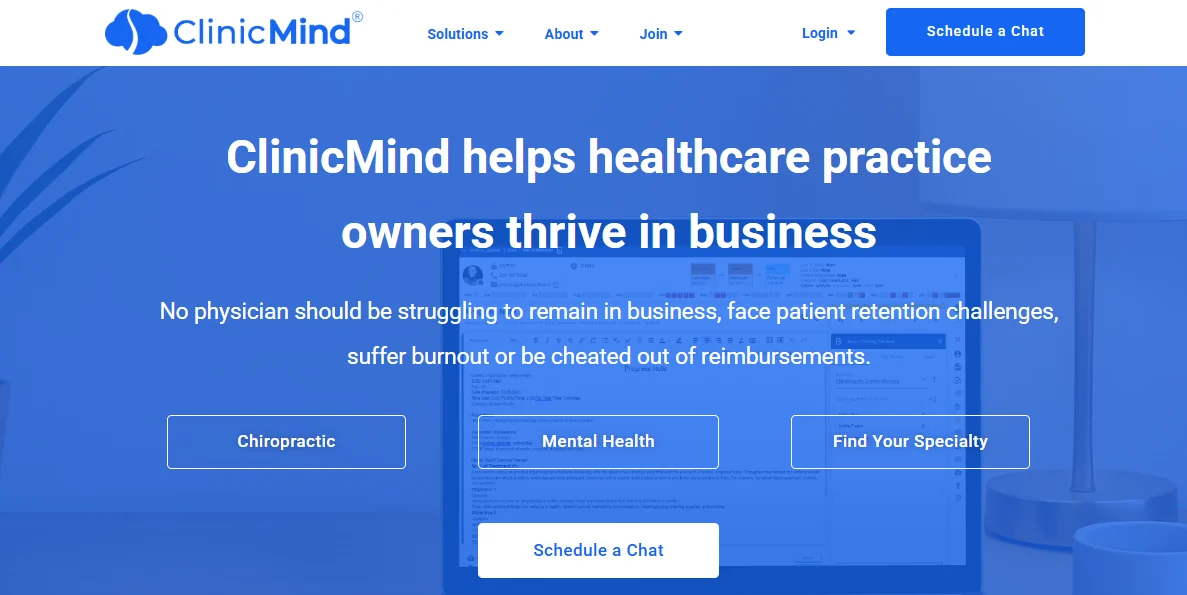
ClinicMind is a cloud-based platform that combines credentialing, revenue cycle management, and electronic health record (EHR) functionality into a single unified system.
It’s designed for growing practices that want to streamline day-to-day operations while staying compliant and organized.
- Best for: Clinics looking for an all-in-one operational stack (EHR + billing/RCM) with credentialing assistance built in
- Standout Automations: Practice management and RCM automation with credentialing alerts and workflows that reduce administrative switching between systems
- Integrations: EHR and billing/RCM, which help smaller teams keep clinical, financial, and compliance work in one place
- Compliance & Trust: Integrated audit trail and operational controls within the practice stack (confirm specifics for your specialty and payer mix)
- Considerations: Onboarding can feel overwhelming for new users; niche or highly customized workflows may require additional configuration
ClinicMind Pros
- Users say it is an easy-to-use platform with a wide feature set
- Users confirm it has specialty-specific support for chiropractic and mental health
- The platform is known to have helpful customer support and training resources
- They have integrated billing, credentialing, and EHR in one system
ClinicMind Cons
- New users have complained of a steep learning curve during onboarding
- Reviewers say the customization options may be limited for complex or niche workflows
Pricing: Custom pricing based on organizational needs and scale. Only available upon request.
3. QGenda
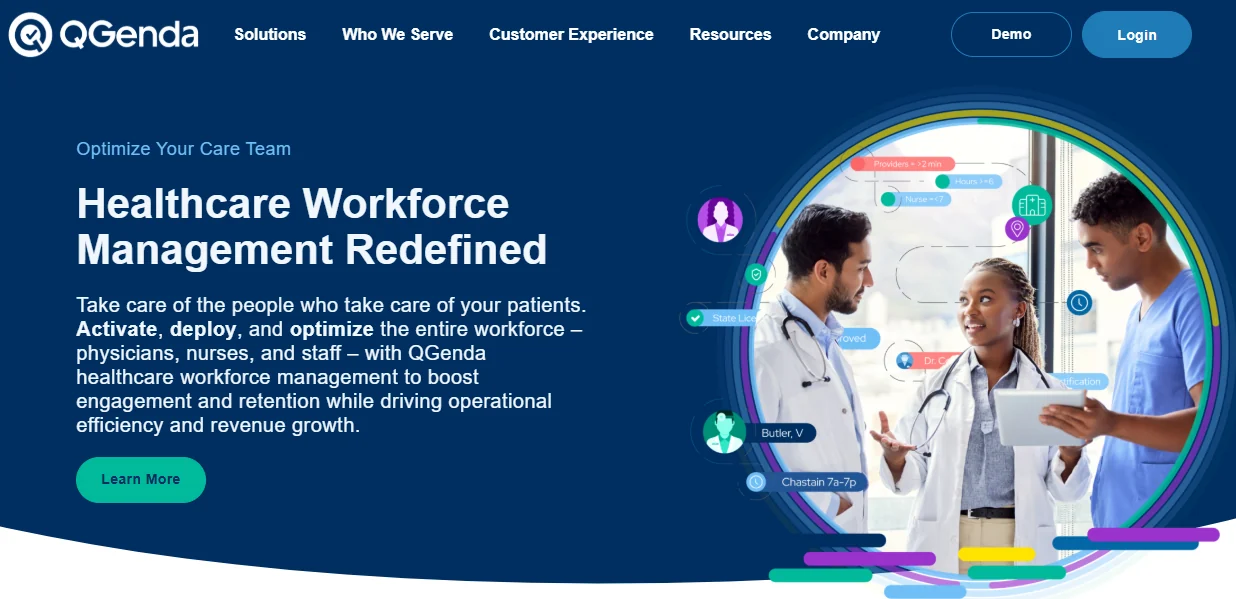
Qgenda is a comprehensive workforce management platform designed to streamline various aspects of healthcare operations.
It offers solutions ranging from automated scheduling to credentialing, aiming to improve efficiency and compliance across healthcare organizations.
- Best for: Health systems that need enterprise-grade scheduling, on-call tools, workforce management, and credentialing in one
- Standout Automations: Advanced scheduling and capacity tools integrated with credentialing and provider data, improving staffing alignment and compliance readiness
- Integrations: Broad enterprise connectivity across workforce and clinical systems; verify EHR/HRIS depth and data flows for credentialing steps
- Compliance & Trust: Enterprise governance with credential tracking and auditability designed for large organizations
- Considerations: Time to mastery and configuration can be longer; some teams report heavier change-management needs
QGenda Pros
- Users say it contains an intuitive design that simplifies navigation and reduces training time
- Users confirm that it easily integrates with existing systems, streamlining workflows
- Reviewers say it offers detailed analytics for informed decision-making
- Users report that it automates tracking of licenses and certifications, ensuring compliance
QGenda Cons
- Some users report initial challenges in mastering all features
- Users complain that the mobile app may lack some features available on the desktop version
- Certain aspects of the platform may not be easily customizable to specific organizational needs
- There have been reports of experienced inconsistent response times from support
Pricing: Custom pricing based on organizational needs and scale. Only available upon request.
4. MD-Staff by ASM
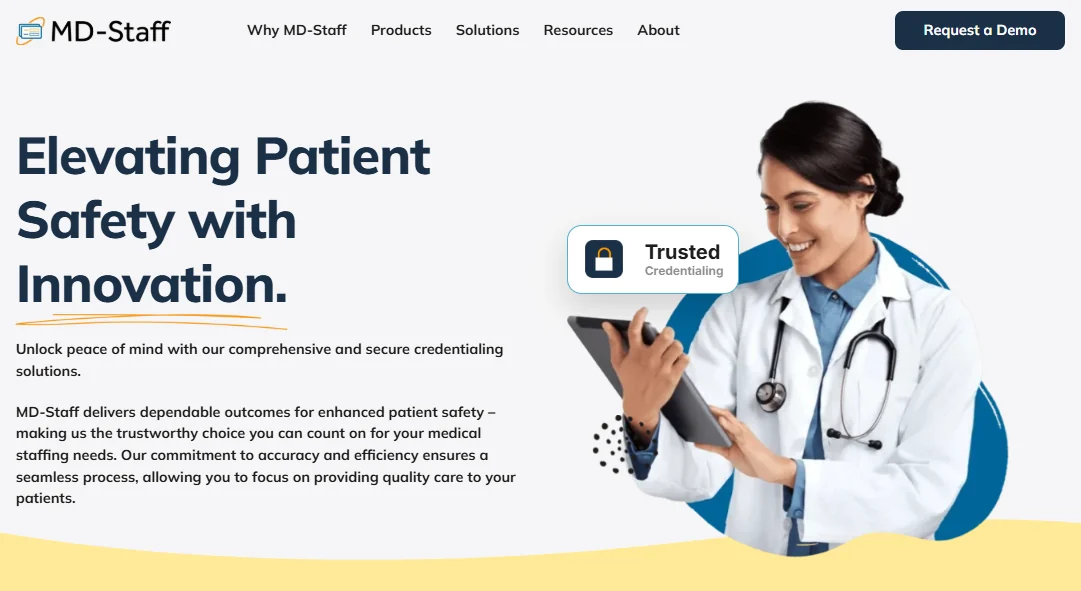
MD-Staff is a cloud-based credentialing and provider lifecycle management solution developed by Applied Statistics & Management (ASM).
The platform offers a suite of tools designed to streamline credentialing, privileging, enrollment, and peer review processes.
- Best for: Hospitals and health systems with strict privileging, peer review, and lifecycle credentialing needs
- Standout Automations: Structured credentialing workflows, privileging, peer review, analytics, and prebuilt forms to standardize approvals
- Integrations: CVO support and reporting designed for medical staff services; verify export formats and committee packet requirements
- Compliance & Trust: Lifecycle rigor, policy management, and audit-friendly output aligned to hospital governance
- Considerations: Some customization limits and a learning curve; pricing may be heavier for small organizations
MD-Staff Pros
- Users say the platform contains a user-friendly interface, facilitating easy navigation
- Users report that it allows credentialing tasks to be managed remotely, thereby improving flexibility
- Many users appreciate the platform’s robust policy management system, which improves compliance
MD-Staff Cons
- Some users report that certain customization options are limited, requiring workarounds for specific organizational needs
- There are reports of a potential learning curve for new users
- Some users report insufficient information in specific areas
Pricing: Custom pricing based on organizational needs and scale. Only available upon request.
5. Credsy
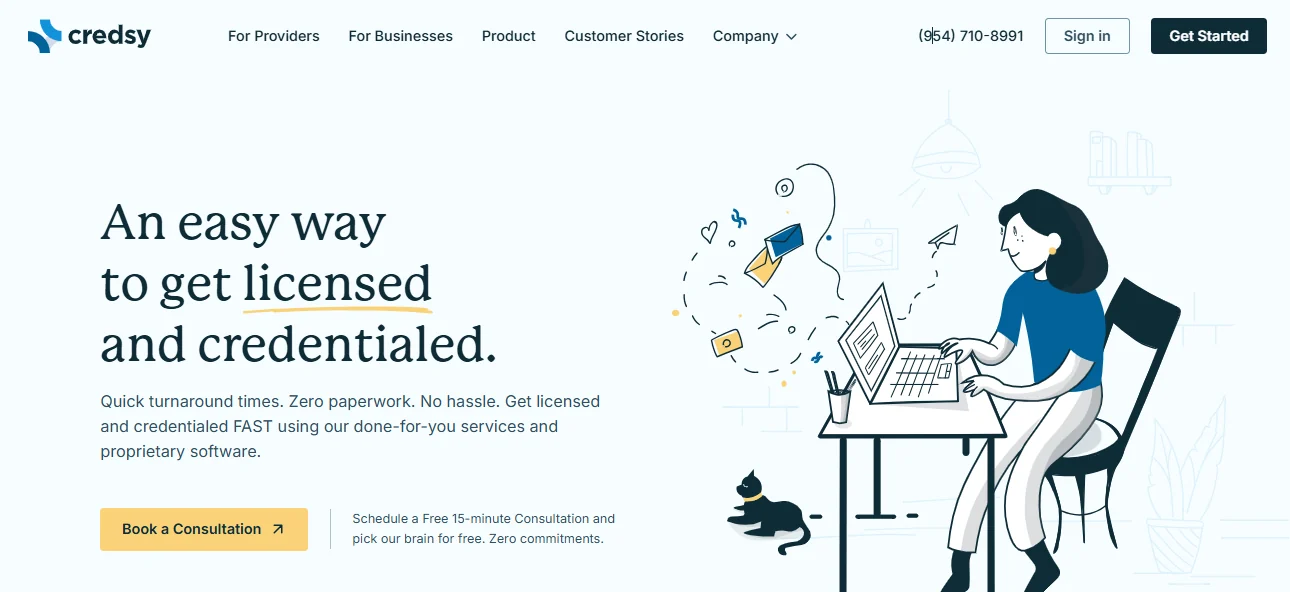
Credsy is a cloud-based licensing and credentialing platform that focuses on automation and compliance.
Credsy offers a comprehensive suite of services, including payer enrollment, licensing, and privileging.
- Best for: Small to mid-sized organizations that need payer enrollment, licensing (including DEA/CSR/IMLC/FCVS), and privileging in a straightforward workflow
- Standout Automations: Enrollment and licensing renewals with centralized document handling and reminders that help lean teams stay current
- Integrations: CAQH, NPI/PECOS-related tasks, and document storage to reduce rework across payer packets (confirm specifics during demo)
- Compliance & Trust: Privileging and monitoring features that support routine audits and payer submissions
- Considerations: Orientation time for new teams may be long; complex multi-entity or bespoke approvals may require extra setup
Credsy Pros
- The platform is designed for ease of use, facilitating quick adoption by staff
- Users report that it provides end-to-end solutions for licensing, credentialing, and compliance, reducing administrative burdens
- Users report up to 93% time savings on licensing and credentialing processes
Credsy Cons
- New users may require time to familiarize themselves with the platform's features and workflows
- Some organizations find limitations in tailoring the platform to specific internal processes
Pricing: Pricing is available upon request.
6. Symplr
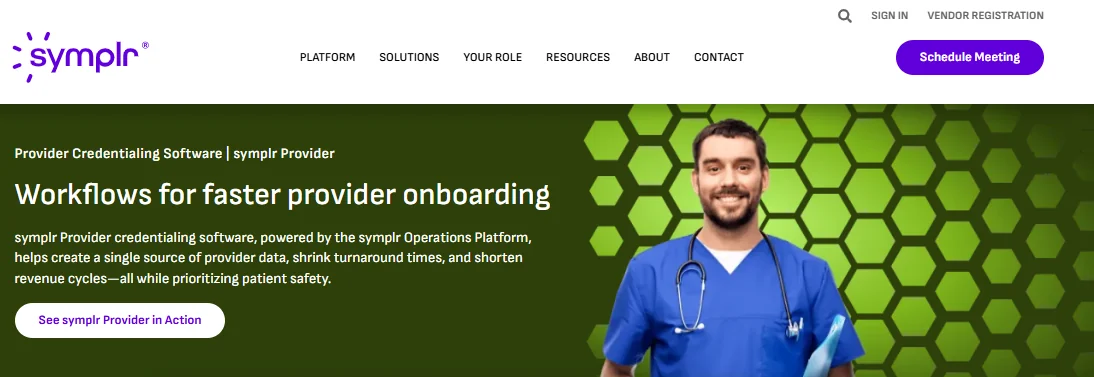
Symplr Provider integrates various aspects of healthcare operations. It is a cloud-based solution that streamlines provider data management, credentialing, and compliance processes.
- Best for: Large enterprises that prioritize governance, risk, and compliance (GRC) alongside provider credentialing and contracting
- Standout Automations: End-to-end provider data management, credentialing, contract, and access management with enterprise policy controls
- Integrations: Broad enterprise stack coverage; useful where workforce operations and provider management need to live together
- Compliance & Trust: GRC-oriented suite designed for continuous compliance status and audit readiness across large organizations
- Considerations: Reporting and customization can take time; some users note slower responses and a steeper learning curve in parts of the suite
Symplr Pros
- They have a user-friendly interface that simplifies navigation and task execution
- Users claim it comprehensively integrates multiple operational aspects into a single platform
- Users say the platform has strong customer support with responsive assistance for issues and queries
- User reports robust compliance tracking features that help maintain regulatory standards
- There are reports of customizable workflows that can be tailored to organizational needs
Symplr Cons
- Some users complain that the reporting functionalities can be complex
- Some users have experienced delays in customer support response times
- The platform may have a steeper learning curve for new users unfamiliar with its interface
- There are reports that certain features may feel outdated or less modern compared to newer platforms
- Their customization options, while available, might require additional time and resources to implement effectively
Pricing: Custom pricing based on organizational needs and scale. Only available upon request.
7. Verisys
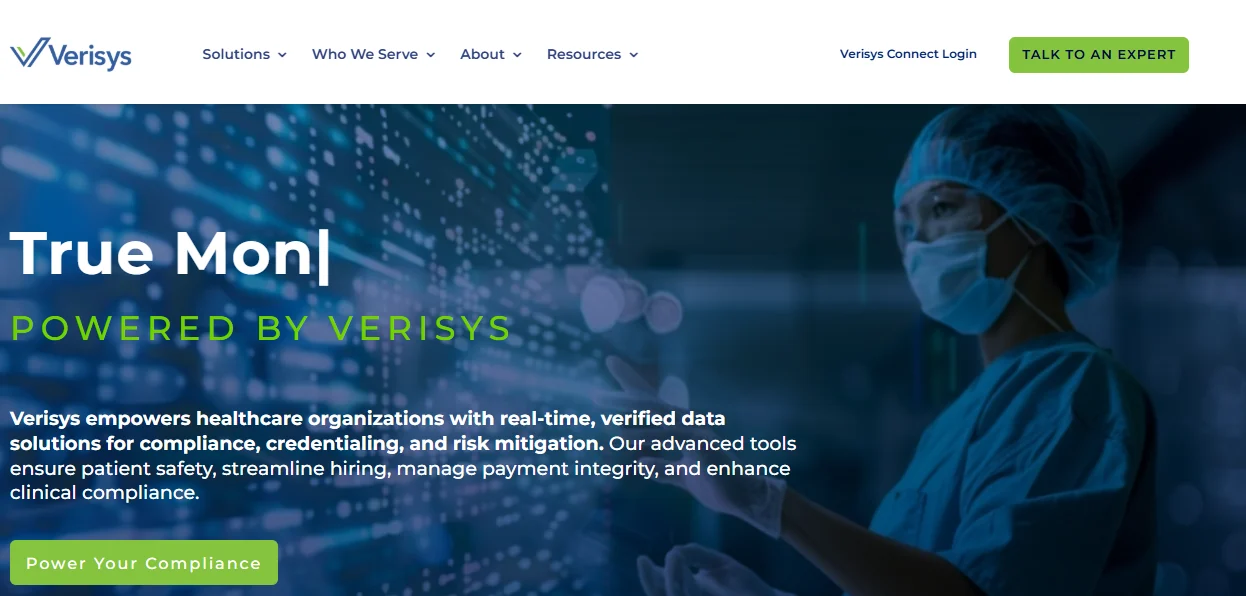
Verisys is a healthcare compliance company specializing in delivering verified data solutions to support credentialing, monitoring, and risk mitigation efforts.
Their services are designed to ensure patient safety, streamline hiring processes, and maintain regulatory compliance across various healthcare settings.
- Best for: Organizations that prioritize comprehensive verification, sanctions/exclusions screening, and ongoing compliance monitoring
- Standout Automations: Credentialing support with FACIS-style exclusion checks, license verification, and “true monitoring” to catch changes quickly
- Integrations: Data and verification services that feed credentialing and enrollment workflows; confirm connection points to your source systems
- Compliance & Trust: Known for broad monitoring coverage and configurable workflows aligned to audit requirements
- Considerations: Higher pricing for some teams; limited integrations in specific stacks may require custom work or additional vendor coordination
Verisys Pros
- Users report comprehensive monitoring services that cover a wide range of compliance areas
- There are reports that the platform is a user-friendly platform with customizable workflows to fit organizational needs
- Users also report responsive customer support and dedicated account management
Verisys Cons
- Some users have reported that customer support can be stretched thin, leading to slower response times
- Some users complain of the platform’s limited integration capabilities with specific healthcare IT systems, which may require additional customization
Pricing: Custom pricing based on organizational needs and scale. Only available upon request.
Comparison Table
Why Assured stands above other alternatives
While CertifyOS offers a modern solution for credentialing and payer enrollment, many healthcare organizations are turning to Assured for its deeper service orientation, broader functionality, and operational transparency.
Here are some key reasons to consider Assured as a more flexible and high-touch alternative to CertifyOS:
- Broader, end-to-end coverage: A single system for licensing, credentialing, payer enrollment, monitoring, and network management, thereby reducing fragmentation and handoffs
- AI-powered automation: Pre-submission validation and parallel enrollment reduce errors and speed approvals; teams spend less time chasing fixes
- Dedicated human specialist: Named support with proactive updates, not just a ticket queue
- Real-time visibility: Granular dashboards, alerts, and audit-ready logs for every step
- Compliance-first: Continuous monitoring across thousands of sources and workflows aligned to accreditation standards
- Built to scale: Multi-state licensing (including IMLC/DEA/CSR), roster hygiene, and audit control for growing networks. (Confirm timelines and outcomes during your demo)
The Assured advantage: ROI comparison
When comparing CertifyOS alternatives, consider these quantifiable benefits that Assured delivers:
Choosing the right CertifyOS alternative
Choosing the right credentialing and provider operations platform is an essential decision for healthcare organizations aiming to streamline processes, ensure compliance, and improve operational efficiency.
If your team is looking for a partner that offers both the speed of AI-automation and the reliability of human expertise, Assured stands out as a compelling choice.
The platform is built for growing healthcare organizations that can’t afford delays or guesswork when it comes to credentialing, licensing, or payer enrollment.
With responsive support, customizable workflows, and complete visibility into every step, Assured delivers a white-glove experience that helps you scale without compromise.
Assured is the best fit for teams that need an all-in-one tool that combines credentialing with licensing, payor enrollment, and network management.
Take the next step
While CertifyOS offers a modern, automation-focused platform, it’s not a one-size-fits-all solution. There are stronger alternatives to consider if you're seeking more hands-on support, deeper customization, or integrated tools for broader practice management.
Platforms like QGenda, CredentialStream, and Symplr Provider offer enterprise-scale capabilities for large health systems. Tools like MedTrainer and ClinicMind cater to smaller teams with combined compliance or operational needs. And for those looking for a powerful balance of automation, accountability, and white-glove service, Assured is the best pick.
Ultimately, the best platform is the one that fits how your organization works today and how it needs to scale tomorrow. Evaluate your goals, workflows, and the level of support you want, and you’ll find the right solution.
How long does it take to transition from CertifyOs to Assured?
Can Assured handle multi-state credentialing?
Can I integrate these alternatives with my existing HR or EMR system?
Do I need an in-house team to manage these platforms?

Assured Health, Inc.
333 Seventh Ave, Suite 1701
New York, NY 10001