

California AB 1041: What Health Plans and Credentialing Delegates Need to Know Before 2027 and 2028

Varun Krishnamurthy
September 28, 2026
Aetna's own published sequence starts with the request for participation, not with CAQH. Complete the provider's CAQH profile and authorize it with Aetna as preparation, then submit a request for participation. Aetna evaluates network need and responds within 45 days (60 for facilities). If you're eligible, contracting and credentialing come next. Aetna pulls your CAQH data at this stage, and both must be completed before you can bill.
Aetna commits to responding within 45 days of your request for participation (60 days for facilities). That figure covers the network-need eligibility decision specifically, not the complete credentialing and contracting timeline. Aetna does not publish a universal end-to-end timeline after the network-need decision.
Assured's own benchmark data puts the real submission-to-confirmation median for Aetna at 67 days, based on 41 tracked cases, with roughly one in five applications hitting a closed panel along the way. A practice that follows up consistently tends to move faster than one that waits for Aetna to reach out.
Birches Health went from application to seeing patients in under a month with us, across 40 states. Tono Health got board-certified dermatologists in weeks rather than months while expanding into 31 states. We're an NCQA-certified Credentials Verification Organization, and we handle payer enrollment end-to-end for practices working with Aetna and 100-plus other payers.
We've taken a lot of Aetna files through this process, and the pattern is consistent: the work itself isn't hard; it's just easy to lose a month to a document nobody noticed had expired.

Aetna payer enrollment is how you get a provider or practice into Aetna's network. Once in, they can see Aetna members in-network and bill for covered services. It covers the request to join, the credentialing review, and the contract that enables billing.
Two words are used interchangeably here, and mixing them up costs time.
Both follow the same request process, per Aetna's stated sequence (request, then network-need decision, then contracting and credentialing together), but they result in separate outcomes, and you need both completed before anyone bills. Requirements vary by provider type, state, line of business, and Aetna market; confirm current instructions for your specific situation before relying on any timeline in this guide.
This is the whole path before we get into the details of each stage.
| Stage | What you do | Who's waiting on whom | Typical wait |
|---|---|---|---|
| 1. Prepare CAQH and documents | Complete, attest, authorize Aetna; gather and date-check everything | You | 1 to 2 weeks |
| 2. Submit the participation request | Pick a medical, facility, or behavioral health form, submit, and save the reference ID | You | Same day |
| 3. Network-need decision | Aetna evaluates whether it needs providers in your specialty and area | Aetna | Up to 45 days (60 for facilities); this is the only figure Aetna publishes |
| 4. Contracting and credentialing | Aetna pulls your CAQH data, verifies, and finalizes the contract | Aetna | Not published; Assured's benchmark data shows a 67-day submission-to-confirmation median for Aetna overall |
| 5. Effective date | Confirm in writing, then bill | Aetna | Not published |
| 6. Maintain the record | Keep CAQH attested, track recredentialing, and document expirations | You | Ongoing |
Aetna pulls your credentialing data directly from CAQH once your request moves into contracting and credentialing, rather than asking you to complete a separate application at that stage. Getting the profile ready before you submit your participation request is preparation, not a formal first step Aetna requires, but a profile that isn't ready when Aetna does reach the credentialing stage means your file has nothing to verify against, and it sits.
Four conditions have to be true:
The authorization step is the one people miss: a complete, freshly attested profile with no Aetna authorization looks to Aetna the same as an empty one.
CAQH also rebranded as "DataSpring, powered by CAQH" in June 2026. ProView wasn't retired; the login and workflow are unchanged.
Core document set: state license, malpractice face sheet (Aetna generally looks for at least $1 million per claim and $3 million aggregate; coverage about to lapse counts the same as coverage expired), DEA certificate where applicable, IRS W-9, plus a CV with full work history, education/training certificates, and board certification.
Two details quietly cause rework: the practice address and NPI data must match exactly across the W-9, CAQH profile, and request form, including the suite number, and the CV needs continuous work history with gaps explained. An unexplained gap stops the clock while it waits for an answer.
Aetna splits its intake by provider type, so filing on the wrong form can delay processing. Medical and midlevel providers use the medical request; facilities use the facility form; behavioral health goes through its own path.
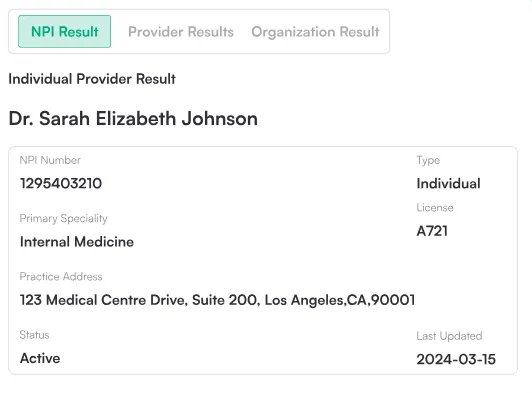
A Type 1 NPI is an individual provider; a Type 2 NPI is an organization. On the facility form, Aetna states that it will automatically deny an application submitted as an NPI type 1 physician or provider group request and notify you by letter or email. A quick NPI lookup settles which is which before you file.
Confirm your state's specific requirements before assuming the standard national process applies in full; Aetna's process, including which vendor or portal is used, can vary by state, provider type, and market.
Submit through Aetna's online request form. You'll get a reference ID back by email. Save it somewhere that isn't one person's inbox, since every status call depends on it. Log the submission date, NPI, and CAQH ID next to it.
You don't have to submit through Aetna's portal by hand, either. Assured navigates straight to Aetna's request-for-participation page and submits on your behalf once your CAQH profile and documents are ready.
Aetna's published process is to first evaluate network need in your specialty and geography, then tell you within 45 days (60 for facilities) whether you're eligible to move into contracting and credentialing. This 45/60-day figure is the only turnaround time Aetna publishes, and it applies specifically to this decision.
If Aetna says the panel is closed, that's a network-need statement, not a problem with the provider's file, and it's a different outcome from a credentialing denial.
This is the stage that decides your overall timeline. Per Aetna's published process, credentialing (with CAQH data pulled at this point) and contracting run together after the network-need decision, and both must be completed before anyone bills. Neither publishes a turnaround.
You'll need to check the status yourself. Providers based in Missouri can request a status update online; everyone else calls provider customer service at 1 (800) 353-1232 for medical and behavioral health, or 1 (800) 451-7715 for dental.
Have the reference ID, NPI, CAQH ID, and submission date ready before you call. Set a check every two weeks and log who you spoke to.
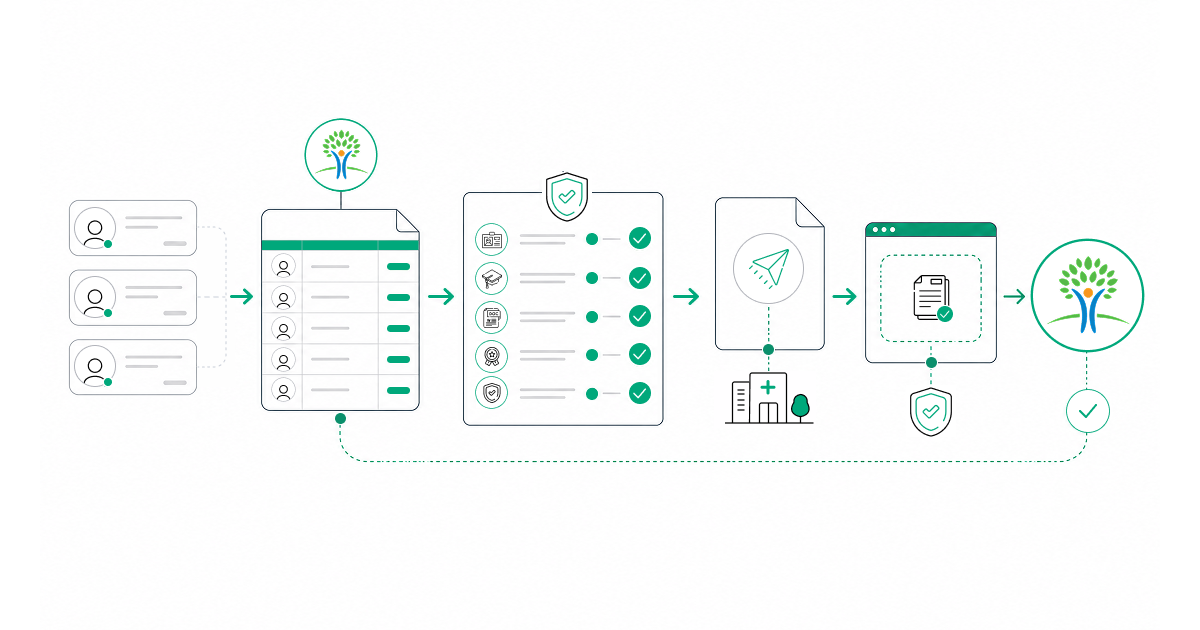
This is the part Assured's payer enrollment product takes off practices entirely: importing the CAQH profile, generating and submitting the application, tracking status, and handling follow-ups on a live dashboard.
You can't bill until Aetna confirms an effective date. A countersigned contract in your hand isn't the same as a loaded record in Aetna's system.
Wait for the countersigned agreement, then confirm in writing that Aetna's systems show participation, effective date, and correct service location. Verify that the provider appears in Aetna's directory before submitting any claims.
Keep the file current: CAQH attestation every 120 days (brief refresher, not a full re-explanation, see Step 1 above for the four conditions in full), recredentialing roughly every three years unless a state rule differs, and state licenses, DEA registrations, and malpractice policies expiring on their own schedules.
A lapse reopens the same problem you just solved. Assured's network management product watches those dates daily across more than 2,000 primary source databases and flags a change the day it happens.
Run this before you submit, so Aetna doesn't come back to you with questions.
Delays and denials trace back to the same three buckets, and knowing which you're in tells you what to do.
Data and document problems: The most common cause of both delay and denial: an incomplete or unattested CAQH profile, Aetna never authorized, expired licenses or malpractice policies, NPI mismatches, or the wrong specialty form. These usually surface as a delay first. Aetna requests the missing piece, and an unresolved request can eventually put the application at risk of being closed and, if left uncorrected, result in an outright denial. Correct the record and refile, usually within days rather than weeks.
Adverse history: Needs a written response. Malpractice history, a licensing action, or a sanction goes to the credentialing committee and needs a formal written explanation with documentation. Don't wait to respond; deadlines for this kind of appeal tend to be tight.
Network need: Not about the provider at all. Aetna decides it has sufficient coverage in that specialty and geography and declines in writing or by email. Send a written appeal explaining what the provider adds, or wait and refile when the panel opens. Aetna doesn't publish a standard appeal window here, so treat whatever deadline the denial notice states as the one that counts.
Aetna's published 45-to-60-day figure covers the network-need eligibility decision, not the full path to being billable. Assured's own benchmark data, drawn from 41 real Aetna enrollment cases across 160 healthcare organizations, shows a submission-to-confirmation median of 67 days. Aetna's first-pass approval rate runs at 70.7%, meaning roughly three in ten applications require at least one round of follow-up before approval. About one in five Aetna applications also hit a closed panel before submission is possible, adding a median of 18 days to the process when it does.
Across the full dataset of six major payers, the typical case closes in 69 days, but a quarter of cases run 97 days or longer, so plan around the longer figure, not just the median, for staffing and revenue projections.
See the full benchmark report for how Aetna compares to the other major payers.
Pick your three oldest open Aetna files and check one thing: is the CAQH profile attested within 120 days, and is Aetna authorized on it? That single check clears more stalled applications than any other, in about ten minutes per provider.
After that, the work is mostly discipline: log reference IDs, call every two weeks, don't let a document expire mid-application. If your team doesn't have the hours, we'll take the submissions, follow-ups, and ongoing data maintenance off your plate for a group practice, a digital health platform, a health system, or a health plan managing delegated credentialing.
Book a demo, and we'll look at your current Aetna queue and where it's stuck.
Aetna publishes one figure: 45 days for the medical network-need decision (60 for facilities). That covers eligibility only, not the full credentialing and contracting process. Assured's benchmark data puts the real submission-to-confirmation median at 67 days for Aetna specifically. Treat any end-to-end number you see, including this one, as a typical range rather than a commitment from Aetna.
No. Claims before your confirmed effective date get denied, and you generally can't bill the patient either. Wait for written confirmation, then check that the provider appears correctly in Aetna's directory.
Each provider needs their own credentialing file; the contract attaches to the group's tax ID, so a group with several tax IDs files once for the primary location.
That's a network-related decision, not a problem with the file. Submit a written appeal (a subspecialty, a language, an underserved location), or track when the panel reopens and refile.
Roughly every three years, unless a state, federal, or accrediting standard requires sooner. CAQH still needs to be attested every 120 days. Assured tracks these dates automatically across licenses, attestations, and malpractice policies.

Assured Health, Inc.
333 Seventh Ave, Suite 1701
New York, NY 10001




.svg)