
We Reviewed The 8 Best Modio Health Alternatives Worth Considering in 2026

Quick Summary
Modio Health OneView is a good credential management and document storage platform… but it's not perfect. If you're looking for alternatives, we reviewed 8 of them in this article. Here are the top 3 picks:
Why Listen to Us
We built Assured after scaling Dawn Health, a virtual clinic, across 15 states and living every credentialing and payer enrollment bottleneck ourselves. Today, the platform runs credentialing for enterprise health systems like Houston Methodist, multi-entity provider groups operating across dozens of states, and digital health organizations at a national scale - NCQA-certified across all 11 verification elements, the depth enterprise teams need to clear delegated credentialing audits.
So, we know this space (the vendors, the gaps, and what actually works).
What Is Modio Health?
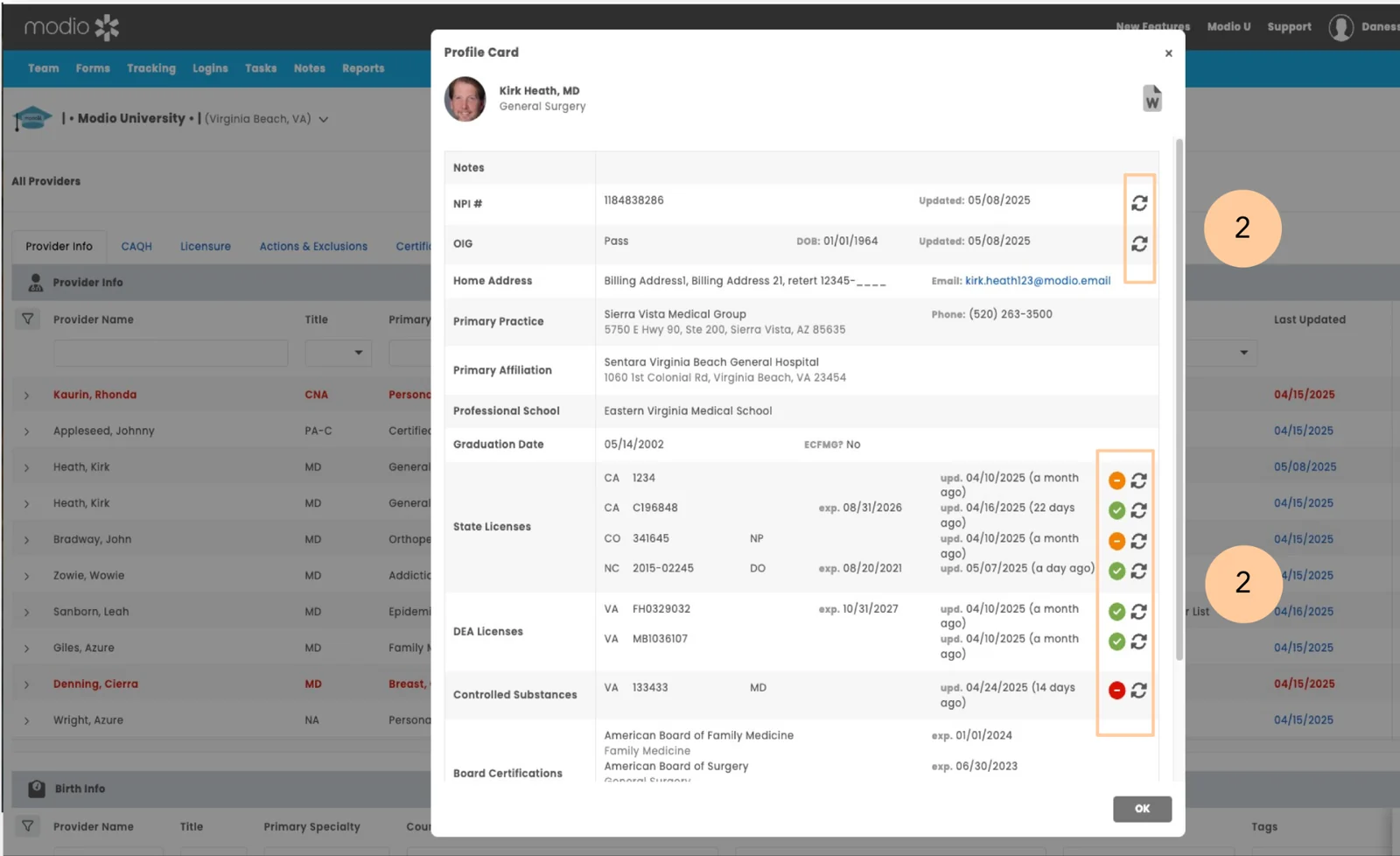
Modio Health was founded in 2014 by two physicians and a tech entrepreneur who initially ran a healthcare staffing company. The core product, OneView, is a cloud-based platform focused on securely managing and storing provider credentials and licensure in one accessible place.
The platform centralizes credentialing workflows, license renewals, primary source verification, and recredentialing, pulling data directly from licensing boards and verification databases. It also provides separate tracking for parallel operational processes like payer enrollment.
However, one common frustration we’ve found with Modio is that organizations still need to pair it with a ton of manual work. It helps organize the process, sure, but a lot of the legwork still happens outside the platform. We’ll get into that shortly.
Key Features
- License Management: Centralizes tracking of state licenses, DEA registrations, and certifications with renewal reminders.
- Document Storage: Securely stores provider documents in the cloud for audits or credentialing events.
- Expirables Management: Tracks expiring documents and certifications and sends alerts before lapses occur.
- CAQH Monitoring: Monitors CAQH profile status and flags when re-attestations are due.
- Prefilled Forms: Auto-populates standard forms with stored provider data, reducing data-entry errors.
- Compliance Alerts: Automated notifications for expirations, renewals, and attestation deadlines.
- Cloud-Based Access: Credentialing workflows and related operational tracking can be managed from any location via a web browser.
Pros
- User-friendly interface that simplifies basic credentialing tasks
- Centralized platform for managing provider credentials and compliance data
- Automated gathering of provider details like NPI, DEA, and license numbers
Why Look for a Modio Health Alternative?
Some workflow tasks still require manual effort
Modio does a good job of organizing credentialing. It keeps provider documents, licenses, and expirations in one place, which already removes a lot of the chaos teams deal with.
But some parts of the process still require manual work. And as the number of providers grows, those small steps can start to add up.

For example, payer enrollment data sometimes has to be imported provider-by-provider instead of across an entire roster. Certain fields may also need to be entered manually when external data sources don’t fully sync.
We hear a similar trend come up often on sales calls. Teams will say things like:
- “Modio was just kind of being used as somewhat of a warehouse for our information.”
- “We’re doing all of that work. We’re just using Modio to house the information.”
In other words, the documents live in Modio, but parts of the operational workflow still happen outside the platform.
For smaller teams with stable provider rosters, that setup may work perfectly well. But for organizations onboarding providers frequently, operating across multiple entities or states, or running networks at any scale where manual coordination compounds, those steps add up fast.
Reporting and task management could be stronger
Credentialing and payer enrollment are both processes where timing matters. A lapse in payer enrollment, for example, can result in delayed billing or a provider temporarily falling off a health plan's panel.
Modio’s reporting tools sometimes require a bit of cleanup before they’re ready to share with leadership. The data is there, but the output doesn’t always match exactly what teams want without a little adjustment.
Task tracking also comes up a lot. While you can create and manage tasks inside the platform, missed deadlines don’t always trigger alerts.
Certain configuration options are limited
Some fields and features can't always be hidden or adjusted to match exactly how a specific organization runs its credentialing or payer enrollment workflows. When workflows get more complex, teams sometimes end up creating internal guidance documents to help staff navigate the system.
The 8 Best Modio Health Alternatives in 2026
1. Assured
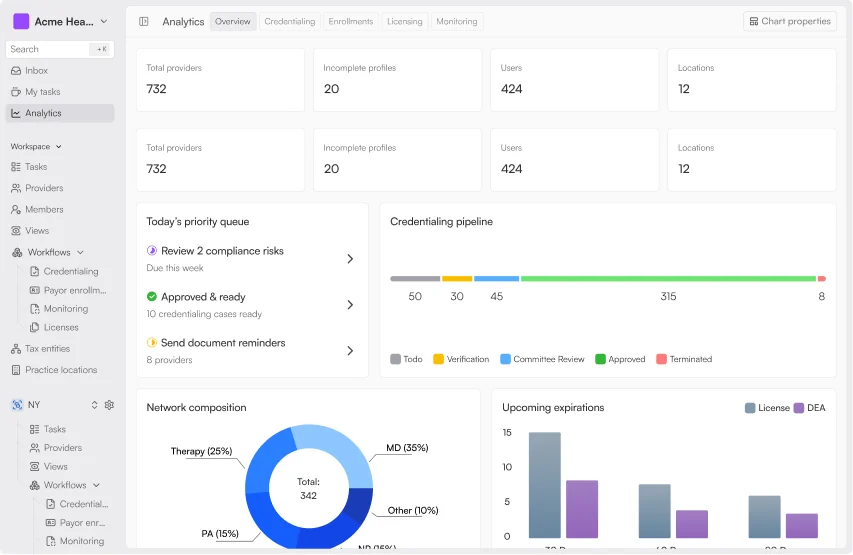
Assured is an AI-powered platform that helps healthcare organizations manage…
- Provider credentialing
- Payer enrollment,
- Licensing
- Roster management
- Provider network monitoring
… in one place.
Many teams use Modio initially because it keeps provider documents, licenses, and expirations organized in one place. That part is helpful. But the operational work behind credentialing and payer enrollment still stays largely manual.
That's one of the gaps we built Assured to fill.
Assured prepares credentialing files using provider data from sources like CAQH and NPPES, verifies credentials across 2,000+ primary sources, and manages operational workflows such as payer enrollment, licensing, and compliance tracking. A lot of the work that usually lives in spreadsheets, email threads, and payer portals simply happens inside the workflow.
The difference shows up once provider networks span multiple states, entities, or thousands of providers. What’s manageable for a small team turns into constant coordination across portals, documents, and internal trackers and at enterprise scale, the breaks just get more expensive. Assured holds up at that complexity while remaining flexible enough for groups still building their footprint.
Case in point: Birches Health uses Assured to run provider credentialing across all 50 states — a footprint and complexity profile that most non-enterprise platforms can’t support without breaking down or adding internal headcount.
You can watch the full case study here.
Key Features
- Credentialing workflow automation: Prepare and organize credentialing files using provider data pulled from sources like CAQH, NPPES, and state medical boards.
- Primary source verification: Verify provider across 2,000+ primary sources
- Payer enrollment management: Prepare, submit, and track payer enrollment applications.
- Multi-state licensing management: Manage license applications, renewals, and compliance across all 50 states
- Continuous compliance monitoring: Monitor sanctions databases, license status changes, and credential expirations
- API integrations: Connect credentialing data with EHR, billing, and RCM systems
- NCQA-certified CVO: Meet all 11 credentialing verification elements required for delegated credentialing
Pros
- Fastest submission SLAs in the category (5-day payer enrollment target)
- All fulfillment staff are direct Assured employees, not third-party BPOs
- Truly modular. Pay only for what you use (credentialing, licensing, enrollment separately)
- Built for the delegation pathway from day one
- Most relevant for the specific gap Modio leaves open: active enrollment workflow
Cons
- Newer to market than legacy incumbents
Pricing
Pricing is available on request. Book a demo at withassured.com/demo .
2. MantraComply
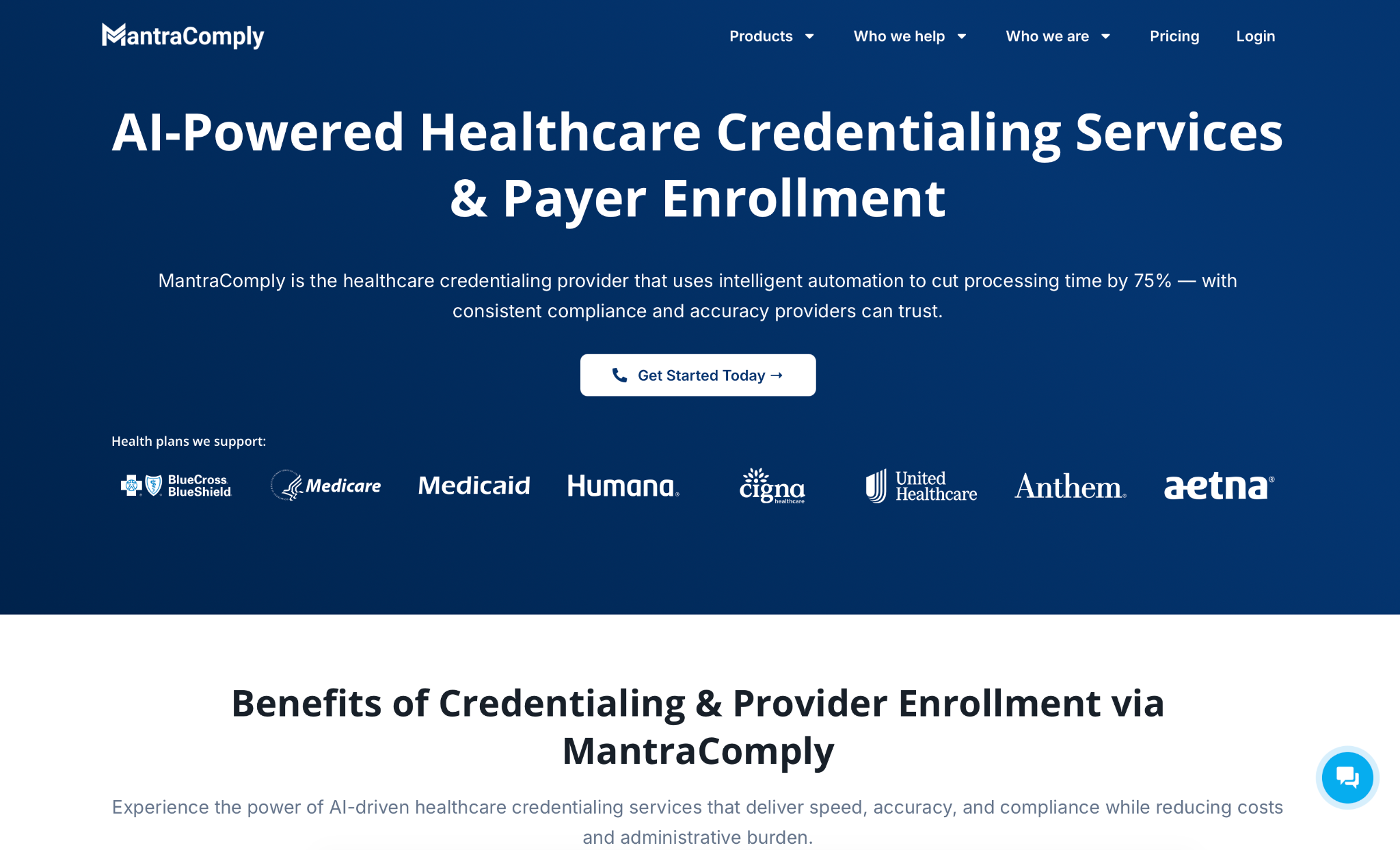
MantraComply offers credentialing and payer enrollment as software you run in-house or as a managed service run by its specialists. Its AI collects documents, completes payer applications, and flags missing information before submission.
If you want someone else to file and follow up on enrollments, the Managed plan does that for $109 per provider per month. If you'd rather keep the work in-house, the Growth plan is $48 per provider per month.
It's built mainly for outpatient practices, with dedicated programs for physical, occupational, and speech therapy, mental health counseling, and ABA. Hospitals that need privileging and state licensing have to move up to the custom Enterprise plan.
Key Features
- Primary Source Verification: Verifies education, residency and fellowship, licenses, and board certifications at the source.
- Payer Enrollment: Prepares, submits, and tracks commercial, Medicare, and Medicaid applications, with payer follow-up on the Managed plan.
- CAQH Management: Keeps CAQH profiles current and tracks re-credentialing dates.
- Expiration Tracking: Tracks license renewals and document expirations for every provider.
Pros
- Published pricing, including a free Starter plan for one provider
- Monthly billing, so you can move between in-house and managed plans without a long contract
- Free guided migration of provider data and documents from most major platforms
Cons
- Workflows are described as NCQA-aligned, not NCQA-certified
- Privileging, state licensing, and API access are only on the custom Enterprise plan
- On the Growth plan, payer enrollment follow-up is a paid add-on
Pricing: Free Starter plan; Growth at $48 and Managed at $109 per provider per month; custom Enterprise pricing.
3. Incredable
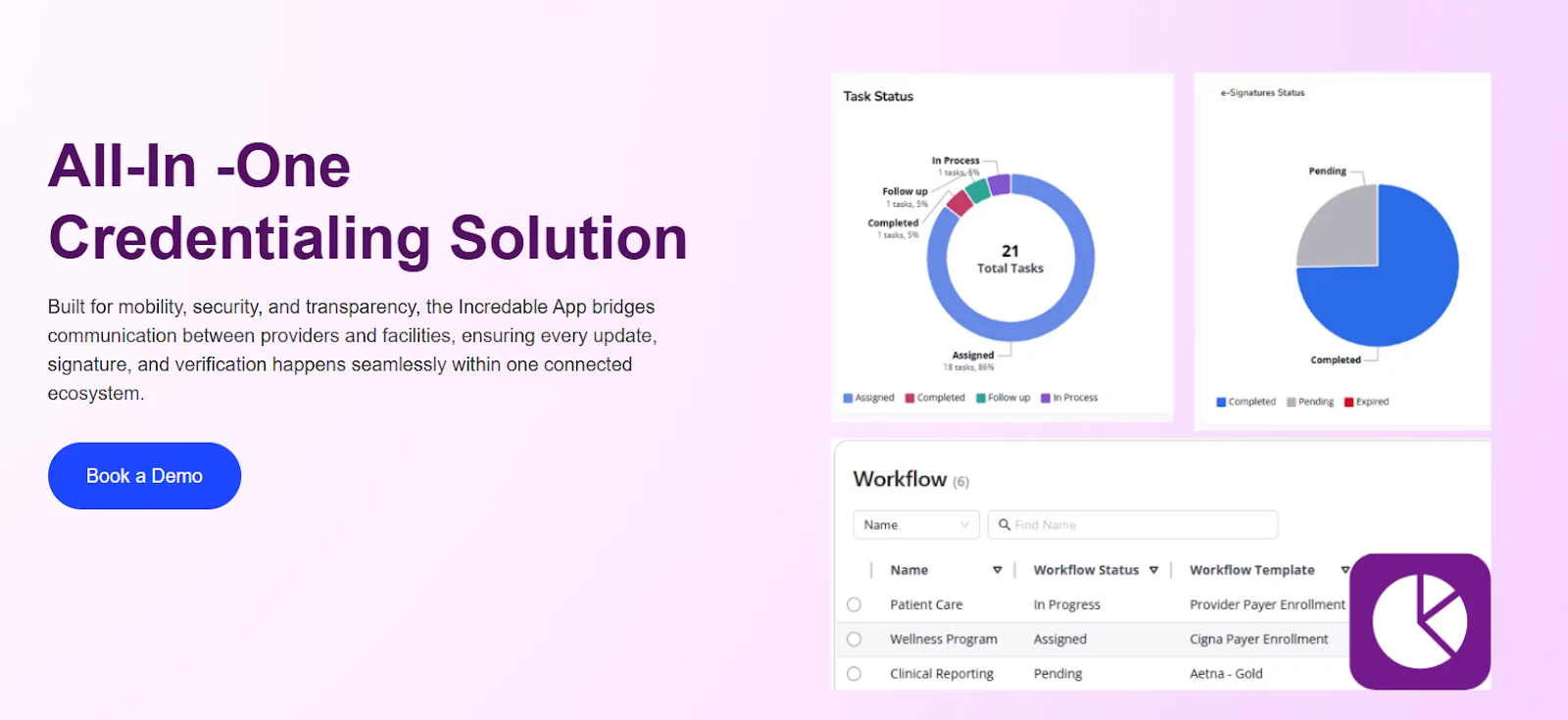
Incredable is a configurable credentialing management platform backed by parent company Intiva Health. Where Modio focuses primarily on document storage and expiration tracking, Incredable goes further with customizable workflows per payer, task management across team members, and AI-driven automation that flags missing data and identifies inconsistencies during onboarding.
The platform also uses distributed ledger technology (DLT) to ensure document integrity, which is a less common security approach in this category.
Key Features
- Configurable workflows: Build custom credentialing workflows per payer, facility, or provider type to match your organization's specific processes
- AI-driven automation: Smart workflows flag missing data, identify inconsistencies, and accelerate team decisions during onboarding and recredentialing.
- Exclusions and sanctions monitoring: Monthly screening across OIG, state licenses, and DEA registrations with automated notifications when issues are discovered
- Payer enrollment tracking: Track enrollment status across hundreds of payers already loaded into the system with real-time visibility
- Primary source verification: Integrated PSV for licenses, certifications, and other credentials
- Facility management: Manage multiple locations, provider assignments, and compliance requirements in one place
Pros
- Highly configurable. Adapts to your workflows rather than forcing a fixed process
- User-friendly interface consistently praised in reviews, with an easy transition from spreadsheets
- Flat-fee pricing with no per-provider costs
- Responsive customer support and hands-on implementation team
Cons
- Self-service model. Your team still handles the operational work of submitting and following up on applications
- Smaller market footprint than legacy players
Pricing: Flat-fee model. Custom pricing upon request.
4. CredentialStream
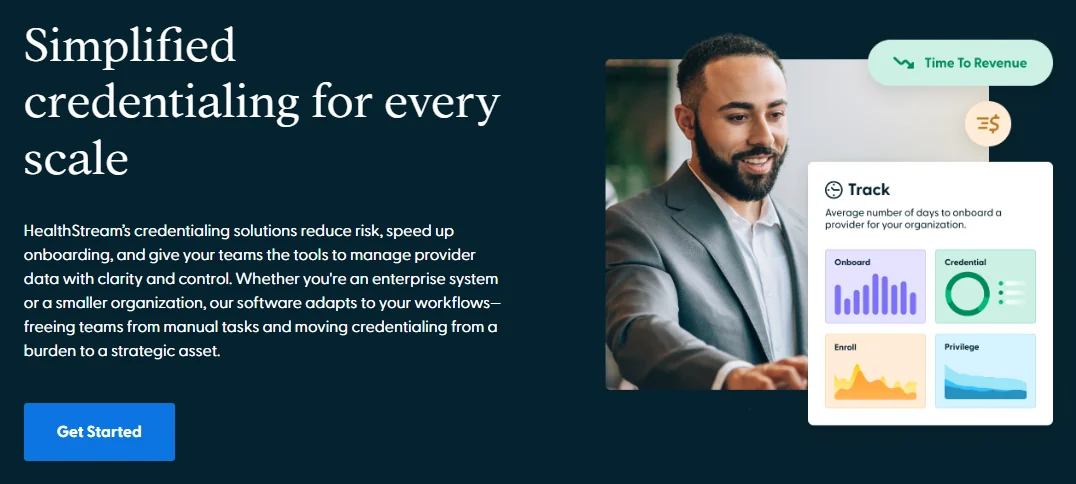
CredentialStream is the enterprise standard for hospital credentialing and privileging. Trusted by over 5,000 healthcare organizations, it uses patented technology for requesting, gathering, and validating provider information. It also offers support for committee management, OPPE/FPPE peer review, and privileging workflows that smaller platforms don't offer. CredentialStream has achieved HITRUST r2 Certification, the highest standard in healthcare data security.
Key Features
- Committee Management: Automates workflows from application to committee review.
- EHR Integration: Connects with Epic, Cerner, Meditech via hStream platform.
- HITRUST r2 Certified: Highest standard in healthcare data security.
- Provider Credentialing: Patented end-to-end provider lifecycle management technology.
Pros
- Deepest privileging capabilities in the market
- Patented technology with enterprise-grade audit trails
- Strong EHR integration ecosystem
Cons
- G2 reviewers note difficult implementation and lacking support
- Higher price point suited to enterprise budgets
- Less suited for growth-stage digital health or smaller practices
Pricing: Custom enterprise pricing upon request.
5. CertifyOS
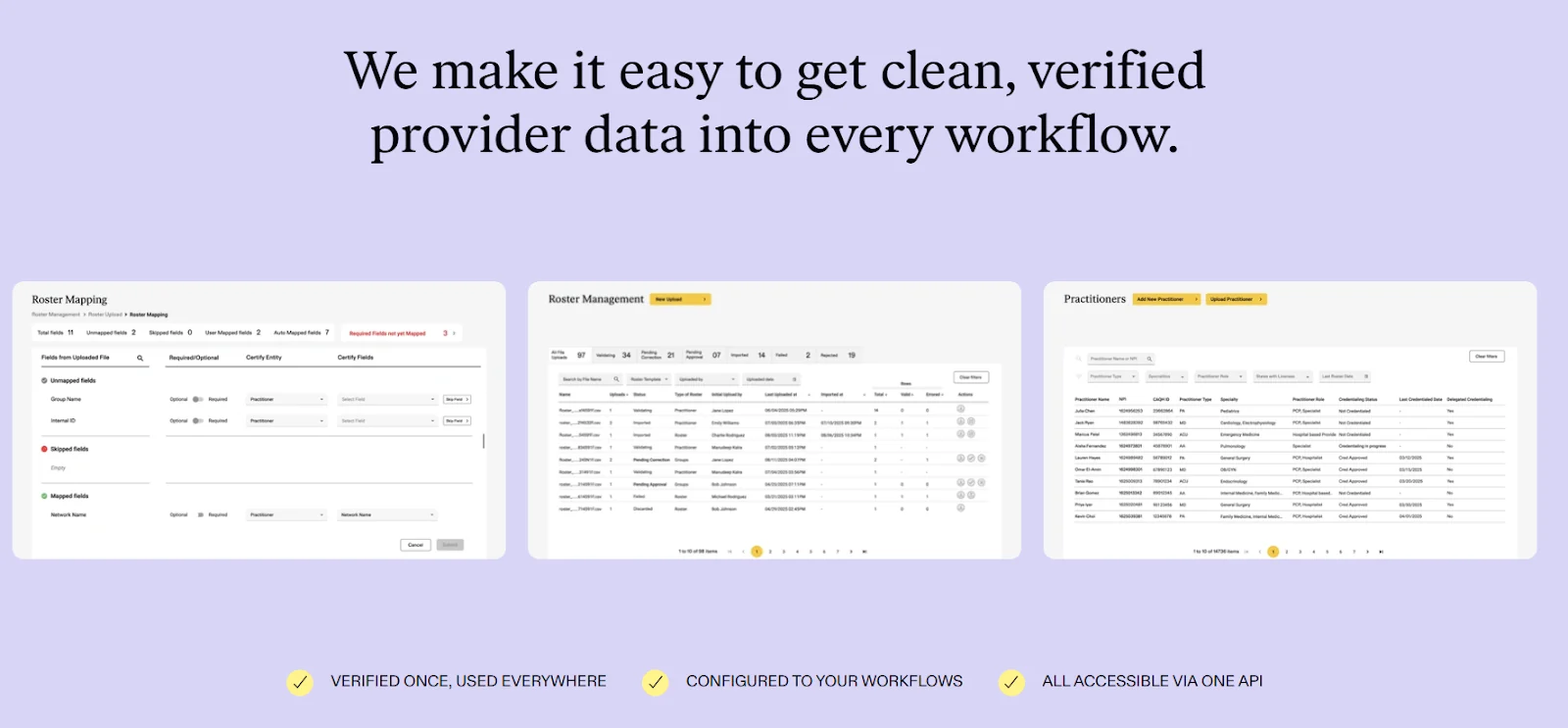
CertifyOS is a provider data infrastructure platform that serves primarily health plans, managed care organizations, and large digital health companies. The platform is built for organizations managing large provider networks where data accuracy, real-time PSV, and downstream system integration are the primary concerns.
If you are a managed care organization running delegated credentialing across thousands of providers and need that data to flow cleanly into claims, directories, and contracting systems, CertifyOS covers ground that most practice-focused tools do not.
Key Features
- Provider Hub: Ingests and unifies provider data from credentialing, claims, directories, and rosters into one continuously updated profile
- Automated PSV: Primary source verification against thousands of sources with real-time results and full audit trails
- NCQA-certified CVO: Certified across all 11 verification elements, available as fully outsourced, hybrid, or self-service
- API-first architecture: Open API for embedding credentialing data directly into downstream systems like claims, contracting, and directories
- RosterOS: Dedicated roster management tool that consolidates delegated provider rosters from multiple entities into a single normalized view
Pros
- Purpose-built data infrastructure for organizations where provider data accuracy drives operational outcomes
- Robust API for integrating credentialing into existing systems without manual handoffs
- $40M in Series B funding signals continued product investment
Cons
- Primarily built for health plans and large networks. May be more infrastructure than smaller provider groups need
- Managed enrollment services are less established than vendors focused specifically on operational execution
- Some users report that additional customization is needed for certain healthcare IT system integrations
Pricing: Custom pricing based on organizational needs and scale. Available upon request.
6. Symplr Provider
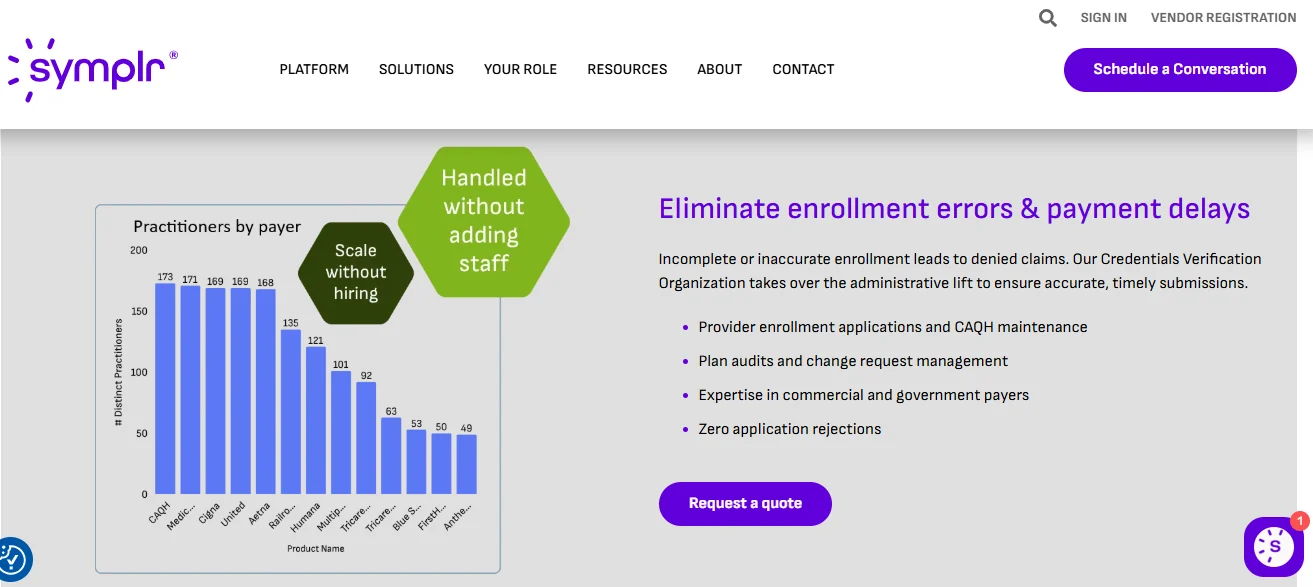
Symplr, which acquired Cactus Software, is the legacy enterprise player in hospital credentialing. It has deep penetration in hospital systems and academic medical centers and integrates across the broader symplr workforce management suite covering scheduling, compliance, and learning.
For organizations already using symplr products, the credentialing module connects naturally to existing workflows and data. For organizations evaluating it fresh, it carries the UX and product velocity characteristics typical of legacy platforms… it works, but it isn't fast to implement or intuitive to use.
Key Features
- Credentialing and Privileging: Full provider lifecycle from application to performance monitoring.
- Provider Enrollment: Enrollment tracking with roster templates.
- Vendor Credentialing: Vendor credentials integrated with supply chain operations.
- OPPE/FPPE Integration: Unified credentialing, privileging, and quality data.
- DocuSign and Ad Hoc Reporting: Electronic signatures and custom reporting without coding.
Pros
- Broad GRC suite
- Long track record with hospital systems
- Multi-function platform beyond just credentialing
Cons
- Slow performance and inconsistent support per G2 reviews
- Missing forms management and data verification per Capterra
- Complex implementation and custom reporting
Pricing: Custom enterprise pricing upon request.
7. QGenda
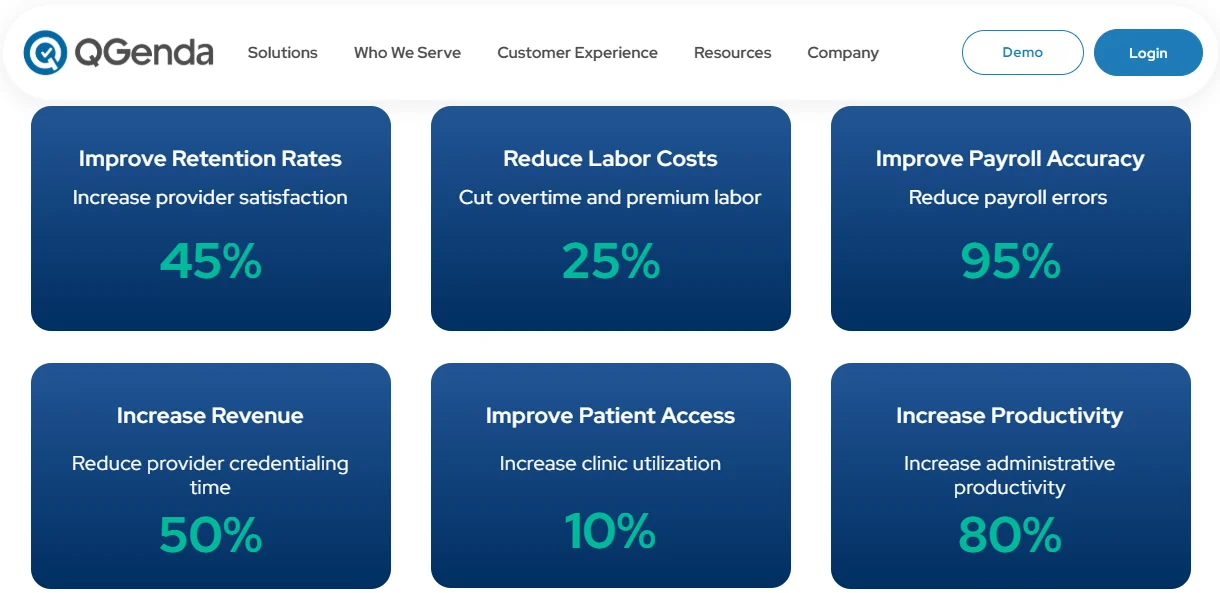
QGenda is primarily a healthcare workforce scheduling platform & one of the most widely used in the country. Its credentialing module exists as part of that broader ProviderCloud workforce suite, and its defining differentiator is exactly what you'd expect given that origin:
- the credentialing status of a provider is natively connected to their schedule.
If a provider's credential is expiring, the scheduling system flags it. If a provider finishes credentialing, they become schedulable immediately, without a manual handoff. For hospital operations teams managing both functions, that integration eliminates a real coordination gap.
As a standalone credentialing tool evaluated without the scheduling context, it is capable but not distinctly better than alternatives at this price point.
Key Features
- Credentialing: Automated PSV and privileging with workflows that cut credentialing time by 50%.
- Advanced Scheduling: Rules-based scheduling for physicians, nurses, and staff.
- Credentialing-to-Scheduling: Providers deployable the moment credentialing clears; expiring credentials flag the schedule.
- OPPE/FPPE: Practice evaluation integrated with credentialing for evidence-based privileging.
Pros
- Scheduling-credentialing integration is functionally unique in the market
- Consistently praised customer service and smooth onboarding experience
- Application pre-population reduces manual form entry for credentialers
Cons
- Priced for larger organizations; difficult to acquire for smaller practices
- Signable document mapping produces formatting issues that limit usability
Pricing: Enterprise pricing not publicly disclosed. Custom quote required.
8. MD-Staff
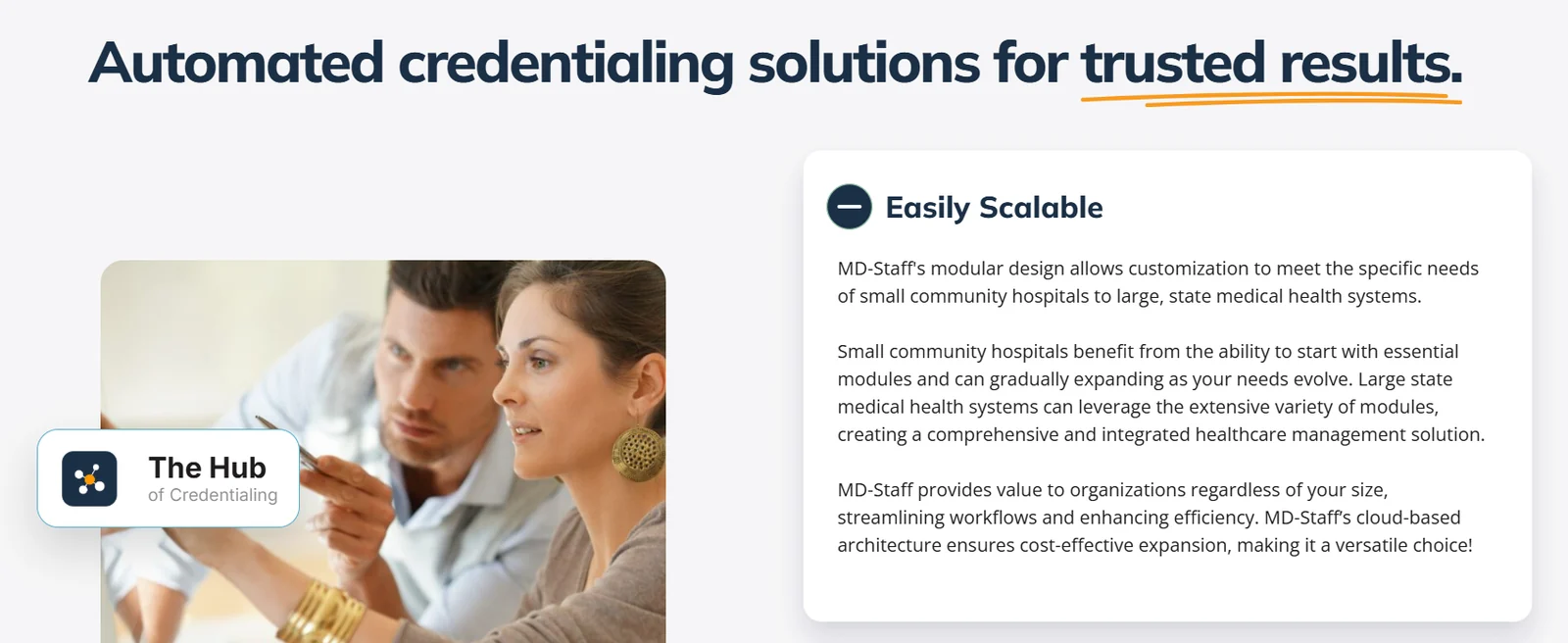
MD-Staff is a cloud-based credentialing and privileging platform developed by Applied Statistics & Management (ASM), with over 40 years of industry experience. Used by more than 3,000 healthcare facilities worldwide, it serves as a centralized "source of truth" for practitioner information across the provider lifecycle.
The platform's core engine, Aiva™ Credentialing, uses AI and deep automation to reduce application processing times and flag practitioner files with potential issues. MD-Staff's modular design means organizations can start with essential modules and expand as needs evolve, making it adaptable for both small community hospitals and large multi-state health systems.
Key Features
- AI-Powered Credentialing (Aiva): Automates application processing, flags incomplete files, and accelerates credentialing workflows
- Privileging with Drag-and-Drop Interface: Create and manage core and laundry list-style privilege delineation forms with an intuitive drag-and-drop builder.
- Compliance and Expiration Tracking: Real-time monitoring of license expirations, sanctions (OIG, SAM, NPDB), and credential status with automated alerts and audit trails.
- Online Provider Applications (MD-App): Paperless portal where providers complete applications, upload documents, and track their status in real time.
- Managed Care & Enrollment: Automated enrollment solution designed to expedite plan participation and reduce costs across payer networks.
Pros
- Ranked #1 credentialing software by KLAS for seven consecutive years (2020–2026)
- Modular design scales from small community hospitals to large health systems
- Consistently praised for personalized customer service and one-on-one training
Cons
- Implementation can be a multi-month process requiring dedicated project leadership
- Feature depth can feel excessive for smaller organizations
- Enrollment module exists but may not match the depth of dedicated managed enrollment platforms
Pricing: Custom pricing based on modules selected and organization size
How to Choose the Right Modio Health Alternative
The right platform depends on what your organization actually needs. A few things worth thinking through before you decide:
- What do you need the platform to actually do? There's a meaningful difference between a platform that organizes credentialing records and one that actively supports operational workflows like payer enrollment and licensing submissions. If you need records stored and expirations tracked, several options here will work. If you need applications submitted, payers followed up with, and licenses managed across states, you need managed services built into the platform; not bolted on separately.
- Do you need an API? If credentialing data needs to flow into your EHR, billing system, or RCM platform, make sure whatever you choose can actually connect. Modio doesn't offer an API. Several alternatives on this list do.
- What’s the scale and complexity of your operations? A platform that works for 20 providers in one state may break at 200 providers across ten. Whether you’re already operating at enterprise scale, working through an acquisition or merger, or planning to expand into new states, evaluate the platform against where your operations need to hold up and not just where you are today.
- Do you need NCQA certification? If you're pursuing delegated credentialing agreements with payers, your vendor needs to be an NCQA-certified CVO. Not every platform on this list qualifies, so check before you commit.
- Are you managing multiple states? Multi-state licensing adds significant complexity (different boards and different renewal timelines). Payer enrollment compounds that further: each state may involve different health plans, different panel requirements, and different processing timelines.
Still on the Fence? Here's How We'd Sum It Up
Modio Health is a genuinely good platform for what it does: centralizing credential records, tracking expirations, and keeping practices organized. It's well-rated, well-supported, and widely used for good reason.
But if your team is spending significant time on manual payer enrollment work or coordinating credentialing across multiple systems, it's worth evaluating platforms that support more operational workflows.
If you want a platform that goes beyond credential storage and handles the full lifecycle, we’ve covered a few options but Assured is worth a serious look.
We built Assured specifically for healthcare organizations that want:
- Providers credentialed in 48 hours.
- Payer applications submitted within 72 hours.
- Compliance monitored across 2,000+ sources continuously.
- And an NCQA-certified CVO behind every file.
If that sounds like what you're looking for, book a demo and we'll show you exactly how it works.
1. What is the best alternative to Modio Health for credentialing?
2. Does Modio Health support delegated credentialing?
3. Which Modio Health alternative handles payer enrollment end-to-end?
4. Can I switch from Modio Health without losing my provider data?
5. What is the best credentialing platform for multi-state organizations?

Assured Health, Inc.
333 Seventh Ave, Suite 1701
New York, NY 10001