

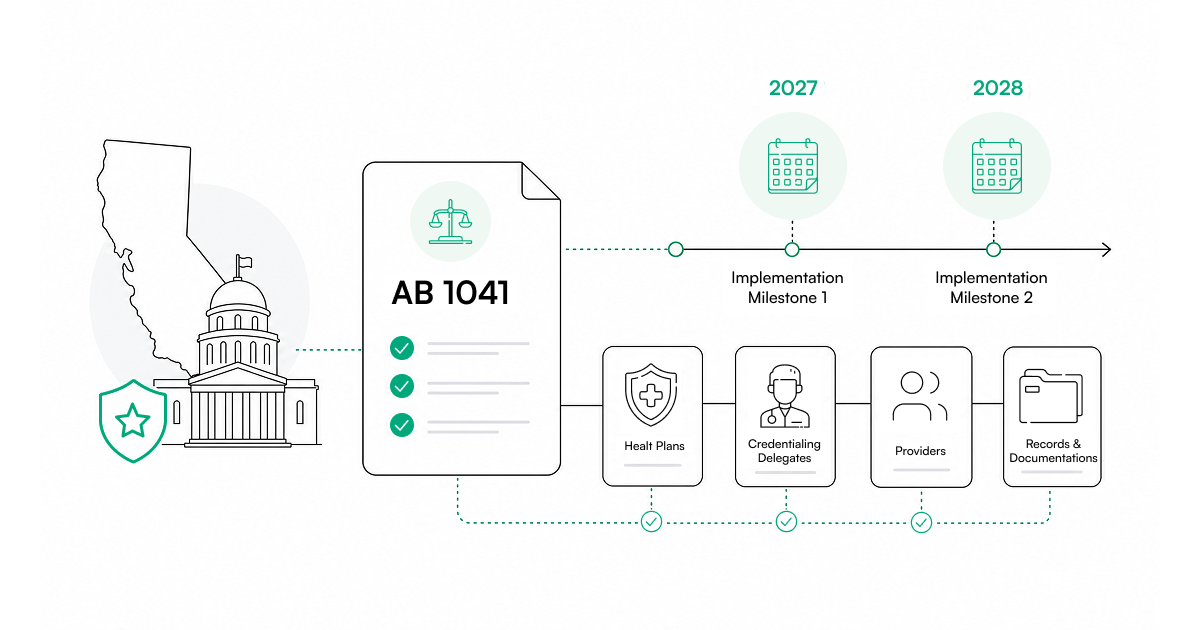
California AB 1041: What Health Plans and Credentialing Delegates Need to Know Before 2027 and 2028

Varun Krishnamurthy
September 28, 2026

Traditional credentialing takes 60 to 120 days. Every idle provider is just lost revenue. We evaluated eight platforms on execution speed, first-pass approval rates, automation depth, and enrollment capabilities. Here are our top three picks:
We built Assured after scaling a provider network from 0 to 150+ providers across 15 states and living every credentialing bottleneck firsthand. Today, we’re an NCQA-certified CVO serving health systems and digital health organizations nationwide, so we know this space: the vendors, the gaps, and what actually works.
For most of healthcare's history, credentialing was managed by one or two specialists at a practice who tracked everything in spreadsheets, accessed CAQH manually, and followed up with verification sources by phone and email. This worked (slowly) when practices were small, and provider turnover was low.
Today, three things have converged to break that model.
Private equity-backed physician groups, digital health companies scaling telehealth, and multi-site pediatric or specialty practices are now onboarding 30 to 50 new providers per year.
In our conversation with a COO building a pediatric network in middle Tennessee, the calculation was explicit: at their growth rate, a single credentialing specialist handling 75 active providers would be overwhelmed within 18 months. The spreadsheet model doesn't scale past a certain inflection point. It just gets louder and more error-prone.
NCQA and Joint Commission standards require ongoing exclusion monitoring, documented primary source verification, and clear credentialing committee records.
Practices pursuing delegated credentialing must demonstrate months of clean, auditable credentialing activity before a payer will grant that authority. Many payers require a six to twelve-month lookback period of consistent credentialing records. Software that centralizes verification data and produces audit-ready documentation becomes critical in those situations.
Every day a provider sits credentialed but not enrolled is lost revenue. At typical physician billing rates, even a two-week delay can amount to tens of thousands of dollars. Across a practice adding 40 new providers a year, the math becomes a compelling business case.
Best for: Growth-stage organizations and enterprises needing credentialing, enrollment, and licensing executed end-to-end
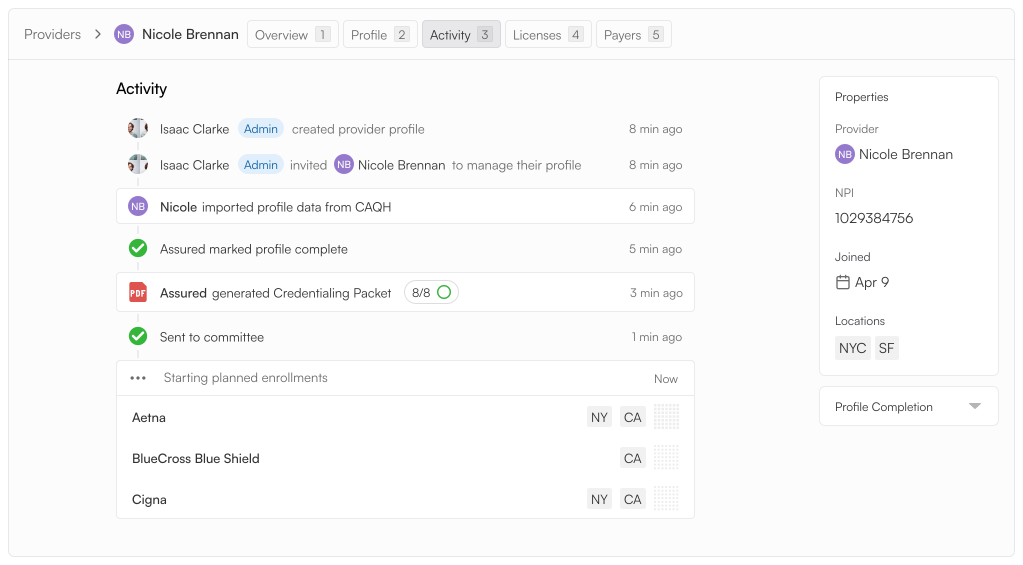
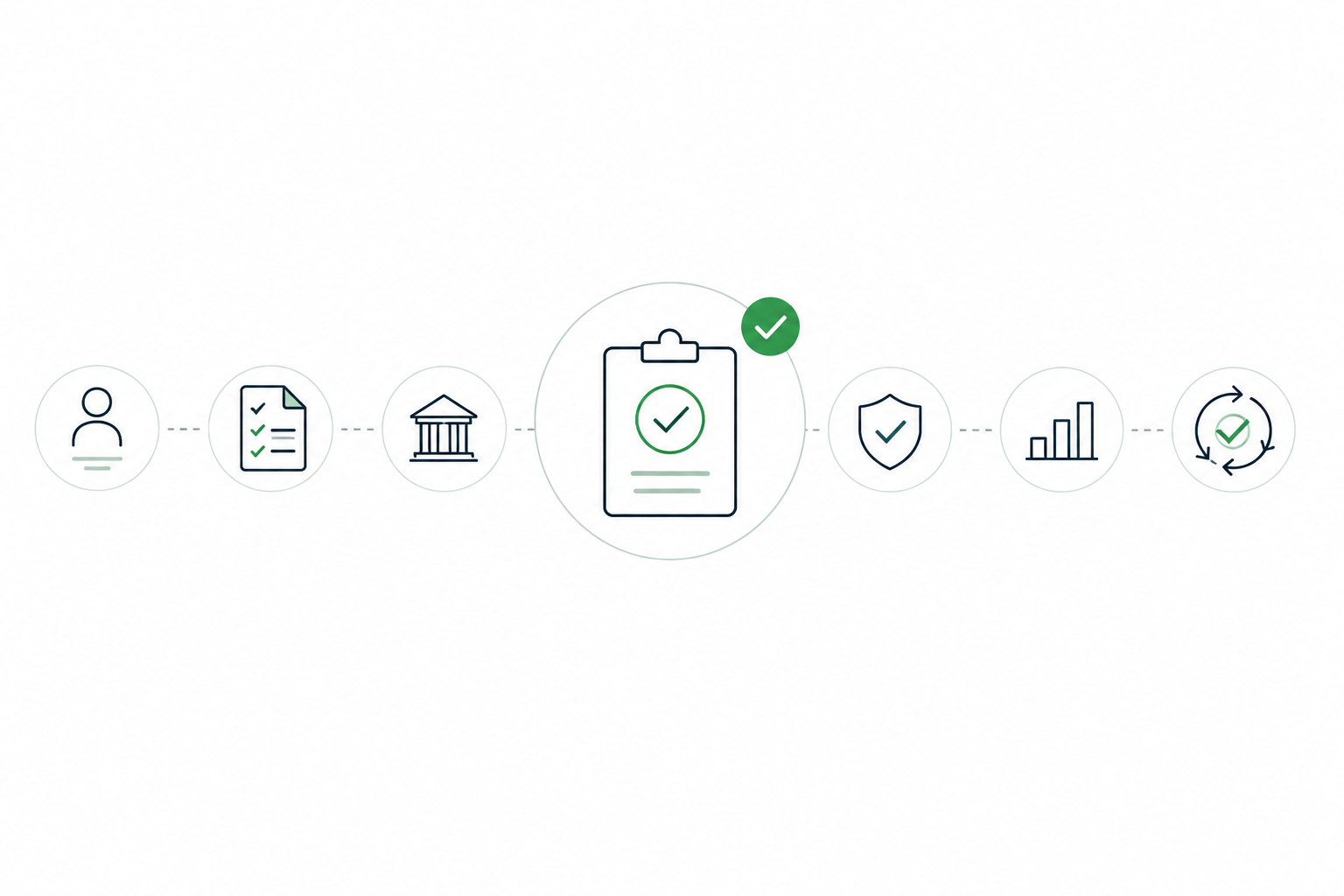
Assured is an AI-powered credentialing platform for healthcare organizations that need to credential providers fast, stay continuously compliant, and scale without adding headcount. It handles the full credentialing lifecycle:
… all in one system.
We're NCQA-certified across all 11 verification elements, and have processed tens of thousands of files for 100+ customers, including Houston Methodist, Tono Health, and Blossom Health.
The difference between Assured and most platforms in this category comes down to one thing: we built software to run the credentialing process fast and smoothly. But how fast? Good question.
We credential providers in 48 hours on average. The industry standard is 60 to 120 days. That gap exists because our PSV engine verifies credentials across 2,000+ primary sources in parallel, not one database at a time. A provider who joins your practice on Monday can have a complete, committee-ready credentialing file by Wednesday.
Accuracy is another big thing for us. Our AI validates every application before it leaves the platform, whether that's a credentialing packet or a payer enrollment submission. That means catching data mismatches, missing documents, and compliance gaps before they become rejection letters or delayed contracts.
Bryson Tombridge, founder of Tono Health, spent two years with a legacy vendor and got zero contracts completed. That delay cost the business an estimated $1 million to $1.5 million. In their first month with us, we completed 120 contracts.
As Bryson put it, “Just shortening the amount of time it takes to get our doctors licensed and credentialed unlocks over $500,000 per provider.” Check out the full case study here.
Custom, based on volume, scope, and which modules you need. Reach out at withassured.com/demo for a tailored quote.
Best for: Digital health companies that want API-first credentialing embedded in their own stack
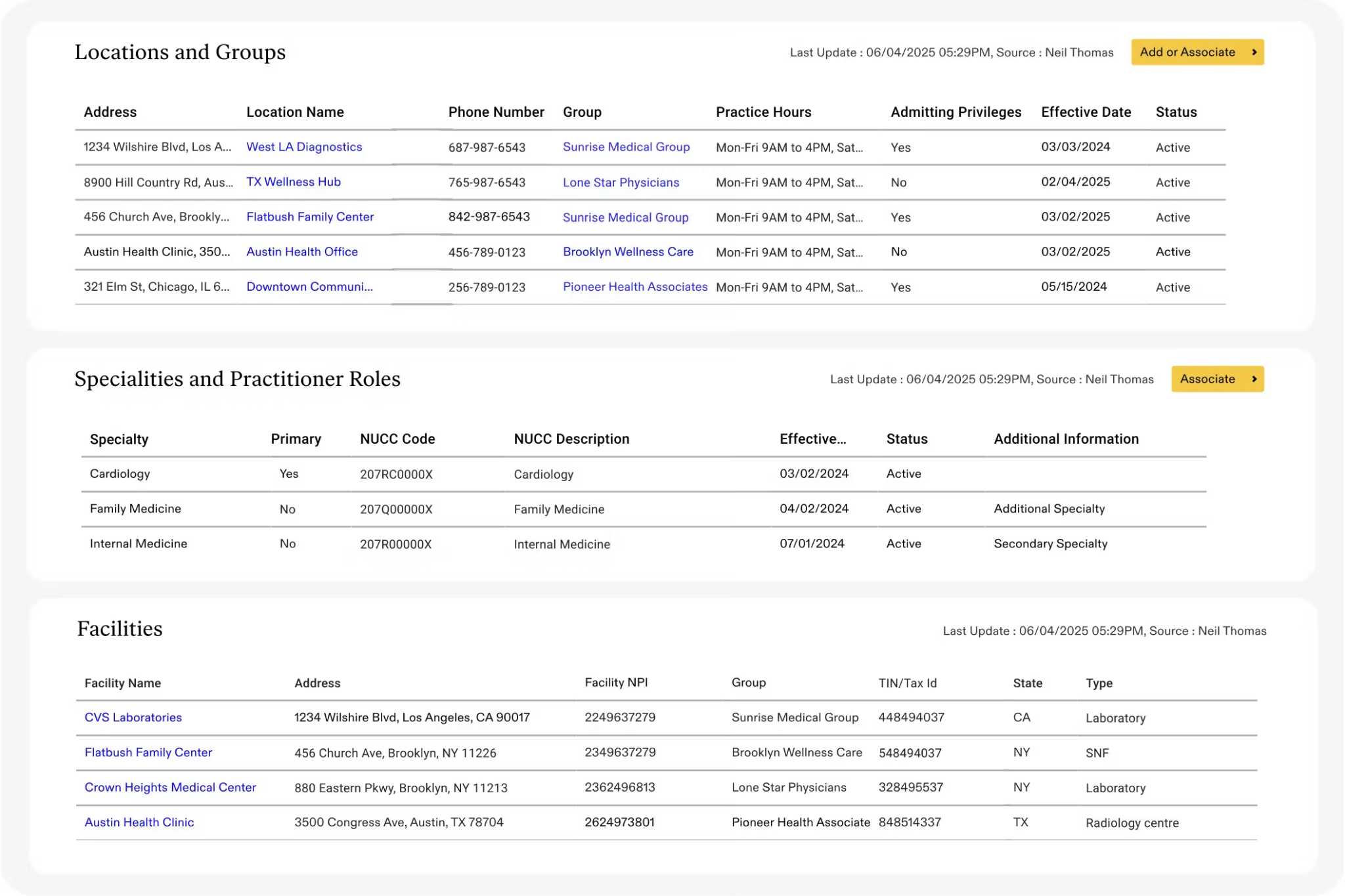
CertifyOS is an API-first provider intelligence platform that automates credentialing, licensing, payer enrollment, and network monitoring. It's built for organizations that want to embed credentialing directly into their tech stack rather than log in to a separate platform.
The API approach allows you to trigger credentialing workflows programmatically. You can pull verification statuses into your own dashboards and automate the handoff between credentialing and enrollment. CertifyOS also runs continuous sanctions monitoring and automated alerts for credential changes.
CertifyOS doesn't publish pricing. It's quote-based and targets mid-market to enterprise digital health and payer organizations.
Best for: Health plans, large provider networks, and organizations that treat network development as a strategic function alongside credentialing
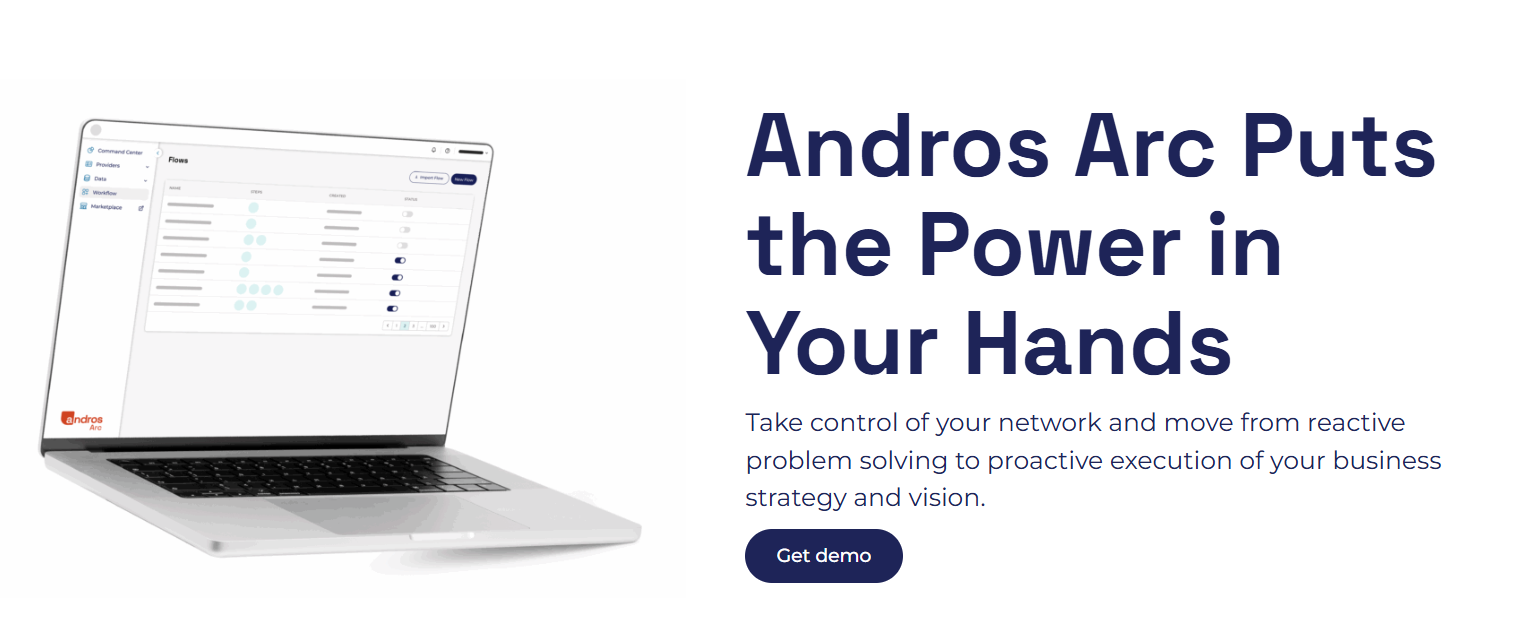
Andros is a provider network management and credentialing platform built primarily for health plans and larger telehealth organizations. It combines network lifecycle management — recruiting, contracting, credentialing, and monitoring — under one platform with a repository covering over 8 million providers.
Where Andros stands out is in delegated credentialing and network development at scale. Its data-matching algorithms automate PSV, and the company claims two out of three applications in its system complete without any direct provider input, reducing administrative burden during onboarding. Andros holds NCQA CVO certification at what it describes as the strictest level available, and claims credentialing workflows run up to 10x faster than industry averages.
● NCQA-certified PSV: Automated primary source verification against primary sources with full audit trails; Andros claims the strictest NCQA CVO certification level available
● Low-touch provider onboarding: Two out of three application processes auto-complete without requiring provider input; a robust data repository autofills provider information from verified sources
● Network development tools: Recruit, contract, credential, and monitor providers in one system; designed for organizations managing network adequacy and geographic coverage strategies
● Credentialing committee management: Andros can manage the full credentialing committee process on behalf of clients, including generating committee-ready files and managing approvals
● Flexible delivery and ongoing monitoring: Continuous monitoring with credentialing professionals following up on flagged discrepancies; outputs delivered via PDF download, web portal, or API for downstream integration
Custom pricing based on organizational scope and volume. Contact Andros directly for a quote.
● One of the few platforms combining network development and credentialing in a single system
● NCQA-certified CVO with highly automated PSV and a large proprietary provider data repository
● Low-touch onboarding design minimizes provider input, reducing administrative friction at scale
Best for: Hospital systems needing enterprise privileging, committee management, and EHR integration
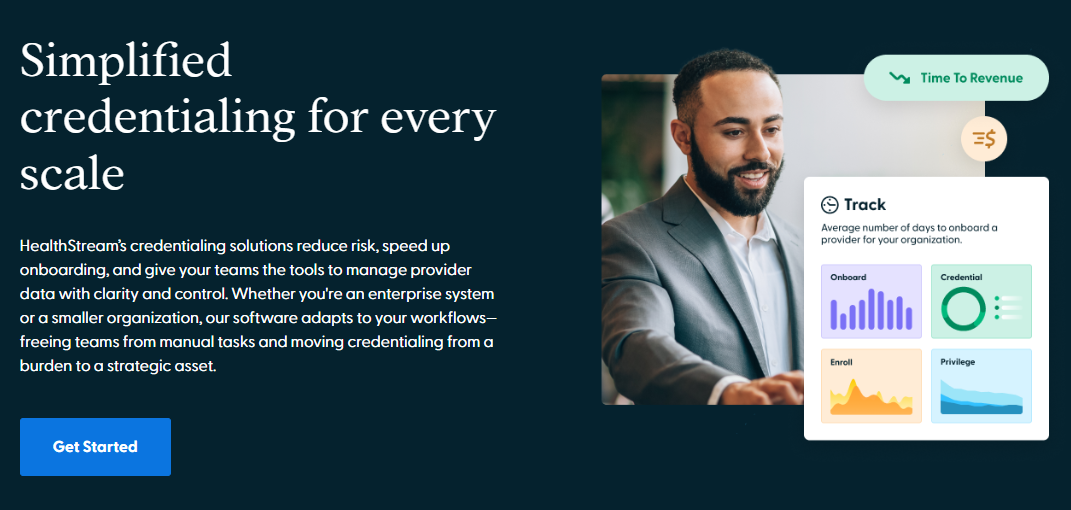
CredentialStream is a credentialing platform from HealthStream designed primarily for hospitals and larger health systems with formal medical staff offices and established EHR systems.
It handles the full provider lifecycle within a single system, including application intake, primary source verification, reappointment, privileging, and provider enrollment. Everything sits under a single connected provider record, making it easier for teams to track status, manage approvals, and keep provider data organized.
One of its biggest strengths is integration. For health systems that need credentialing data to flow into platforms like Epic and other operational systems, CredentialStream can be a strong fit. That helps reduce duplicate data entry and keeps provider information more consistent across teams.
Subscription-based. Custom quotes based on organization size and the number of modules.
Best for: Companies that need API-based verification and provider monitoring, particularly if they already use Salesforce or have the technical resources to build around an API.
Verifiable is an API-first credentialing and provider monitoring platform. If you need to verify provider credentials or track changes across your network, you can connect Verifiable to primary sources and integrate those workflows into your existing systems.
You can use it for primary-source verification across licensing boards, registries, and other verification resources, as well as ongoing monitoring for sanctions, exclusions, and credential changes. If your provider operations already run on Salesforce, Verifiable also provides a native Salesforce application, so you can manage these workflows without constantly switching between systems.
Verifiable doesn't publish standard pricing. Pricing is quote-based and varies based on the products you need and the number of providers you're managing.
Best for: Healthcare organizations needing credentialing natively connected to provider scheduling
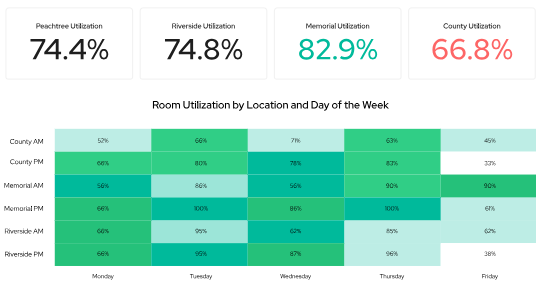
QGenda is primarily a healthcare workforce scheduling platform. Its credentialing module exists as part of the broader ProviderCloud workforce suite. The defining differentiator is that credentialing status is natively integrated with scheduling. If a provider’s credential is about to expire, the scheduling system flags it. If a provider finishes credentialing, they become schedulable immediately without a manual handoff.
Custom enterprise pricing based on organization size and the number of modules.
Best for: Mid-market organizations and staffing firms needing highly configurable credentialing workflows
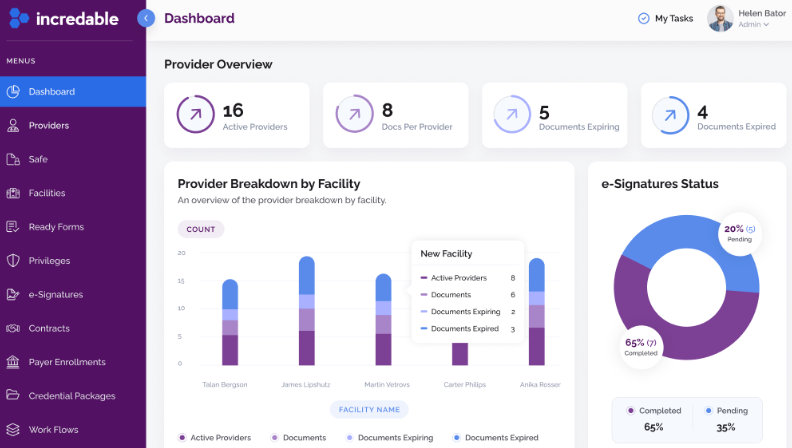
Incredable is a credentialing platform built by people who have worked in healthcare and know how messy credentialing can get in real life. One of the main things it leans into is flexibility. Teams can adjust workflows, forms, reporting fields, and payer tracking to match how they already work, instead of forcing everything into a rigid setup.
It covers the core pieces most teams care about, like document storage, expiration alerts, OIG and sanctions monitoring, payer enrollment tracking, license verification, task management, privileging, appointment workflows, and reporting.
Flat-fee model with no per-provider costs. Custom pricing upon request.
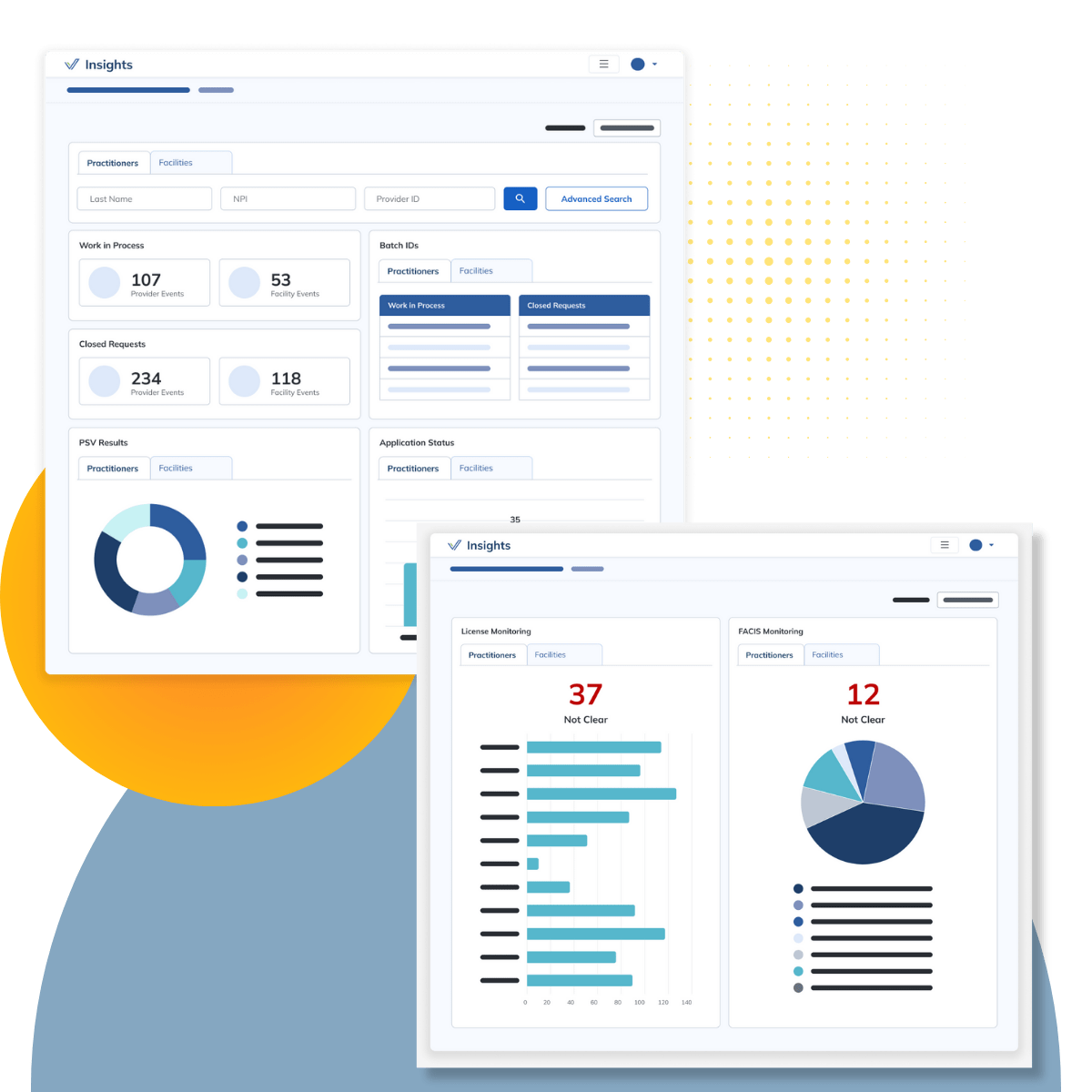
Best for: Healthcare organizations that need credentialing, provider data management, and ongoing compliance monitoring in one system, particularly larger organizations managing high provider volumes.
Verisys combines healthcare credentialing, provider data management, and compliance screening with its own proprietary provider data. A big part of its value is the data layer behind the platform, which includes information on sanctions, exclusions, licenses, and other regulatory and compliance records.
You can use Verisys for primary source verification, ongoing license and credential monitoring, and broader compliance screening. It also offers credentialing workflows covering everything from application gathering and PSV to committee review and recredentialing, so it's more than just a verification database.
Verisys doesn't publish standard pricing, so you'll need to contact the company for a quote.
Clarify what you need the platform to do. There is a real difference between a tool that stores credential data and one that submits applications, follows up with payers, and manages compliance. Knowing which category you need narrows the list immediately.
Plan for where you are headed, not just where you are. A platform that works at 20 providers in one state often falls apart at 100 providers across five states. If growth is part of the plan, factor in multi-state licensing and scalable enrollment in your decision.
Check for NCQA CVO certification. If delegated credentialing is on your roadmap, your vendor needs to be certified. Not every platform on this list qualifies.
Evaluate the support model. When a payer loses an application or changes a requirement mid-cycle, response time matters. Ask prospective vendors about SLA specifics: what they cover, what falls outside scope, and what happens when deadlines are missed.
Ask who is doing the work. Some platforms use in-house credentialing specialists. Others rely on offshore BPO teams. The difference shows up in first-pass rates and follow-up quality.
Choosing credentialing software comes down to one simple question. Do you want a system that only organizes your files, or one that actually moves credentialing forward?
Many platforms in this guide are solid, depending on what you need. Some are great for document management. Others fit large hospital systems with complex medical staff structures. But if your goal is to credential providers faster, reduce administrative work, and avoid revenue delays, the platform needs to do more than store data.
That is exactly what we built Assured for. If you want to see how fast modern credentialing can run, book a demo with Assured and we'll show you exactly how it works.
Credentialing software manages the verification of healthcare providers' qualifications (education, state licenses, board certifications, DEA registration, malpractice history, and sanctions status) against primary sources before they treat patients.
The best platforms also handle ongoing monitoring (so you know immediately if a license lapses or a sanction is posted), expirables tracking (proactive alerts before renewals are missed), and CAQH management (keeping the industry's standard data repository in sync). Credentialing software is distinct from payer enrollment software, which handles the separate process of submitting providers to insurance networks for reimbursement.
Delegated credentialing is a formal arrangement in which a health plan accepts a physician group's credentialing decisions rather than running its own credentialing process for each provider. The operational impact is significant; instead of waiting months per provider per payer, a delegated group submits a roster, and the provider is recognized in-network. Achieving delegation requires typically 6 to 12 months of documented, NCQA-compliant credentialing history as a prerequisite.
The platform you're using today either builds that record or doesn't.
Not in every case. But if you're pursuing delegated credentialing, have health plan partners who audit your process, or need to demonstrate compliance to accrediting bodies, yes. "NCQA compliant" is self-declared. "NCQA CVO certified" is independently audited by NCQA against specific verification standards.
Among the platforms in this guide, Assured holds NCQA CVO certification.
Four that reveal the most:
(1) What is your documented first-pass approval rate, and how do you calculate it?
(2) Can we license the software without the managed service, and what does that look like?
(3) What is your current NCQA CVO certification status, and can I see the letter?
(4) Can you show me live how the platform handles an expired license or a flagged OIG result? A vendor that answers all four without hesitation is worth continuing to evaluate

Assured Health, Inc.
333 Seventh Ave, Suite 1701
New York, NY 10001



.svg)