
California AB 1041: What Health Plans and Credentialing Delegates Need to Know Before 2027 and 2028

Varun Krishnamurthy
September 28, 2026
NCQA certification is the clearest signal that a credentialing vendor verifies provider credentials to a national standard, and the foundation payers look for before granting delegated credentialing. We evaluated eight NCQA-certified solutions on verification scope, turnaround speed, delegation support, and automation depth. Here are our top three picks:
We built Assured after scaling a provider network from 0 to 150+ providers across 15 states and living every credentialing bottleneck firsthand. Today, we are an NCQA-certified CVO serving enterprise health systems like Houston Methodist, multi-entity provider groups operating across many states, and growth-stage digital health organizations nationwide, so we know this space: the vendors, the gaps, and what actually works when a payer audits your files.
| Solution | NCQA Scope | Best For | Turnaround | Delegated Cred. Support |
|---|---|---|---|---|
| Assured | All 11 elements | Enterprise health systems, multi-entity provider groups, and growth-stage digital health organizations | 48-hour credentialing | Yes, full support + audit trails |
| Sagility | All 10 elements | Health plans, large outsourced credentialing programs | SLA-based, BPM-style delivery | Yes, full committee and audit support |
| Symplr CVO | All 11 | Enterprise hospitals/health systems | Up to 75% time reduction | Yes, full support |
| Verisys | NCQA + URAC | Compliance monitoring, payers | Largely real-time data | Yes, virtual committee |
| HealthStream | NCQA CVO | Hospitals and health systems | Standard CVO SLA | Yes, via CredentialStream |
| Welter Healthcare Partners | NCQA + URAC | Physician practices, provider groups | Expedited, SLA-based | Yes, incl. delegation audits |
| Andros | NCQA (strictest level) | Health plan network operations | Often under 14 days | 10x faster than industry average |
| Medversant | NCQA + URAC | Health plan and payers | SLA-based | Yes, virtual review committee |
Every solution below holds active NCQA CVO certification, cross-checked against the NCQA Report Card. They are ordered by overall fit for healthcare organizations, but always confirm current certification status before contracting.
Best for: Enterprise health systems, multi-entity provider groups, and growth-stage digital health organizations needing fast, NCQA-aligned credentialing with continuous compliance monitoring
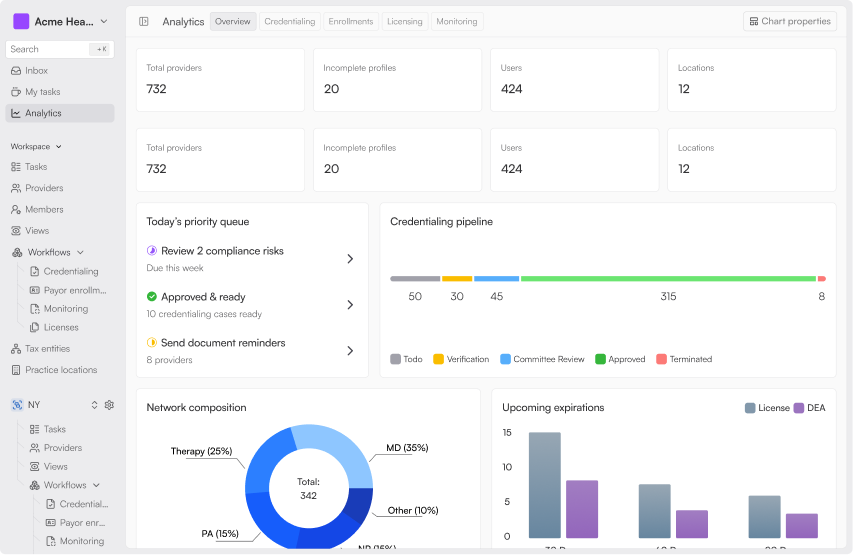
Assured is an AI-powered credentialing platform for enterprise health systems and growth-stage healthcare organizations that need to credential providers fast, stay continuously compliant, and scale. We handle the full credentialing lifecycle: data collection from CAQH, NPPES, DEA, and state medical boards; automated parallel PSV across 2,000+ sources; NCQA-compliant file generation; and expirables management, all in one system. Our platform is built to NCQA’s 2025 standards, including the compressed 90-day PSV window and the updated ongoing monitoring requirements.
We are NCQA-certified across all 11 verification elements, the broadest scope available. That matters because payers can grant automatic credit for Assured’s verification work when evaluating delegated credentialing arrangements, materially shrinking audit scope on the client side.
The difference between Assured and most platforms in this category comes down to execution speed. Assured credentials providers in 48 hours on average. The industry standard is 60 to 120 days. That gap exists because Assured’s PSV engine verifies credentials across 2,000+ primary sources in parallel, not one database at a time.
Accuracy is the other differentiator. Assured’s AI validates every credentialing packet before it leaves the platform, catching data mismatches, missing documents, and credential conflicts before they become committee rejections, audit findings, or revalidation failures.
Scales with provider volume. Customers pay for what they use.
Best for: Health plans and large healthcare organizations wanting a tech-enabled, NCQA-certified outsourced CVO with global delivery scale
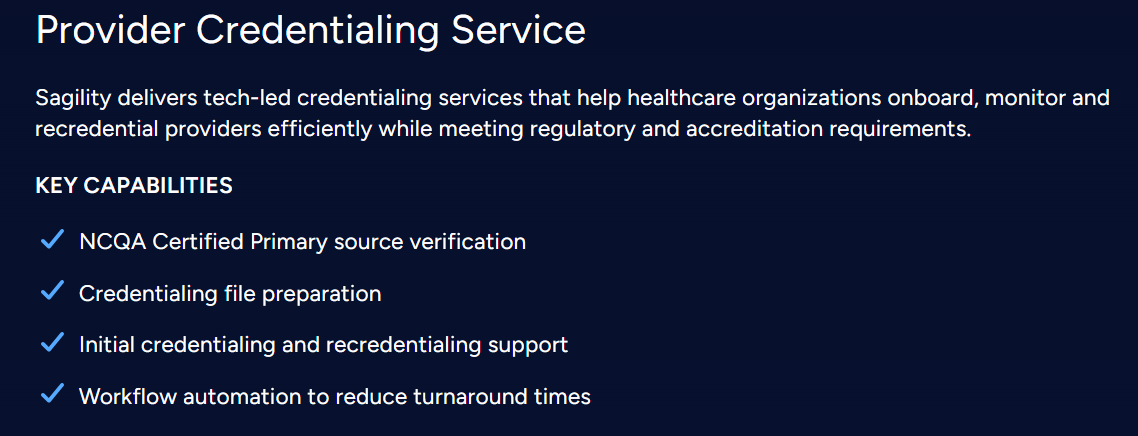
Sagility is a tech-enabled healthcare business process management firm whose Credentials Verification Organization holds NCQA certification across all 10 verification services. The company partners with major US health plans and large provider organizations, delivering credentialing through its proprietary Provider Forward™ workflow platform combined with global delivery teams.
Sagility’s Provider Network Operations services include application review, outreach to obtain missing information, primary source verification, committee routing, and ongoing monitoring. With more than 25,000 employees globally, the company runs high-volume credentialing and is well-suited to organizations that need outsourced scale rather than an in-house platform.
Custom, quote-based.
Best for: Healthcare organizations wanting a legacy CVO embedded in a broader governance suite
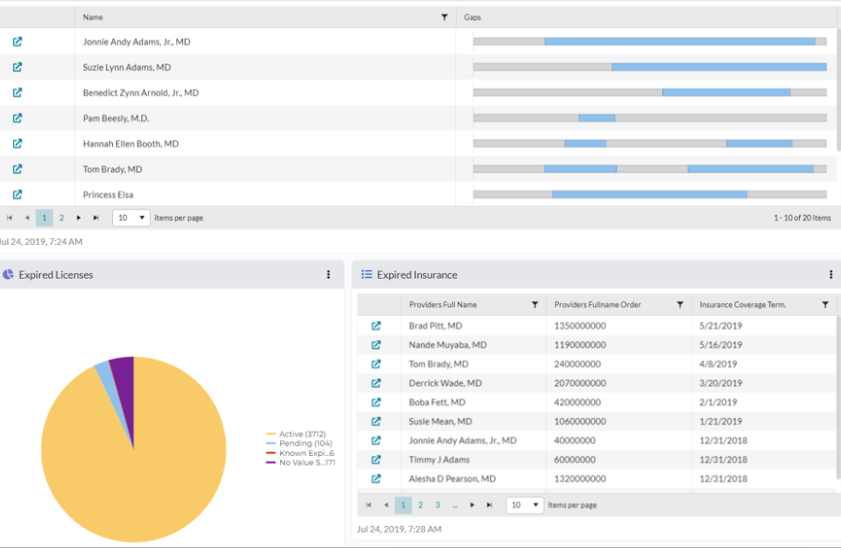
Symplr CVO is the credentialing-verification arm of Symplr, a healthcare operations software company deployed in the vast majority of US hospitals. The CVO pairs an automated workflow engine with hundreds of credentialing specialists and more than 35 years of operating history.
Symplr holds both NCQA accreditation and certification across all 11 verification areas. Independent Black Book surveys have rated Symplr the top CVO vendor in the industry.
Custom, quote-based.
Best for: Health plans, health systems, and pharmacies that prioritize exclusion screening and continuous compliance monitoring
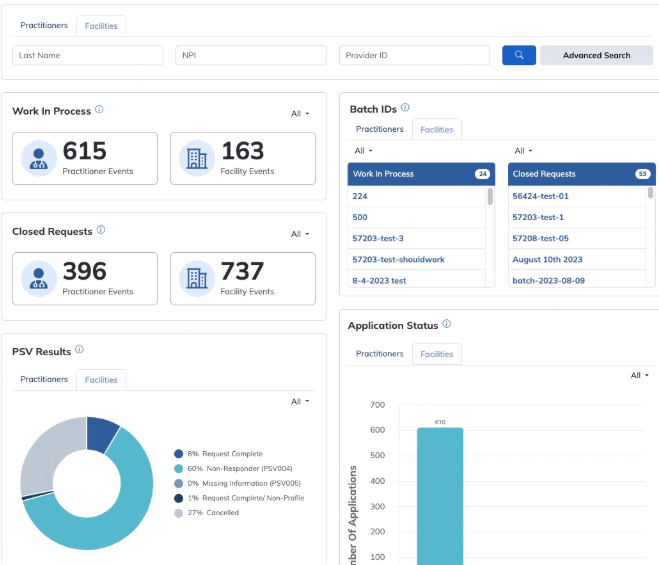
Verisys is an outsourced CVO in the United States with more than three decades of operating history. It is both NCQA-certified and URAC-accredited. The company is best known for FACIS, its proprietary exclusion and sanctions database that aggregates federal, state, and commercial adverse-action data into a single searchable layer.
Verisys also provides virtual credentialing committee services, real-time license verification, and continuous monitoring across all provider and taxonomy types nationwide.
Custom, quote-based.
Best for: Hospitals and health systems needing credentialing, enrollment, and clinical privileging in one governance-grade platform
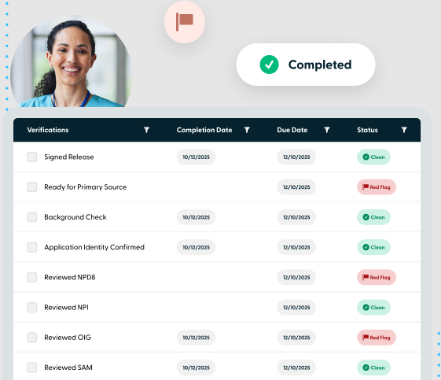
CredentialStream, now under HealthStream Credentialing, manages credentialing, enrollment, and privileging for hospitals and health systems. HealthStream's NCQA-certified CVO has operated since 1998, and its OneClick CVO option lets CredentialStream users send files for verification on a pay-as-you-go basis.
The platform also integrates with Epic and other EHR systems and holds HITRUST r2 certification for data security.
Custom quote.
Best for: Physician practices, provider groups, and healthcare organizations needing enrollment, credentialing, and practice management support
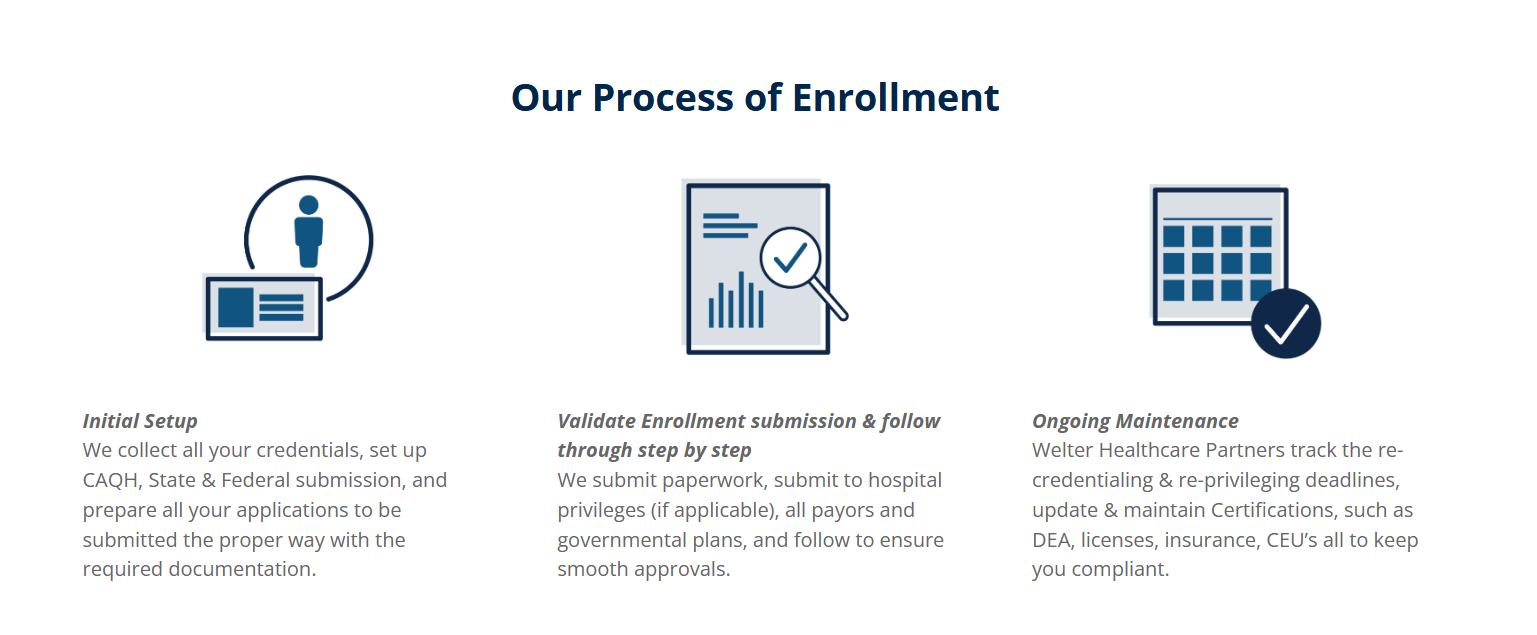
Welter Healthcare Partners is a healthcare business-management firm with a 30-plus-year history whose CVO holds both URAC accreditation and NCQA certification, a combination only a small group of organizations carries.
The team provides primary source verification, credentialing and recredentialing, pre-delegation and annual delegation audits, ongoing sanctions monitoring, and configurable reporting.
Custom, quote-based.
Best for: Health plans and large provider networks managing network development and credentialing as a combined function
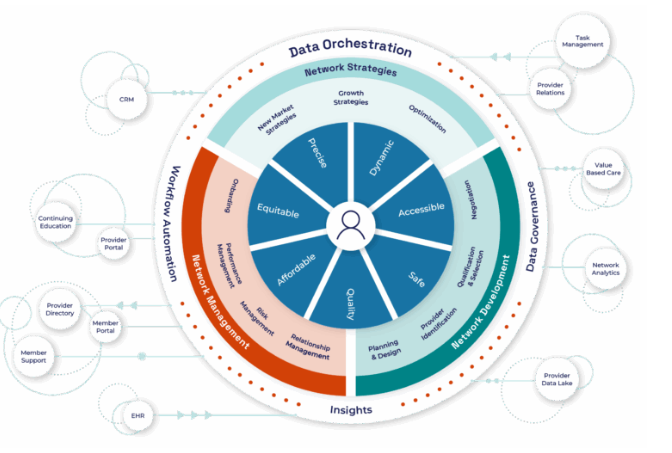
Andros is an NCQA-certified CVO and network-management platform built primarily for health plans. It combines network lifecycle management (recruiting, contracting, credentialing, and monitoring) on a single platform, with a provider data repository covering over 8 million providers.
Its data-matching algorithms automate PSV, and the company says that two out of three applications are completed without direct provider input. The platform is designed around health-plan network workflows, so growth-stage provider organizations should confirm fit on day-to-day credentialing operations.
Custom pricing based on organizational scope and volume.
Best for: Health plans and payers, public sector, pharmacy, and PBM providers
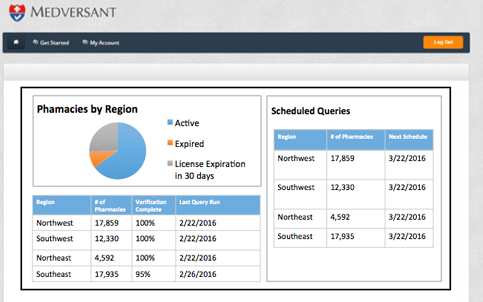
Medversant is a credentialing technology company whose ProviderIQ platform combines primary-source verification, provider data management, and continuous monitoring. It holds NCQA CVO certification across the available verification elements.
Its patented verification technology captures date-stamped source images alongside each verification, giving audit teams a clear evidence trail. The platform also includes modules for network enrollment, virtual review committees, and provider directories.
Custom, quote-based.
We used five criteria to evaluate each solution. Here is what we looked at and why it matters.
Certification covers up to 11 evaluation elements, but not every CVO is certified for all of them. We confirmed each vendor's certification status against the NCQA Report Card and noted whether the scope was full or partial, since gaps can surface.
NCQA compressed the primary source verification window from 120 to 90 days for CVO-track organizations in 2025. We evaluated how each solution performs against that tighter window and whether turnaround benchmarks are published or undisclosed.
We assessed committee management capabilities, pre-delegation and annual audit readiness, and whether the CVO's certification earns payers automatic NCQA credit, which directly reduces audit scope.
We looked at how much verification is genuinely automated versus manual, including whether PSV runs in parallel, whether pre-submission validation catches errors before files go out, and whether the platform provides real-time dashboards.
We evaluated ongoing sanctions and expirables monitoring, including how quickly issues are flagged. We also factored in support response times, since NCQA standards and verification source behavior shift constantly, and missed deadlines translate directly into credentialing delays.
Choosing an NCQA-certified credentialing solution comes down to one question: Do you want a CVO that only verifies credentials, or one that also handles payer enrollment, licensing, and monitoring in the same system?
If your goal is to credential providers faster, reduce administrative work, and avoid revenue delays, see how Assured works, and we will show you exactly how it runs.
NCQA has independently reviewed the organization's verification operations and confirmed it meets national standards for primary source verification. Certification signals reliability to payers and reduces audit risk.
Certification applies to CVOs performing verification on behalf of others. Accreditation applies to organizations owning the full credentialing process, including a committee. If buying a vendor, certification is the standard to look for.
Check the NCQA Report Card directory directly and ask the vendor for the current certification documentation that lists which evaluation elements are covered.
Effectively, yes. Payers grant delegation to organizations that meet NCQA standards, and a fully certified CVO allows the payer to apply automatic credit for verification work, reducing the audit scope.
They span application processing, education, licensure, DEA, board certification, malpractice, federal and state sanctions, ongoing monitoring, and work history. A CVO can be certified for all 11 or only some. Confirm the scope before signing.

Assured Health, Inc.
333 Seventh Ave, Suite 1701
New York, NY 10001


.svg)