

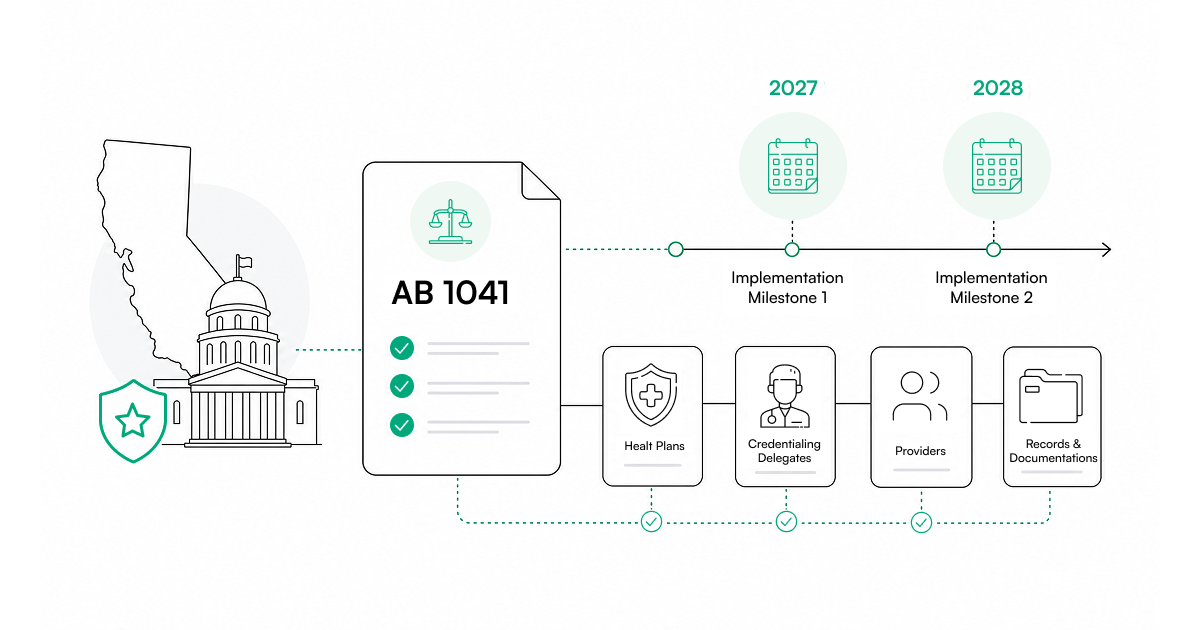
California AB 1041: What Health Plans and Credentialing Delegates Need to Know Before 2027 and 2028

Varun Krishnamurthy
September 25, 2026

Dental credentialing and payer enrollment together still lock new associates out of billing for 60–120 days, and every week an associate can’t bill is lost revenue. AI-native credentialing platforms now reduce submission timelines to 48 hours. This guide compares 8 dental credentialing solutions across CVOs, BPOs, enterprise software, and AI platforms, matched to practice size and growth stage.
What dental practices call "credentialing" is actually two jobs glued together. Credentialing verifies the dentist’s qualifications — license, education, malpractice, and primary source verification. Payer enrollment is the application to join a specific network: Delta Dental, Cigna, MetLife, Aetna, Guardian, or state Medicaid. Each payer runs its own forms, portals, and panel rules, and each enrollment requires its own back-end credentialing verification.
With 83% of Americans having dental benefits, getting both jobs done quickly determines how fast new associates start producing. New associate dentists routinely sit on payroll 90+ days without billing a single claim, and AI platforms are now cutting both timelines from months to days.
We have reviewed 20+ credentialing platforms and BPOs serving the dental space, drawing from buyer interviews, vendor demos, NCQA certification records, and customer testimony. Picks below reflect real fit by practice size and need, not pay-to-play ranking. Each was evaluated on speed, automation depth, payer coverage, pricing transparency, and support quality.
| Tool | Best For | Credentialing Speed | NCQA Certified | AI Automation |
|---|---|---|---|---|
| Assured Health | Enterprise-ready for scaling dental groups & DSOs (20–200+ providers, multi-entity) | 48 hours (fastest published) | Yes, all 11 elements | Full-stack AI, CAQH import, parallel PSV, payer auto-fill, monitoring |
| Fluent Dental | DSOs & dental plans needing dental-only NCQA CVO with delegation | Faster via delegation arrangements | Yes, dental-only CVO | Online client portal; service-led |
| CredentialStream | Hospital-owned dental depts & large enterprise groups | Standard enterprise timeline | Implied via HealthStream compliance stack | Limited; workflow automation, not AI-native |
| Overjet | DSOs using Overjet clinical AI wanting credentialing in same platform | Not publicly specified | No, HITRUST & SOC 2 only | AI credentialing + imaging + insurance verification in one platform |
| Capline Dental Services | Solo & small group practices wanting credentialing + billing in one vendor | Not specified | No | Minimal; service-led BPO |
| Dental Xchange | Dental practices and DSOs looking to streamline claim processing, payments, etc. | Fast | No | Strong AI capabilities |
| Credex Healthcare | Solo & small practices wanting transparent pricing + tracking portal | Not specified | No | Portal-based tracking; limited automation |
| CureMD Dental Credentialing | Practices wanting credentialing within a broader EHR + RCM platform | Not specified | No | Service-led; tied to practice management suite |
Best for: DSOs and scaling dental groups running acquisition-driven, multi-entity growth that need enterprise-grade credentialing, licensing, payer enrollment, and continuous monitoring on a single platform.
.png)
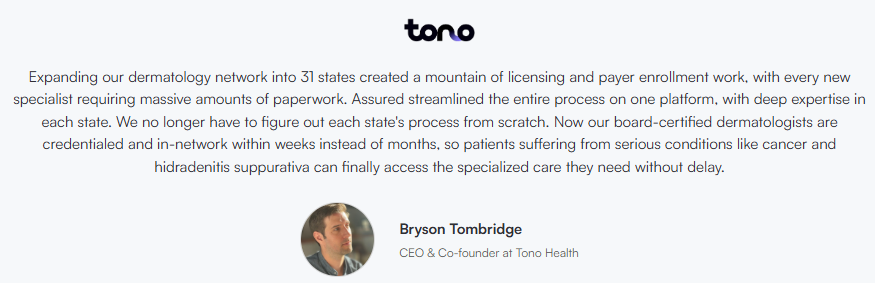
Assured is an AI-powered credentialing and payer enrollment platform built for the way DSOs actually grow: through acquisitions and fresh openings. Every acquired practice brings a new tax entity, new group contracts, and a roster of dentists who must be linked to payers under the DSO’s TINs.
Every associate hire or departure triggers another round of add/term updates across Delta Dental’s state member companies, MetLife, Cigna Dental, Guardian, and Medicaid dental administrators like DentaQuest and MCNA. Where most dental credentialing vendors quote 60 to 120 days, Assured delivers committee-ready files within 48 hours of complete documentation and initiates payer enrollment submissions within 72 hours, at a 95%+ first-pass approval rate.
Our platform models DSO structure natively: multiple tax entities with many-to-many mapping of TINs, NPIs, and practice locations, so an acquired group’s providers and locations slot into your existing data structure instead of another spreadsheet. It covers credentialing, licensing across all 50 states, payer enrollment, and continuous compliance monitoring, with AI embedded at every step.
Assured is trusted at enterprise scale. Houston Methodist and Platinum Dermatology Partners, a private-equity-backed multi-site specialty group running the same acquisition-and-integration playbook as a DSO, both run on the platform and are NCQA-certified across all 11 verification elements, the audit standard payers require for delegated credentialing.
Best for: Dental insurance payers, DSOs, and dental groups needing a dental-only NCQA-accredited CVO with established delegated credentialing arrangements.
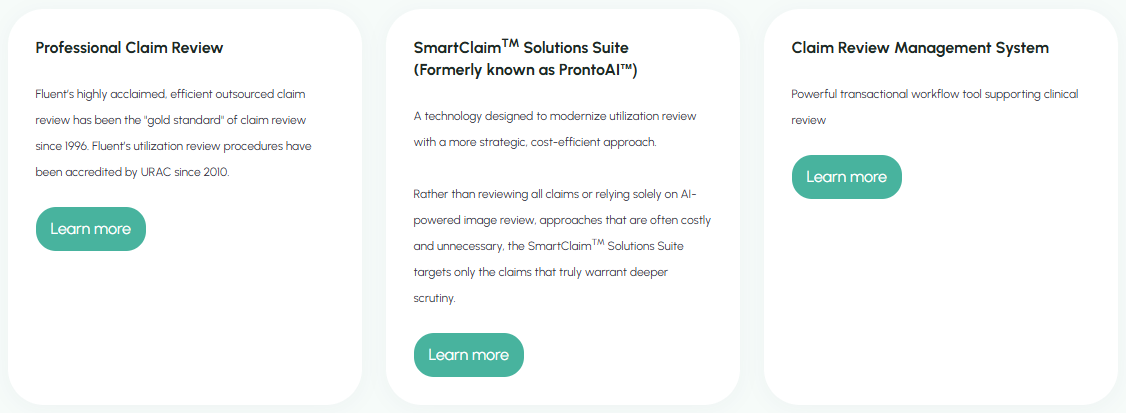
Fluent Dental is the only dental-specific NCQA-accredited Credentialing & Recredentialing Organization, with two complementary lines: Dentistat, the longstanding CVO (founded 1968, acquired by Fluent in 2023), which handles primary source verification and recredentialing for dental plans; and Fluent Credentialing (formerly Delegated DDS, acquired 2024), which provides full delegated credentialing for DSOs with direct payer arrangements that compress in-network effective dates.
Fluent also offers a separate payer enrollment service for payers without delegation programs, making it one of the few vendors covering the full dental credentialing and enrollment stack. The team is dental-specialized and familiar with Delta Dental, MetLife, Cigna Dental, Aetna Dental, and Guardian panels.
Contact sales for pricing
Best for: Hospital-owned dental practices and large enterprise dental groups that need credentialing, privileging, and enrollment in a single mature system.
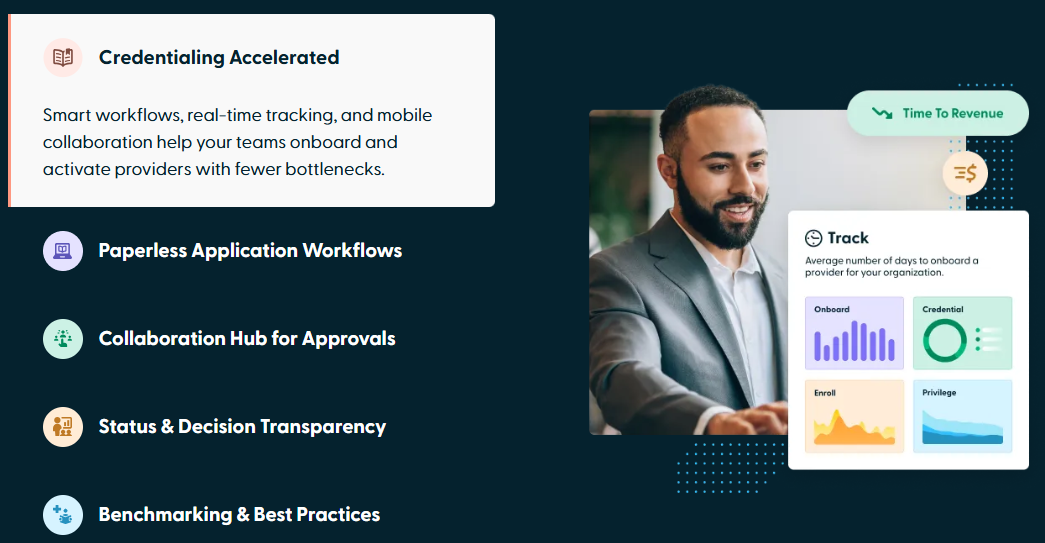
CredentialStream by HealthStream (formerly marketed under the VerityStream brand) is an enterprise credentialing platform with a library of nearly 900 preformatted dental enrollment applications. It covers credentialing, privileging, and enrollment workflows in one unified system, with national benchmarking and HITRUST r2-certified compliance reporting.
Best suited to hospital systems with dental departments and large dental enterprises with formal committee review processes. Implementation is heavier than newer platforms, and AI automation is less prominent. The strength is workflow depth and database maturity.
Custom pricing, contact sales
Best for: DSOs already using Overjet's clinical AI who want to consolidate credentialing into the same platform as imaging and provider analytics.
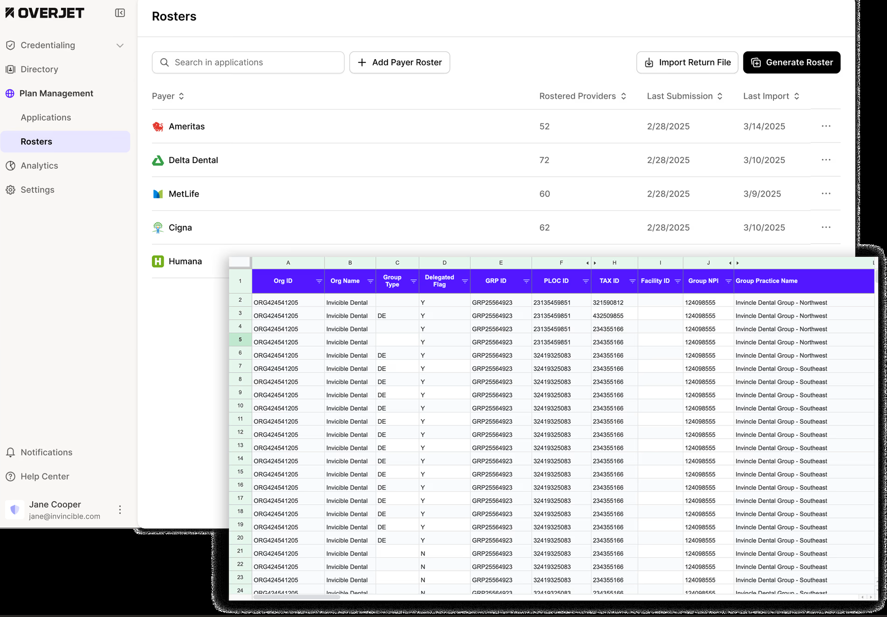
Overjet, best known for its FDA-cleared dental imaging AI used by 9 of the 15 largest DSOs and 6 of the 10 largest dental insurers, launched its all-in-one Dental Credentialing Suite in late 2025 — bringing AI-powered credentialing and delegated credentialing as defined product lines alongside its clinical and revenue cycle suite. The pitch is consolidation: clinical performance, insurance verification, and credentialing data on one platform.
Provider performance tracking sits alongside credentialing data, providing DSO operators with a single view of imaging quality, insurance verification, and compliance. Strong fit for DSOs already running on Overjet’s clinical AI.
Contact sales for pricing
Best for: Solo dentists and small-group practices seeking credentialing bundled with billing, RCM, and back-office support through a single vendor relationship.
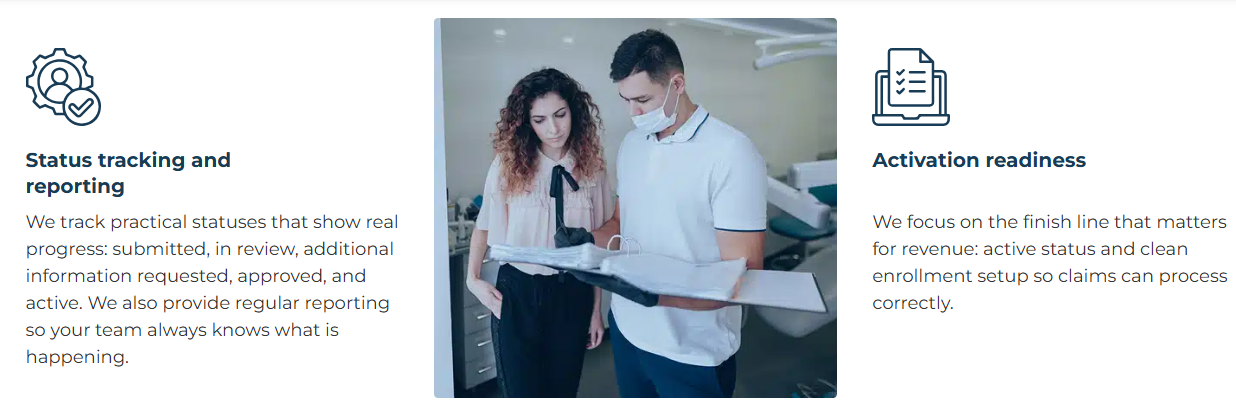
Capline is a Houston-based dental BPO with 12+ years of dental industry experience, bundling credentialing with billing, RCM, claim follow-up, and patient statements. Strong fit for solo practitioners and small groups that want one vendor for back-office instead of stitching together specialists.
Their team handles CAQH setup, payer enrollment, re-credentialing, and bi-weekly status reporting, with familiarity across dental panels including Delta Dental, MetLife, Cigna Dental, and state Medicaid programs. The trade-off is a service-led model with limited platform-style dashboards.
Capline bundles credentialing into broader RCM packages priced as a percentage of insurance collections (3.5% of insurance collected under $100K/location/month, scaling to 2.5% above $150K, with a $999/month tier for offices under $30K in collections).
Best for: Dental practices and DSOs that already use DentalXChange for claims and want credentialing in the same vendor relationship.
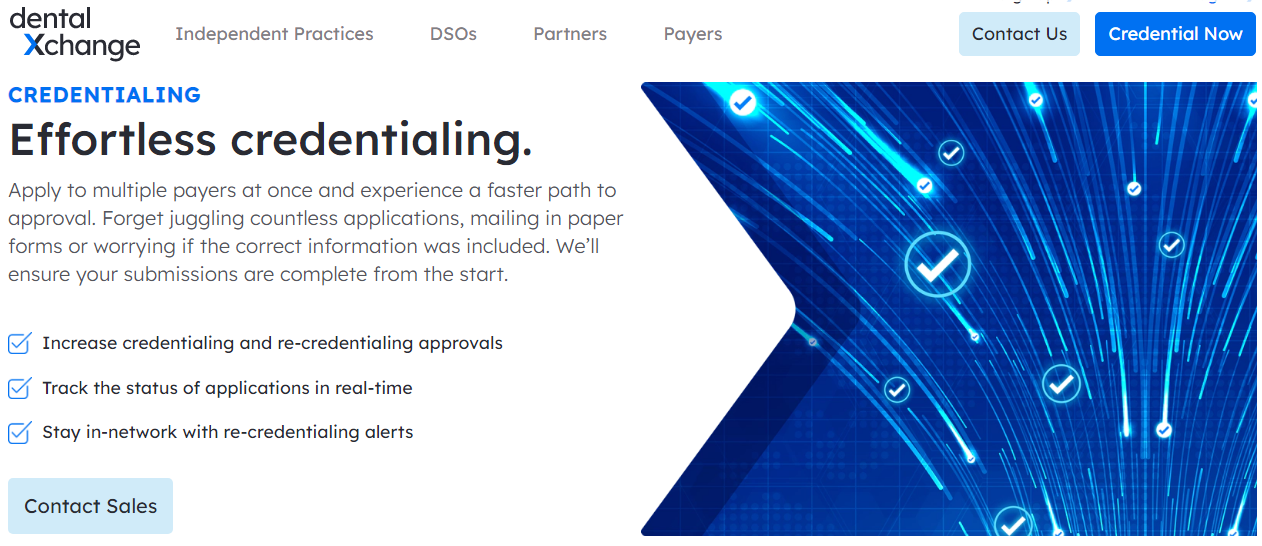
DentalXChange’s CredentialConnect, launched in January 2024, is an all-payer dental credentialing platform that enables practices to complete and submit credentialing and enrollment applications to dental payers through a single interface. It sits inside DentalXChange’s broader dental clearinghouse (107,000+ providers, processing 71M+ claims annually), so practices already using DentalXChange for claims get credentialing as a natural extension.
CredentialConnect digitizes nearly every dental insurance company’s credentialing forms into a single platform, with a three-step submission process, document repository, automated re-credentialing reminders, and primary source verification automation. Better suited to dental-only credentialing than complex multi-state, multi-line healthcare needs.
Pay-per-application with no monthly fees or minimums for CredentialConnect; broader RCM modules priced separately.
Best for: Solo and small dental practices seeking a credentialing partner with a dedicated dental line, multi-state coverage, and a portal to track applications and document expirations.
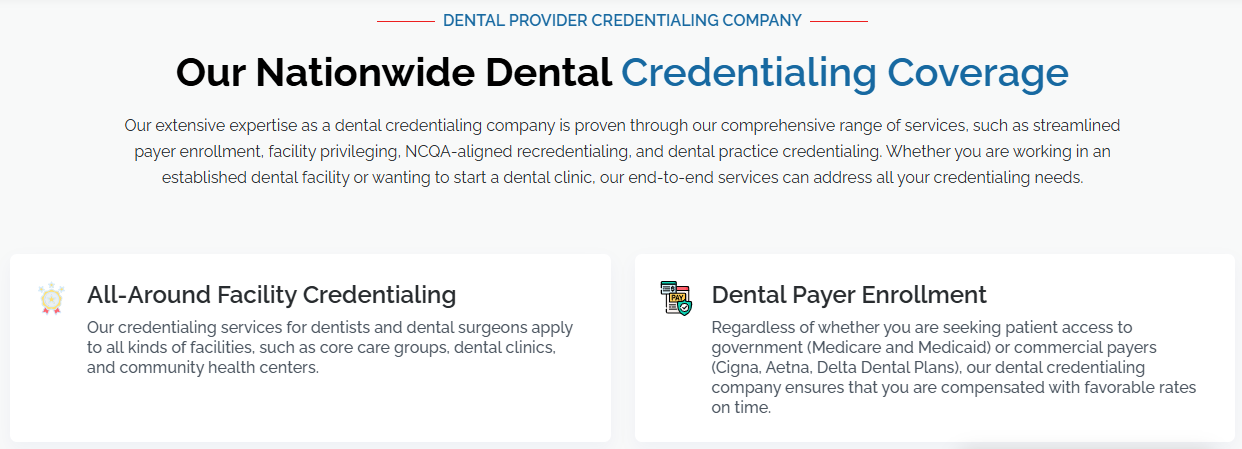
Credex Healthcare is a Jacksonville, FL-based credentialing and RCM company with a dedicated dental credentialing line serving solo, group, and DSO dental practices across all 50 states. The differentiator is a portal-based tracking model with expiration alerts — a step up over pure email-and-phone BPOs — and 12+ years of experience across credentialing, billing, and licensing.
Services cover solo and group dental credentialing, recredentialing, facility credentialing, CAQH and PECOS maintenance, teledentistry credentialing, and expiration alerts on licenses, malpractice, and credentials. Less automation depth than AI-native platforms, but the tracking portal and dental-specific workflow make it a solid mid-market fit.
Contact sales for pricing
Best for: Dental practices seeking credentialing as part of a broader practice management ecosystem that covers EHR, RCM, and patient management.
CureMD offers dental credentialing as part of its broader practice management suite. Services span initial enrollment, payer credentialing, re-credentialing, ongoing compliance, and DMEPOS enrollment for dental providers handling oral appliances and prosthetics.
The angle is single-vendor across credentialing, billing, EHR, and revenue cycle, useful for practices already on CureMD's core platform. Standalone credentialing buyers comparing against dental-only specialists may find the offering narrower in dental-specific panel depth.
Custom pricing, contact sales.
A pure CVO like Dentistat verifies qualifications but won’t submit your application to Delta Dental. A payer-enrollment platform, such as CredentialConnect, submits applications but isn’t an NCQA CVO. Most growing groups need both, which is why full-stack platforms (Assured, CredentialStream, Overjet’s late-2025 suite) tend to win at scale.
Solo dentists and small groups with fewer than 10 providers are usually best served by dental-only BPOs like Capline or Credex. Growing groups in the 10-50 provider range, especially those expanding across multiple states, benefit from AI platforms with full-stack capabilities. DSOs and large enterprises need delegated CVOs like Dentistat or enterprise software like CredentialStream.
This is the metric most vendors avoid. If a vendor cannot tell you their first-pass rate, that is the answer. A 60% first-pass rate doubles your timeline.
Final approval depends on the payer; submission speed is within the vendor's control. AI-native platforms commit to 48 to 72 hours from receipt of documentation.
Full certification across all 11 NCQA verification elements matters for delegated credentialing audits with payers.
Ask exactly where AI runs: auto-fill, PSV, or monitoring? If the demo shows a polished interface but no visible automation underneath, that is a service company with a UI.
Verify the vendor has experience with the specific dental panels you need like Delta Dental, MetLife, Cigna Dental, state Medicaid dental, and Medicare Advantage dental plans.
Dental credentialing has shifted from a manual BPO grind to AI-powered platforms that compress months into days. The right choice depends on your scale and trajectory.
Solo and small practices doing predictable, low-volume credentialing usually do well with a dental-only BPO. Hospital-owned dental departments and large enterprise groups need mature credentialing software like CredentialStream. Scaling dental groups and DSOs expanding multi-state, where credentialing speed directly impacts revenue, benefit most from AI-native platforms.
For groups in that scaling category, Assured Health is built specifically for the speed, first-pass rate, and platform breadth that scaling provider networks demand. Book a demo to see how multi-state credentialing runs in days, not months.

Assured Health, Inc.
333 Seventh Ave, Suite 1701
New York, NY 10001


.svg)