
We Reviewed The 6 Best MedTrainer Alternatives Worth Considering in 2026

Quick summary
MedTrainer is an all-in-one platform for healthcare teams that handles training, credentialing, and compliance in a single system. The bundle works for organizations that need all three under one vendor. For organizations whose actual bottleneck is credentialing execution and payer enrollment at scale, a credentialing-first platform tends to close the revenue gap faster. Our three highest-fit alternatives from a list of 6 reviewed:
Why buyers search for MedTrainer alternatives
People looking for MedTrainer alternatives usually fall into two groups:
- Those outgrowing MedTrainer's credentialing module
- Those weighing an all-in-one tool against a credentialing-first platform
Both are valid; they just tend to land on different shortlists.
The warning signs are usually the same. Credentialing takes forever; providers are on the payroll but can't bill yet; and one person is somehow keeping it all from falling apart.
That works at 50 providers but not at 200.
This guide covers what MedTrainer does well, where teams tend to outgrow it, and which six platforms are worth a look.
Why listen to us
We built Assured because we lived this problem firsthand. Scaling Dawn Health, a virtual sleep clinic from 0 to 150 providers across 15 states, taught us exactly where credentialing breaks down and why most tools can't keep up. Today, Assured is an NCQA-certified CVO serving enterprise health systems, multi-entity provider groups, and high-growth digital health companies. We've seen what works, what doesn't, and where every vendor breaks down.
What Is MedTrainer?
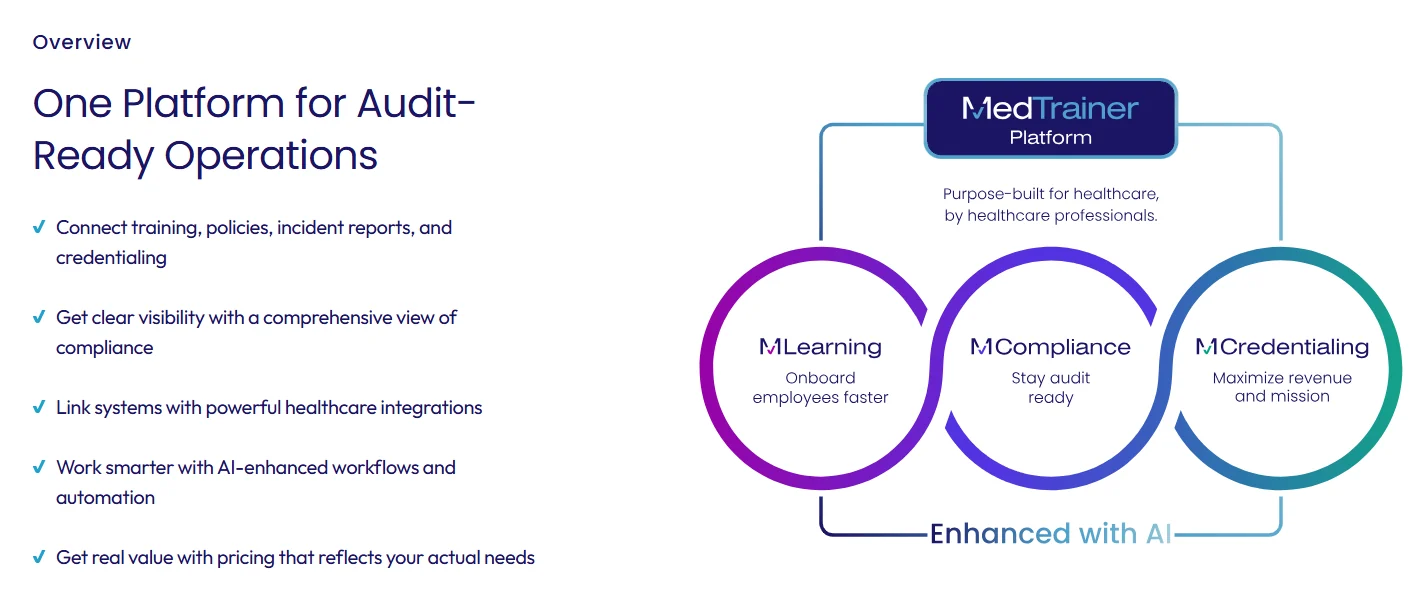
MedTrainer is a healthcare workforce compliance platform that's been around since 2013 and is used by 32,000+ healthcare facilities across the US. It brings three things together in one system. Staff training via a healthcare-specific LMS, credentialing with both self-serve and fully managed options, and compliance tools covering policies, documents, and incident reporting.
It covers a wide range of settings, from urgent care and physician offices to hospitals and behavioral health centers.
Key features
- LMS Course: Around 1,000 healthcare-specific courses covering HIPAA, OSHA, CMS, and accreditor requirements.
- Credentialing: Provider document collection, primary source verification, license verification, payer enrollment workflows, privileging, and exclusions monitoring.
- Managed Credentialing Services: A fully managed option where MedTrainer's team handles credentialing end-to-end. Built for organizations with 10 or more providers.
- Compliance: Policy creation, version tracking, electronic signatures, acknowledgment tracking, and incident reporting.
- HRIS integrations: It connects with ADP, Paylocity, UKG, Workday, and Paycom.
Pros
- MedTrainer consolidates LMS, compliance, and credentialing into a single vendor, reducing vendor sprawl for organizations that need all three.
- The course library is built specifically for healthcare workflows, with regulatory updates folded in as standards shift.
- AI-enhanced workflows are layered across credentialing tasks such as form auto-fill, exclusion monitoring, and document classification.
Cons
- MedTrainer is for small and medium-sized healthcare organizations, so enterprise health systems and multi-entity provider groups often outgrow it.
- Some users do not find the platform intuitive
- The incident reporting filters could be more flexible
Which brings us to the real question: what makes organizations start looking elsewhere?
Why look for a MedTrainer alternative?
MedTrainer does a lot of things well. But there are recurring patterns in user feedback worth knowing before you buy.
Credentialing depth sits inside a wider compliance suite
MedTrainer bundles credentialing inside a broader compliance suite. If payer enrollment speed and credentialing volume are your main bottlenecks, a credentialing-first platform like Assured will move faster and deliver higher first-pass approval rates.

When routine tasks become a chore
Users report that common tasks take more clicks than they should, and the platform can run slowly. Course assignment logic also gets unreliable when you unassign incomplete training.
Custom reporting is limited but manageable for a small team. It becomes difficult when running at scale.

When the system gets in your way
MedTrainer isn't always intuitive. Some functions aren't easy to find unless you already know where to look, and reassigning learning courses can be more painful. Support is responsive and usually resolves issues quickly, but you shouldn't need to call support for routine tasks.

Slow response when it matters most
Payer requirements shift frequently, and a stalled application means lost revenue while the application clears. One reviewer flagged that response times from the assigned credentialing rep can lag. If you need a same-day turnaround on enrollment application issues, that's a real problem.
These won't matter to every team. But if you're moving fast, credentialing at volume, or can't afford delays, they're worth keeping in mind.

Comparison table of the 6 best MedTrainer alternatives
How the 6 platforms compare across the parameters that credentialing buyers actually decide on.
The 6 best MedTrainer alternatives in 2026
1. Assured
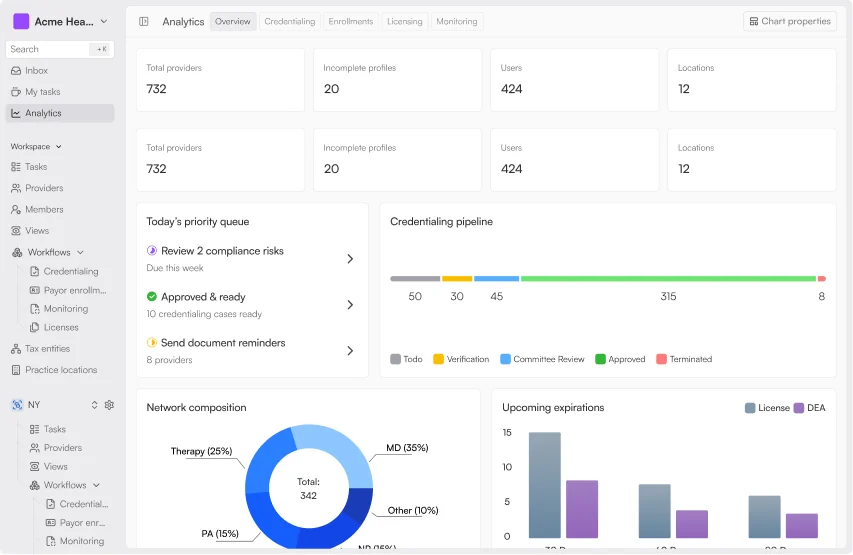
Assured is an AI-native platform that handles credentialing, payer enrollment, multi-state licensing, roster management, and continuous network monitoring within a single unified system. A single provider data model unifies credentialing, payer enrollment, licensing, and network monitoring, so one roster update flows through every downstream workflow with no re-keying between systems
Under the hood, the AI engine handles CAQH auto-import, parallel primary source verification across 2,000+ sources, payer form pre-fill, pre-submission validation, and portal submissions via browser agents.
Credentialing experts handle payer escalations and follow-ups inside the same workflow with full real-time visibility for the customer. Assured serves enterprise health systems such as Houston Methodist, multi-entity provider groups operating across multiple states, and growth-stage digital health organizations.
Key features
- 48-hour credentialing SLA - The industry standard is 60–120 days. Assured gets it done in 48 hours, from roster submission to a committee-ready packet.
- Parallel PSV - Primary source verification runs across 2,000+ sources simultaneously, not sequentially.
- AI-native payer enrollment: applications are auto-filled from CAQH, validated before submission, and automatically followed up. Submissions start within 72 hours.
- NCQA-certified CVO - Covers all 11 verification elements, reducing audit lift for delegation-ready buyers.
- Multi-state licensing - All 50 states covered, including IMLC, DEA/CSR, and FCVS. Renewals auto-initiated 60 days before expiration.
- Continuous network monitoring - We check OIG, SAM, state boards, Medicare, and Medicaid exclusion lists continuously. Any sanctions get flagged within 24 hours.
- Real-time visibility: See exactly where every provider stands with live dashboards, status timelines, and exportable reports.
Pros
- Around 95% first-pass approval rate on payer enrollment applications. Denials don't compound into 60-to-90-day rework cycles.
- Founder-led by operators who scaled Dawn Health's provider network from zero to 150+ providers across 15 states before starting Assured.
- Live status timelines, exportable reports, and a shared Slack channel with the Assured team keep every roster, submission, and follow-up visible in real time.
- Sub-24-hour support response times, with a dedicated implementation specialist and customer success manager assigned per account from day one.
- Go live in under 72 hours with CAQH data cleanup, direct profile auto-import from NPPES and state medical boards, and integrations into your ATS, EMR, and Salesforce.
Cons
- Newer than already established vendors
2. Symplr Provider
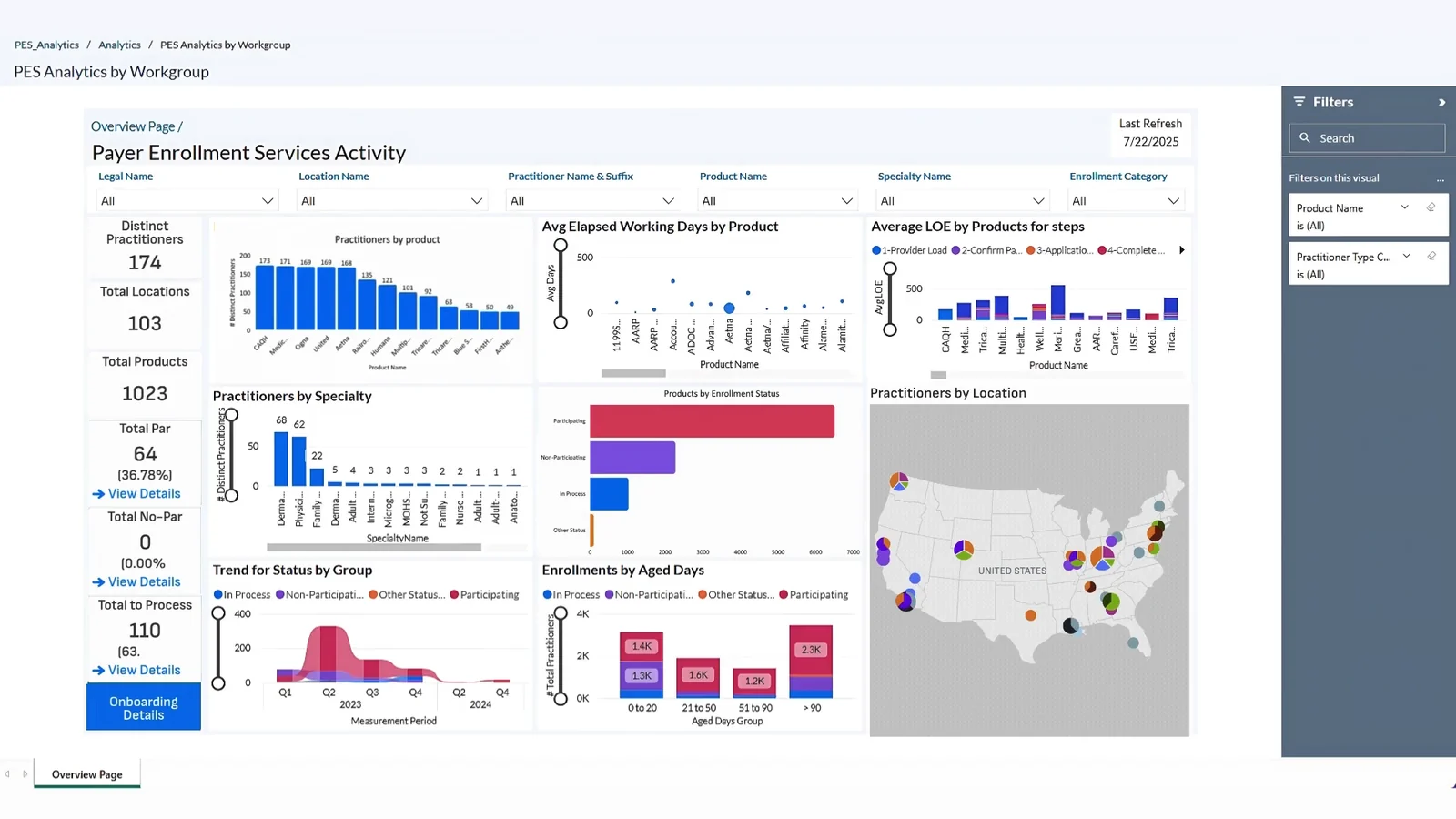
Symplr Provider is a cloud-based credentialing and privileging platform built on the Cactus engine. Acquired in 2017, it sits inside Symplr's broader workforce and GRC suite. Its natural-fit buyer is an enterprise hospital already running multiple Symplr modules. Hospitals like it for its deep privileges library and end-to-end credentialing coverage.
However, some reviewers flag declining support responsiveness and performance issues. For the deeper comparison, see our Symplr breakdown.
Key features
- Credentialing and privileging: Full lifecycle from application through committee review with the Cactus privileges library.
- 9,600+ delineated privileges library: Has embedded ICD/CPT codes across 250+ specialties.
- OPPE/FPPE integration: Quality and peer review data tied directly to credentialing decisions.
- Enrollment tracking: Roster templates, CAQH management, and payer-specific workflows built in.
- Symplr workforce suite tie-in: Scheduling, compliance, learning, and vendor management all under one vendor.
Pros
- Trusted by 9 out of 10 U.S. hospitals and 400+ health plans
- Providers upload documents once, and it is shared across all facilities automatically
- Rated well among the credentialing vendors in the 2025 Black Book survey
Cons
- Declining customer support responsiveness
- Web Cactus is slow for reports and document editing
- More clicks than needed to complete basic tasks
3. Modio Health
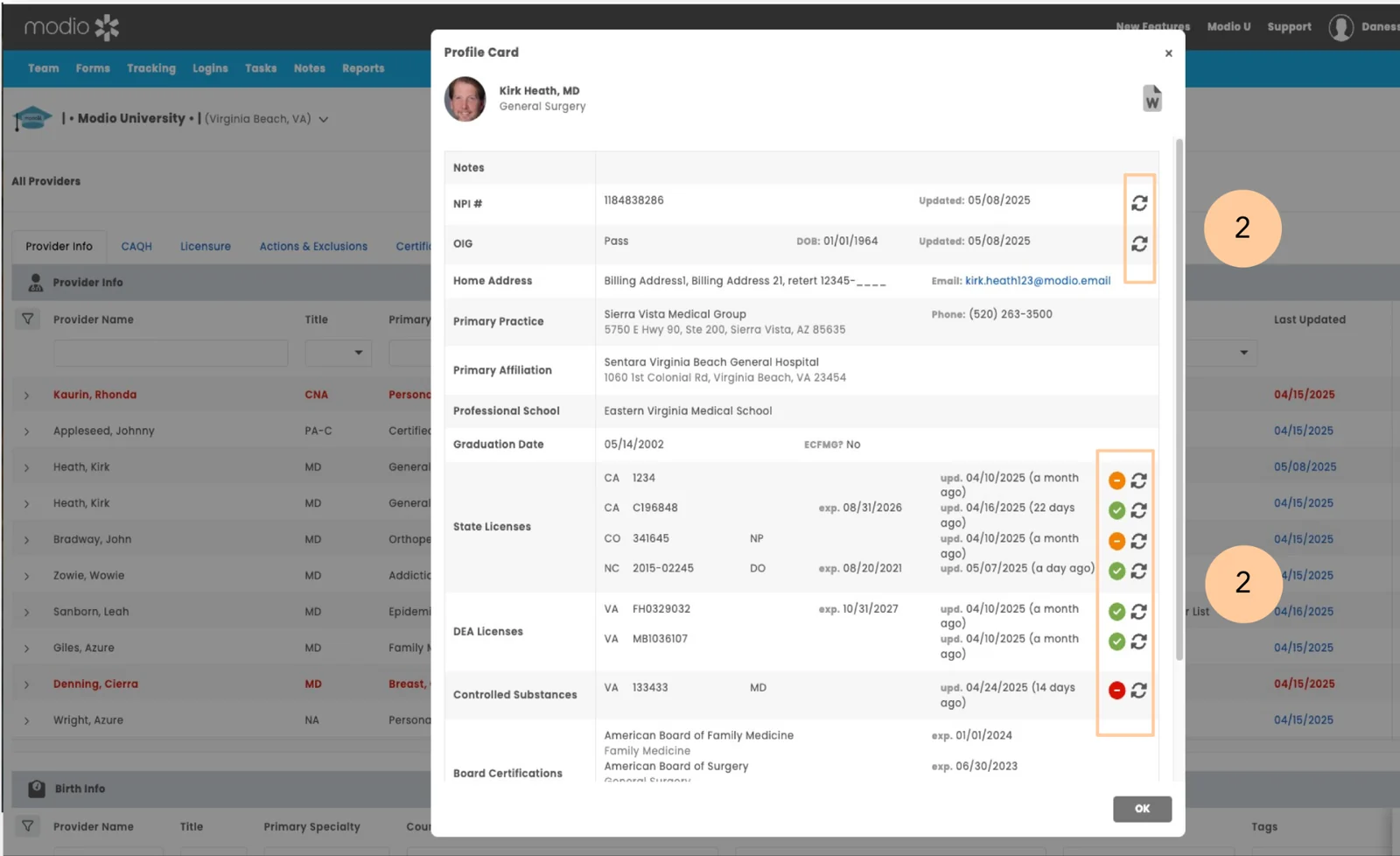
Modio Health's OneView is a cloud-based credentials management platform built for mid-market group practices, ASCs, and FQHCs. It centralizes provider profiles, license and DEA expirations, CAQH data, and document storage with proactive expiration alerts. Your team still handles submissions, follow-ups, and escalations manually because the platform doesn't do that for you.
Customer feedback consistently praises the expiration tracking workflow, implementation experience, and assigned support specialists. However, some reviewers flag inconsistent state medical board sync and cancellation friction. For the deeper comparison, see our Modio breakdown.
Key features
- Centralized credentials tracking - One place for provider profiles, locations, and tax entities.
- Expiration alerts - Proactive notifications for board certifications, state licenses, and DEA renewals.
- CAQH integration - Direct sync for re-attestation tracking and profile management.
- SOC 2 Type 2 compliant storage - Audit-ready document repository with independently audited security.
- OIG and SAM exclusion monitoring - Automated monthly screening against federal sanctions databases.
Pros
- Alerts and compliance visibility are effective
- Pure credentials management, no bundled LMS or compliance training
- Well-established in mid-sized group practices and ambulatory surgery centers
Cons
- Submissions, follow-ups, and escalations are manual
- State board sync is inconsistent; some data needs manual work
- Invoices keep coming even after you've notified them
4. Incredable
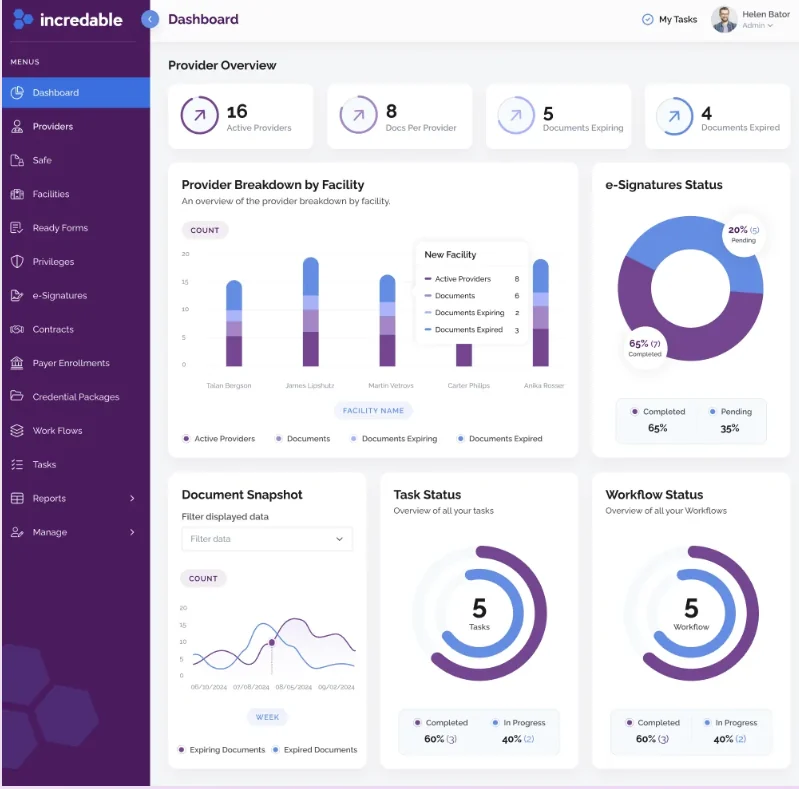
Incredable, built by Intiva Health, is a credentialing platform centered on configurability. Administrators can build workflows, forms, and processes per payer, per facility, or per provider type without engineering effort.
The platform was originally launched as Ready Doc and was later rebranded as Incredable. For the wider category context, see our credentialing software landscape.
Key features
- Configurable workflows - Built per payer, per facility, or per provider type without engineering effort.
- Ready Forms - Pre-built digital forms with e-signatures for onboarding and compliance paperwork.
- Exclusions monitoring - Automated OIG, SAM, and state medical board screening with a full audit trail.
- Enrollment tracking: Real-time payer status on one dashboard.
- Document management: centralized storage with expiration alerts and e-signature support.
Pros
- Customer support is consistently praised
- Built-in validation tools catch missing or inconsistent data during provider onboarding.
- Genuinely configurable workflows per payer, facility, or provider type.
Cons
- Your team handles payer submissions, follow-ups, and escalations, not the platform
- Limited social proof
- Does not publicly hold NCQA CVO certification, which limits delegated credentialing arrangements with payers that require certified CVOs
5. QGenda
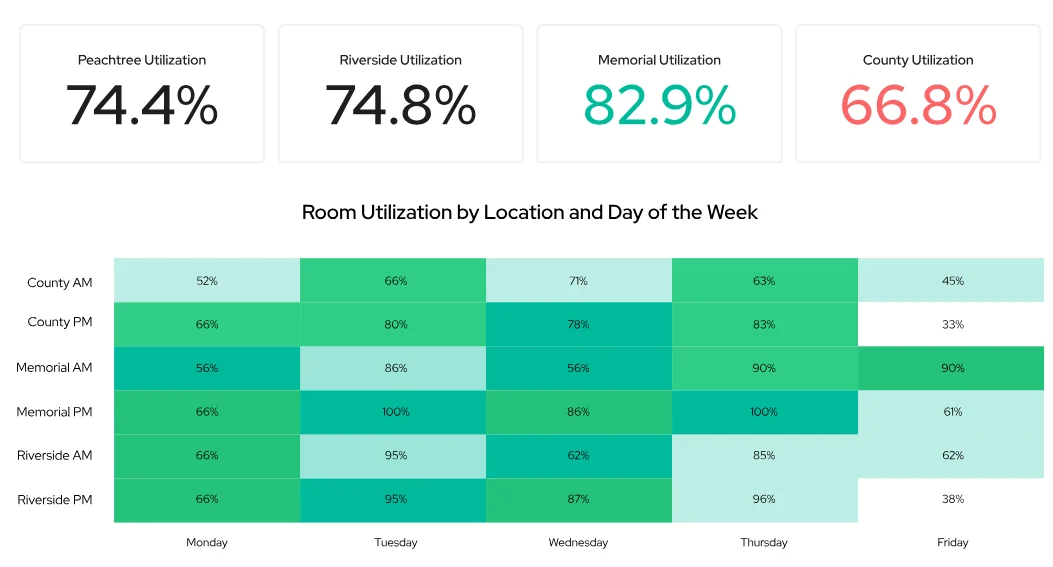
QGenda is a healthcare workforce platform serving more than 4,500 organizations. The core differentiator is credentialing that is natively tied to scheduling within the ProviderCloud suite. When a credential expires, the schedule automatically reflects it. Once credentialing clears, the provider appears available to book.
Without the scheduling product, the credentialing module alone is a harder sell.
Key features
- Scheduling-to-credentialing data flow - Credential status feeds directly into shift logic and scheduling decisions.
- PSV automation: connects to state licensing boards and national databases for primary-source verification.
- OPPE/FPPE integration - Practice evaluation data tied to credentialing and privileging decisions.
- Application autofill - Credentialing packets and renewals auto-populated from provider profile data.
- ProviderCloud suite - Scheduling, time and attendance, capacity, and credentialing all on one platform.
Pros
- Credential status flows directly into shift logic
- Reviewers note new features shipping at a high pace
- Mature deployment depth in academic medical centers and large IDNs.
Cons
- QGenda lacks a dedicated payer enrollment product, per some reviewers
- Mapped document formatting can render inconsistently for signable files
- Without the scheduling product, the credentialing module is a harder sell
6. CredentialingSpectrum
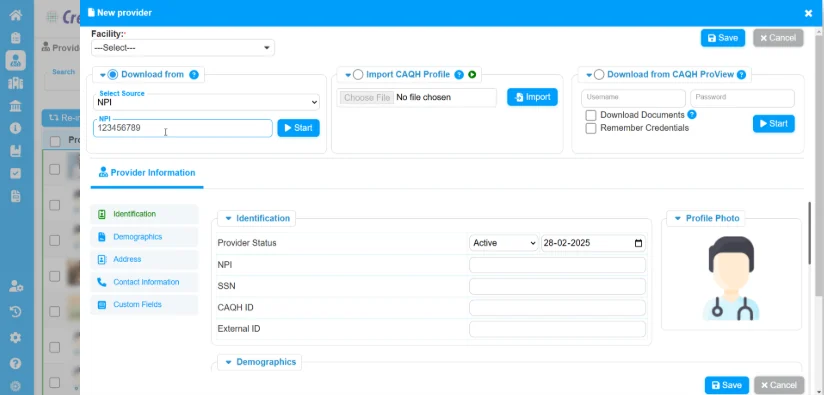
CredentialingSpectrum is a healthcare credentialing and payer enrollment platform built by ClinicSpectrum. It combines CAQH integration, seven-layer source verification, and an auto-populated payer form library covering webforms, Excel rosters, and PDFs. Mid-market group practices, billing companies, and hospital credentialing teams use the hybrid workflow to flag gaps before an application is submitted.
Enterprise health systems and orgs pursuing NCQA delegated credentialing typically require deeper CVO infrastructure than CredentialingSpectrum publicly documents.
Key features
- CAQH integration and auto-import: Extracts provider data directly from CAQH profiles into the platform with color-coded verification of imported and manually entered fields.
- 7-layer source verification: Adds exclusion search, license verification, and refined verified-search filters on top of standard OIG monitoring.
- Auto-populated payer form library: Webforms, Excel rosters, and PDFs across commercial and government payer applications, pre-filled from stored provider data.
- Credentialing workflow management: Payer-specific contact tracking, time-stamped remarks, and follow-up dates for every credentialing and recredentialing assignment.
- Expiration reminders: Automated alerts for CDS, DEA, license, CAQH, board certification, and malpractice renewals across every provider profile.
Pros
- CAQH integration and auto form population
- Cut enrollment processing time by 40%
- Reliable daily expiration reminders
Cons
- No public NCQA CVO certification listed, which constrains delegated credentialing arrangements with payers requiring certified CVOs
- Limited public review base across Capterra and Software Advice compared to enterprise-focused credentialing platforms
- Capterra positions the platform for the 11-50 user range, so multi-entity enterprise health systems typically outgrow the workflow depth
How we evaluated these alternatives
Every platform was assessed against six criteria that map to what credentialing and operations buyers actually decide on, not surface-level feature checklists.
Credentialing depth and execution
We looked at whether each platform actually runs credentialing end-to-end, including primary source verification, packet generation, audit-ready files, and committee workflows.
For organizations considering delegation, NCQA CVO certification across all 11 verification elements was the key signal. Without it, a health plan can't delegate credentialing to the vendor and ends up paying for a platform while still doing the work in-house.
Operational execution model
Not all platforms actually submit applications and chase payers on your behalf. For high-volume teams, that distinction matters more than any feature list.
A platform with 50 features that still leaves submission and follow-up to your team creates the same bottleneck as a spreadsheet, just with a better UI. We weighted managed execution heavily for anyone credentialing more than 50 providers.
Multi-state scale and licensing
Real multi-state coverage means all 50 states, IMLC compact support, DEA and CSR management, FCVS setup, and a solid handle on state-specific Medicaid rules.
We weighted this heavily for digital health companies and multi-entity groups. A platform that works in 10 states doesn't automatically work in 30, and the gaps show up worst in Medicaid MCO enrollment, where state rules vary the most.
Enterprise readiness
We looked at Epic and Cerner integration depth, delegation audit support, multi-entity roster management, and audit trails. Most mid-market platforms hold up fine until multi-entity rosters, your first NCQA delegation audit, or crossing 100 providers. After that, the limits show up fast. Evaluate this against where you'll be in 18 months, not today.
Pricing transparency
We looked at how each platform prices, such as usage-based, per-provider, or flat-fee. Some have minimum contract commitments and bundle requirements.
Bundled pricing is often the hidden cost trap. If you only need credentialing, you still pay for the LMS and compliance modules. That can push the total contract value to 2-3x higher than that of a credentialing-first platform for the same number of providers. These are the things that actually matter when credentialing delays are costing you revenue.
How to choose the right MedTrainer alternative
The right platform comes down to what's actually slowing your team down. These five questions will help you figure that out.
What is the actual bottleneck?
Start with what's actually costing you time and money. If it's training and compliance documentation, MedTrainer fits well. If credentialing and payer enrollment are slow, a credentialing-first platform like Assured will close the gap. Staying with a bundled tool for a credentialing bottleneck means paying for features you don’t need while the problem persists.
What is the scale today, and where will it be in 12 months?
A platform that works at 50 providers often breaks at 200. Ask vendors for references at the size you'll be in 12 months, not where you are today.
Is delegated credentialing on the roadmap?
For delegation, the vendor must be an NCQA-certified CVO for all 11 verification elements. Bundled platforms often don't cover the full audit surface. If delegation is a priority, stick to specialist credentialing platforms and dedicated CVOs like Assured.
Where do scheduling, EHR, and payroll data live?
On Epic or Cerner, integration depth is everything. Partial integrations just create duplicate data entry and cancel out the time savings. Map your current data flows before you sign anything, and ask vendors exactly how they handle roster changes, provider terminations, and revalidation.
What is the team capacity?
Self-service means your team does the work, and managed means the vendor does. That gap often matters more than the price difference. A cheaper platform that adds 20 hours a week to your credentialing manager's plate will cost more in the long run than a pricier one that takes those hours away.
The right answer here isn't about the platform, it's about where your team's time is best spent.
Still on the Fence? Here's How We'd Sum It Up
MedTrainer is a solid compliance platform. If you need training, policy management, and credentialing, it works well.
But if your real problem is slow credentialing, payer enrollment backlogs, or scaling across multiple states and entities, a platform built specifically for that will get you there faster.
That's why most of our customers come to Assured either after outgrowing a bundled tool or after realizing spreadsheets won't cut it anymore.
Assured credentials providers in 48 hours, submits payer applications within 72 hours, monitors across 2,000+ sources, and is NCQA-certified.
If that's what you need, book a demo with our team.
1. What is the best alternative to MedTrainer for credentialing and payer enrollment?
2. Does MedTrainer offer managed credentialing services?
3. Why do buyers switch from MedTrainer to a specialist platform?
4. Can I migrate from MedTrainer to Assured without losing provider data?

Assured Health, Inc.
333 Seventh Ave, Suite 1701
New York, NY 10001