We Reviewed 8 Best Credentialing Solutions for Mental Health Providers In 2026
Varun Krishnamurthy
Updated
August 18, 2026
Published
June 26, 2026
Quick Summary
Mental health credentialing is slow, and every delay means providers sitting idle instead of billing. Carve-out payers, six-plus license types, and closed panels make it harder than most. We reviewed 8 credentialing solutions built for health organizations across speed, licensing, payer relations, and other areas. Here's how they stack up.
Mid-market to enterprise health organizations and growing networks managing credentialing at scale
48-hour credentialing files, NCQA-certified CVO across all 11 elements, PSV across 2000+ sources
BellMedEx
Multi-specialty practices needing outsourced credentialing across many provider types
Multi-specialty credentialing experience across 75+ specialties, including behavioral health
CureMD
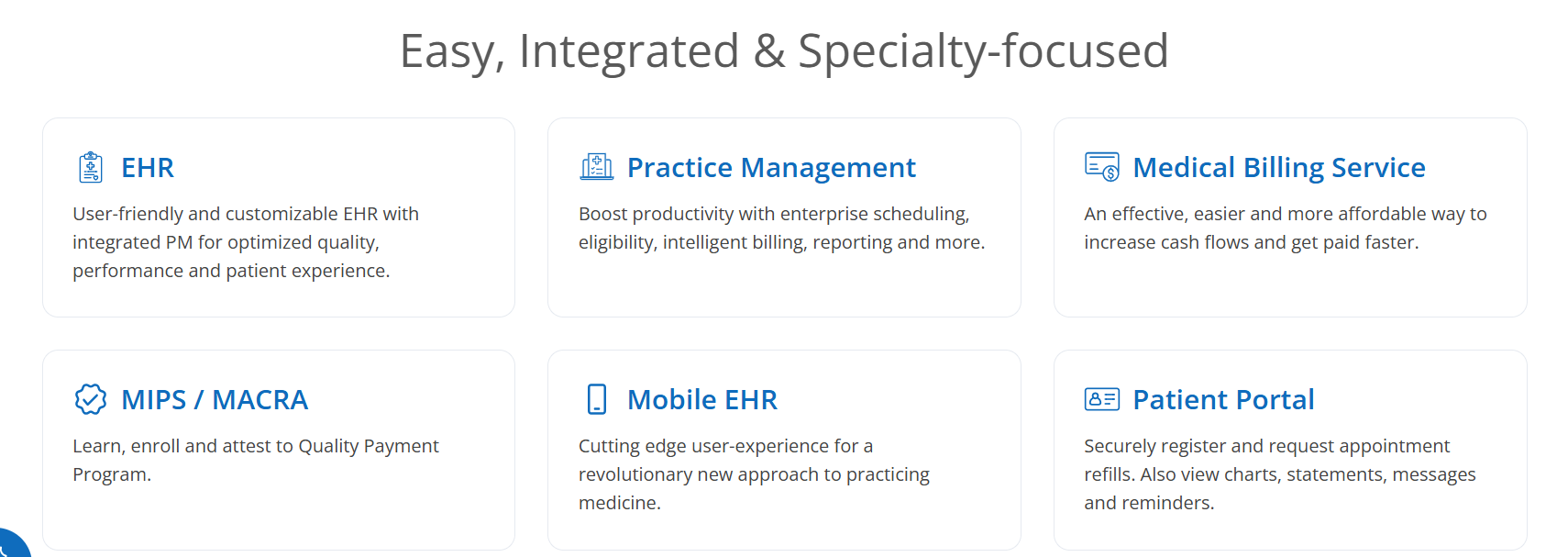
Solo and small-group practices wanting credentialing inside an all-in-one platform
Credentialing bundled with EHR, practice management, and RCM in one platform
What Mental Health Credentialing Actually Involves
Mental health credentialing diverges sharply from medical credentialing. The diversity of licenses alone (LCSWs, LPCs, LMFTs, BCBAs, psychologists, PMHNPs, psychiatrists) increases the workload, since each state board governs each license with a different verification path.
Behavioral health carve-outs (Optum Behavioral Health, Magellan, Carelon, Evernorth) administer in-network credentialing separately from medical plans. Medicaid is the largest BH payer in many states and runs through MCOs with state-specific rules. And BH panels close more often than medical panels, especially in saturated urban markets.
The 8 solutions below split across three models: a credentialing platform for organizations, aggregators that credential solo therapists under their own Tax ID, and managed credentialing services for BH groups.
Why Listen to Us
We built Assured to handle credentialing at scale across all provider types, including behavioral health. We are an NCQA-certified Credentials Verification Organization across all 11 verification elements. Assured credential providers for behavioral health groups, including Prosper Health and Birches Health, a 40-state behavioral addiction telehealth provider.
Our team handles BH carve-out logic, state-specific Medicaid rules, and license-type-specific primary source verification for every BH role, from BCBAs to psychiatrists.
Side-by-Side Comparison of All 8 Tools
Here is how the 8 platforms compare in terms of model, pricing, and key capabilities.
Mid-market to enterprise health organizations and growing networks managing credentialing at scale
Usage-based (custom)
BellMedEx
Small mental health practices wanting outsourced credentialing
Custom
CureMD
Solo and small-group mental health practices wanting outsourced credentialing
Custom
DENMaar
BH group practices wanting fast multi-license credentialing on one platform
Custom
Modio Health
BH groups wanting a credentialing system of record
Custom
Headway
Solo therapists and prescribers wanting in-network access
Free
Alma
Solo therapists wanting aggregator credentialing with major commercial payers
$125/mo
SimiTree
Established BH orgs wanting credentialing inside a broader managed-services engagement
Custom
The 8 Best Credentialing Solutions for Mental Health Providers
1. Assured
Best for: Organizations scaling providers across states, license types, and payers.
Behavioral health credentialing is where lean ops teams drown: seven license types, frequent renewals, and endless payer follow-up. Assured takes that workload end-to-end.
Our AI runs primary source verification in parallel across 2,000+ sources: state behavioral health boards for LCSWs, LPCs, and LMFTs; the BACB for BCBAs; psychology boards with PSYPACT routing; NPDB; OIG; SAM; OFAC; Medicare opt-out; DEA registration for prescribers; and the National Student Clearinghouse for education.
Each provider becomes a committee-ready credentialing file within 48 hours, compared with the 60 to 120-day industry standard. The speed holds up at the behavioral health scale: Birches Health, a behavioral addiction care platform, used Assured to go from 10 to 800 credentialed providers across all 50 states in under a year, cutting time-to-in-network by 75% and eliminating credentialing denials.
Key Features
Screenshot-proof PSV across 2,000+ sources: Education, state licenses, board certifications, NPDB, DEA, OIG, SAM, OFAC, and Medicare opt-out verified in parallel, with a screenshot of every check compiled into a portable credentialing file your committee can act on.
License-type routing across the BH spectrum: LCSWs, LPCs, and LMFTs route to state behavioral health boards; BCBAs and RBTs verify against the BACB, including supervision rules; psychologists, PMHNPs, and psychiatrists route to their boards plus DEA registration for prescribers
Pre-submission validation tuned to BH panel reality: AI scans every field before submission and flags closed behavioral health panels
CAQH sync that chases providers for you: Pulls provider profiles from CAQH, flags incomplete fields, and reaches out to therapists directly to collect missing documents
PSYPACT, IMLC, and 50-state licensing: PSYPACT enrollment for psychologists practicing across member jurisdictions, IMLC for psychiatrists, and state-by-state licensing for therapist license types compacts don’t cover.
Monitoring built for prescriber compliance: License expirations, DEA renewals for psychiatrists and PMHNPs, and monthly exclusion checks across Medicare, Medicaid, and OIG databases, with instant alerts routed to your team before a lapse disrupts billing.
Delegated credentialing support as you scale: NCQA-certified CVO across all 11 verification elements. For BH groups approaching the ~100-provider delegation threshold, Assured helps set up policies, committee meeting minutes, and pre-delegation audit prep.
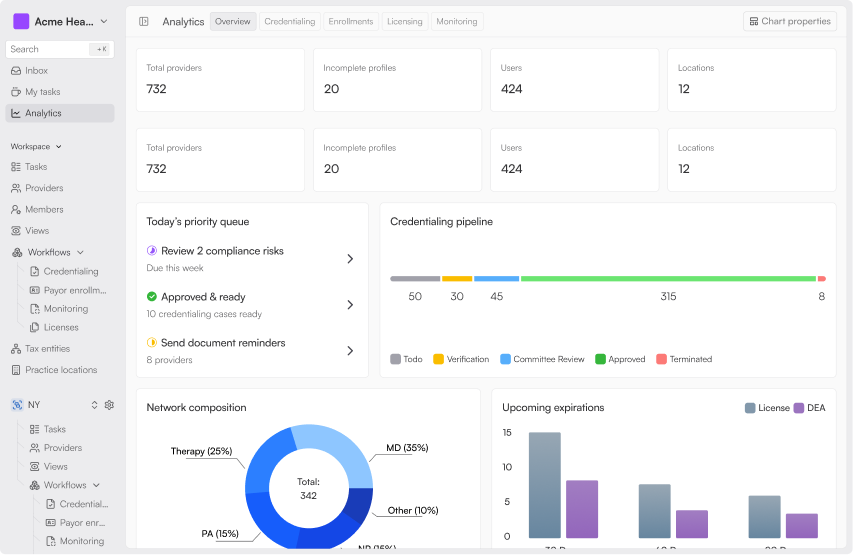
Visibility built for lean ops teams: Real-time dashboards track every application’s status with exportable reporting.
Pros
Native BH license diversity, including ABA workflows for BCBAs and RBTs.
95%+ first-pass approval rate, driven by pre-submission validation that flags closed behavioral health panels before you spend time and money applying into them.
Credentialing, licensing, payer enrollment, and monitoring in one platform.
Psychiatry groups vouch for it: Blossom Health, an AI-native psychiatry platform, calls Assured the “gold standard” for getting providers in-network, citing the highest first-pass approval rates and turnaround times it evaluated.
Dedicated implementation specialist and CSM on every account, with shared Slack channels, weekly check-ins, and support that responds in under 24 hours
Usage-based pricing that scales with provider volume.
Cons
Newer to market than other credentialing incumbents.
Pricing: Usage-based, scales with provider volume. Custom quotes available.
2. BellMedEx
Best for: Solo and small-group mental health practices wanting fully outsourced credentialing across commercial, Medicare, Medicaid, and BH carve-out panels.
BellMedEx is a Seattle-based medical billing and RCM company serving 1,500+ US healthcare providers across 75+ specialties.
The team handles credentialing across Medicare, Medicaid (with MCO-specific rules), commercial, and behavioral health carve-out panels, with CAQH setup, primary source verification, and recredentialing managed under the same engagement.
Key Features
Managed credentialing across all payers: Medicare, Medicaid (MCO-specific), commercial, and BH carve-outs.
CAQH setup and maintenance: Profile creation plus quarterly re-attestations handled by the team.
Multi-specialty credentialing experience: Credentialing workflows tested across 75+ specialties, with behavioral health as a defined service line.
State-specific Medicaid expertise: Local rules and MCO requirements across NY, CA, WA, and other key states.
Pros
Behavioral health and substance use credentialing expertise built into the same engagement.
End-to-end credentialing lifecycle handled by the team, from initial application through recredentialing.
Responsive team that walks providers through credentialing applications and follow-ups.
Covers CAQH profile setup, primary source verification, initial credentialing, and recredentialing across commercial, Medicare, Medicaid, and BH carve-out panels.
Cons
No self-service portal to independently track application status.
Standard 60–120 day credentialing timelines still apply despite “expedited” marketing promises.
Credentialing pricing requires a quote; no rates published.
Pricing: Custom quotes per practice.
3. CureMD
Best for: Solo and small-group mental health practices wanting outsourced credentialing bundled with EHR, practice management, and revenue cycle management under one vendor.
CureMD is a healthcare technology company in business since 1997, with credentialing offered as one service line inside a unified platform that also includes EHR, practice management, and revenue cycle management. The Mental Health Credentialing Service handles applications across commercial payers, Medicare, Medicaid, TRICARE, and behavioral health carve-out programs for solo practitioners, group practices, and telehealth providers. CAQH integration and real-time dashboards give visibility into application status, with CureMD’s team managing follow-up across payers.
Key Features
Managed credentialing across major payers: Aetna, Cigna, BCBS, UHC, Medicare, Medicaid, and TRICARE, plus behavioral health carve-outs and state-specific plans.
CAQH and EHR integration: Auto-fills credentialing forms by pulling provider data from CAQH and connected EHRs, reducing manual entry across applications.
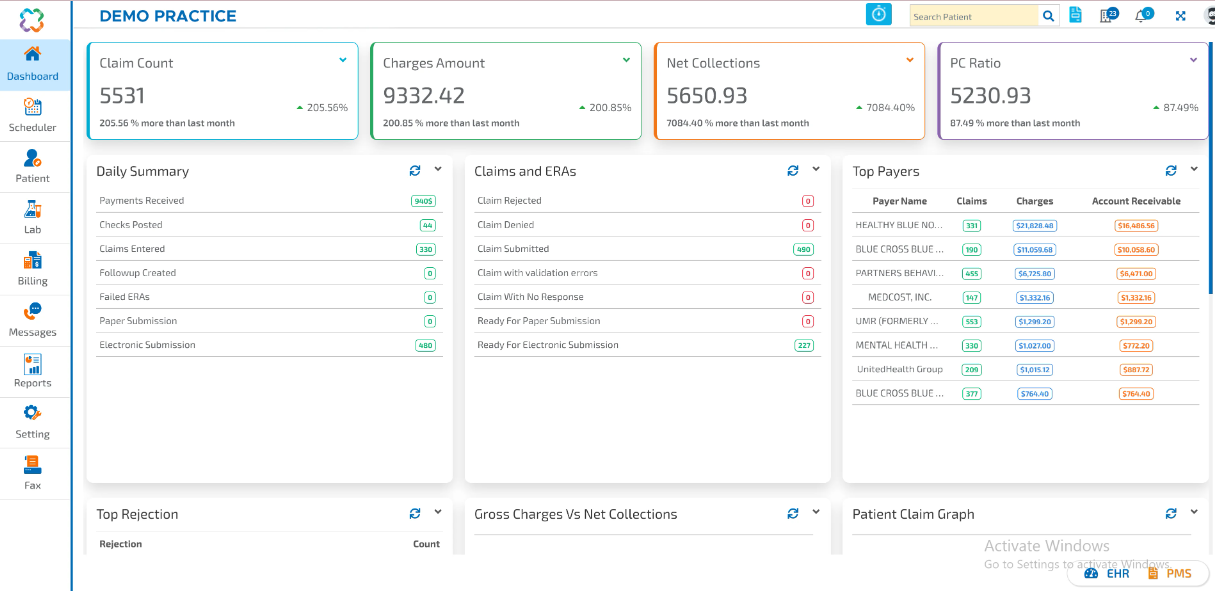
Real-time dashboards: Status tracking and progress visibility across active credentialing applications, with automated reminders for re-credentialing and license renewals.
Multi-state credentialing for growing practices: Scales from solo providers to multi-location group practices, with dedicated account management coordinating credentialing across providers and states.
Pros
Credentialing is bundled inside a 29-year unified healthcare platform that also includes EHR, practice management, and revenue cycle management.
Behavioral health carve-out and state-specific plan enrollment built into the service line, including Medicare, Medicaid, and TRICARE, as well as major commercial payers.
Trustpilot described CureMD’s credentialing process as streamlined and well-managed, citing proactive communication and clear, transparent timelines at every step.
Cons
Standard 60–120-day credentialing timelines per CureMD’s own FAQ; the “nearly in half” marketing claim is not paired with a committed SLA.
Not an NCQA-accredited CVO.
CureMD averages 3.6 of 5 across 79 Capterra reviews of its broader platform, with recurring complaints around customer service responsiveness and an interface that reviewers describe as dated relative to modern AI-native credentialing tools.
Pricing: Free for providers. Per-session compensation set by Rula.
4. DENMaar
Best for: Behavioral health group practices wanting fast credentialing across multiple license types and BH settings.
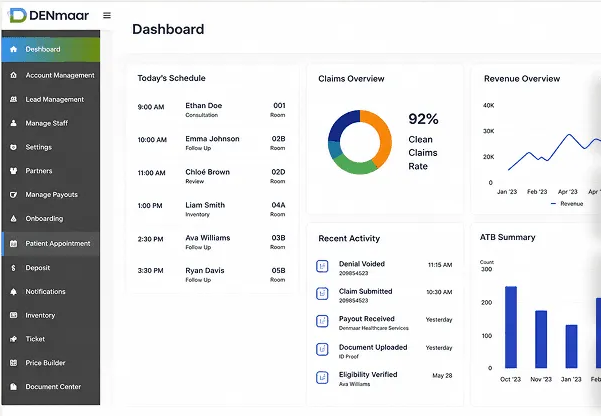
DENMaar credentials behavioral health group practices in 30 to 45 days. The credentialing service supports therapists, counselors, psychologists, psychiatrists, and APRNs across mental health, substance use, IOP/PHP, and CBHC settings.
The credentialing service is built for group practices, not solo providers.
Key Features
Integrated credentialing workflow: Credentialing applications, tracking, and renewals managed from one platform rather than across separate tools.
Broad license coverage: Credentials therapists, counselors, psychologists, psychiatrists, and APRNs under the same engagement.
Setting-specific credentialing: Covers credentialing for mental health, substance use, IOP/PHP, and CBHC programs.
30 to 45-day credentialing: Faster than many traditional outsourced managed services.
Pros
Single-platform credentialing for group practices with multiple license types under one workflow.
ABA-specific workflows built into the credentialing service.
Medicaid and commercial payer credentialing support across BH license types.
Cons
Credentialing service is group-practice-only; solo providers cannot access it.
Client-end portals need improvement.
Some features can be hard to figure out,
Pricing: Custom, based on practice size.
5. Modio Health
Best for: Multi-provider behavioral health groups wanting a centralized credentialing system of record.
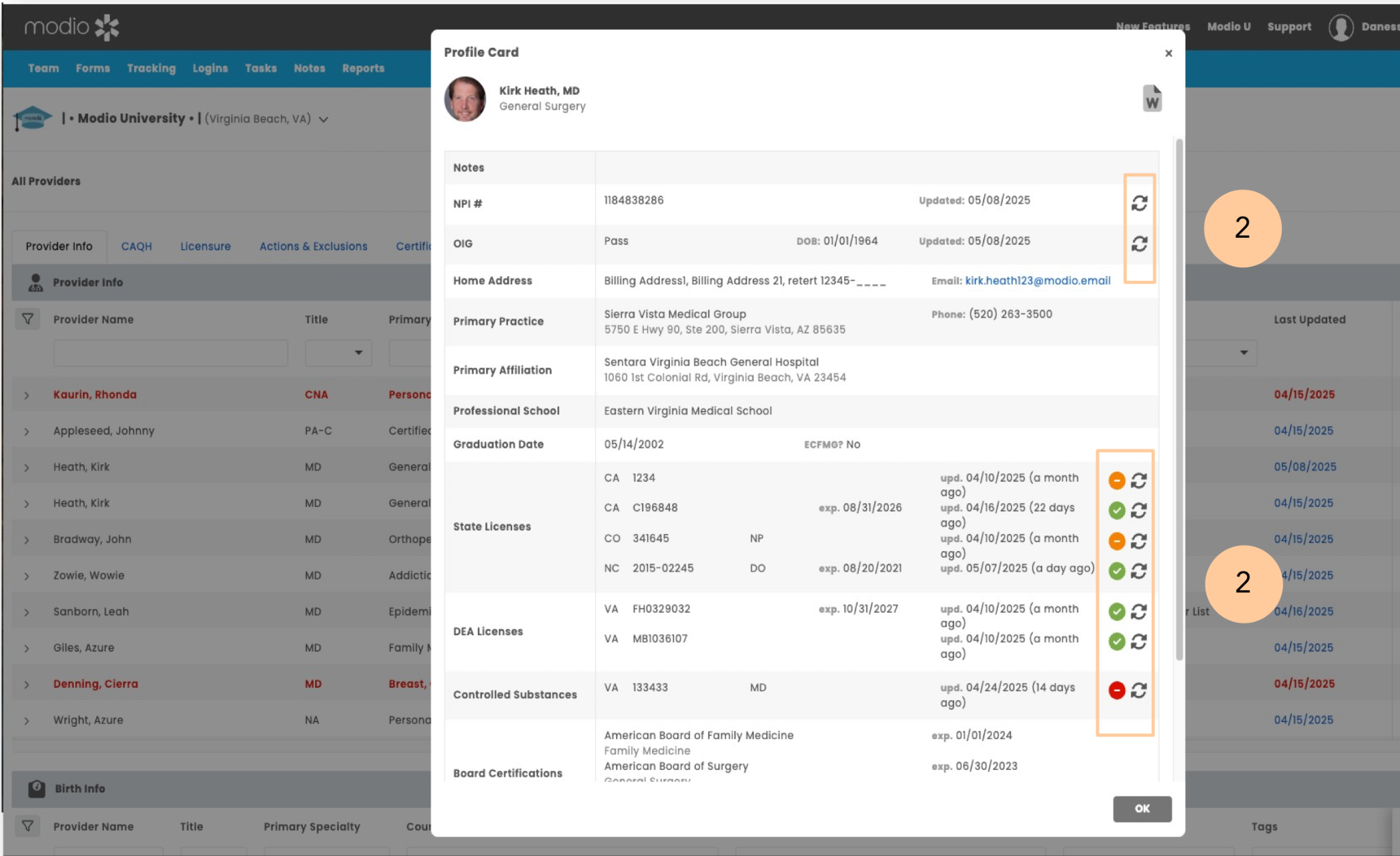
Modio Health's OneView is a centralized credentials management system built by physicians and credentialing experts. The platform is SOC 2 Type 2 compliant.
OneView pulls public-source data to reduce manual entry, tracks re-attestation dates with reports and alerts, and lets organizations track credentialing-related processes such as license renewals, primary source verification, and recredentialing. The platform is not an NCQA-accredited CVO.
Key Features
Centralized credentials management: Single source of truth for provider files, documents, and expirations.
Public source data pull: NPI, DEA, license numbers, and education auto-imported where available.
Forms management and e-signatures: Send forms for completion or signature. Signed forms route into the provider's record.
Expiration alerts and reporting: Tracking and notifications for license, DEA, and certification expirations.
Pros
Built by physicians and credentialing experts, with workflows shaped accordingly.
Strong fit as a credentialing system of record across diverse license types.
SOC 2 Type 2 compliant for data security.
Cons
Not an NCQA CVO; does not support delegated credentialing.
Database-and-tracking model rather than fully automated PSV execution.
Pricing is custom and not published on the Modio website.
Pricing: Custom, based on provider count.
6. Headway
Best for: Solo therapists, psychiatrists, and nurse practitioners wanting free credentialing into major insurance networks.
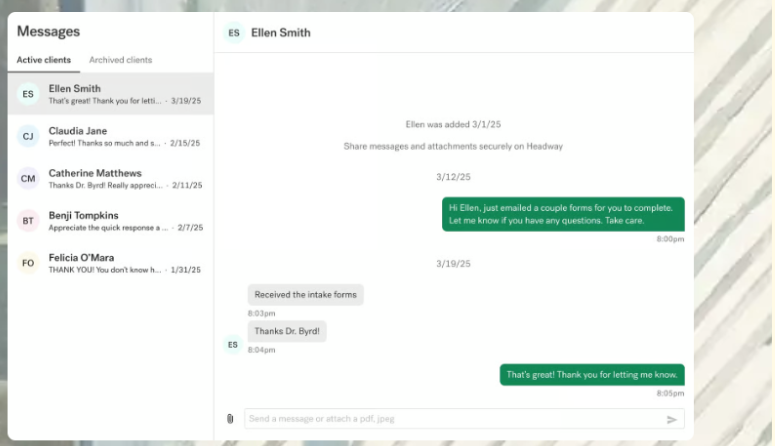
Headway is among the largest aggregators of mental health providers in the US, with 60,000+ clinicians in the network. Therapists join free and are credentialed with national commercial insurers, typically within 2 to 4 weeks per state, though it can take up to 30 days.
Headway earns its commission from the insurer. Providers credential under Headway's contracts and Tax ID, which makes credentialing fast but not portable.
Key Features
Free credentialing with major payers: UnitedHealthcare, Aetna, Cigna, Anthem, Oscar, and Oxford. No membership fee.
Multi-state support: Add additional states from the provider portal once initial credentialing is complete.
Aggregator credentialing scale: 60,000+ clinicians credentialed under Headway’s contracts with national commercial insurers.
Fast credentialing turnaround: Typically 2 to 4 weeks per state to in-network status under Headway’s Tax ID.
Pros
Free for therapists; commission model paid by insurers.
Credentialing typically completed in 2 to 4 weeks to 30 days per state per payer.
Multi-state credentialing supported once licensed.
Cons
Credentialing tied to Headway's Tax ID, not portable to an independent practice.
Insurance partner availability and rates vary by state; coverage is not universal.
Credentialing scope is limited to Headway’s contracted payer set; expanding beyond that network requires separate credentialing with other payers.
Pricing: Free for providers. Headway earns from insurance partners.
7. Alma
Best for: Solo therapists building a private practice who want fast aggregator credentialing with commercial insurers under a single Tax
Alma is a membership-based platform supporting 24,000+ clinicians. Therapists pay $125/month (or $1,140/year) and are credentialed under Alma's Tax ID with major commercial payers within 45 days.
Credentialing administration runs centrally through Alma. CAQH setup, primary source verification, document maintenance, and recredentialing are managed by Alma’s team rather than left to each clinician.
Key Features
Credentialing under Alma's Tax ID: Paneled with Aetna, Cigna, Optum, Anthem, UHC, Oxford, and Oscar depending on state.
Credentialing turnaround: Up to 45 days to in-network status with major commercial payers under Alma’s Tax ID.
Member network scale: 24,000+ clinicians credentialed and active on Alma’s network.
Centralized credentialing administration: CAQH, primary source verification, and recredentialing handled by Alma’s team rather than the individual clinician.
Pros
Faster path to in-network credentialing than independent payer-by-payer applications.
Predictable $125/month covers credentialing across all paneled payers a clinician is eligible for per state.
Available to fully licensed therapists in all 50 states.
Fully and independently licensed clinicians only. No associate or pre-licensed tier.
Credentialing scope is restricted — new members must be credentialed with at least one of Aetna, Cigna, or Optum to join.
Pricing: $125 per month or $1,140 annually.
8. SimiTree
Best for: Established behavioral health organizations wanting credentialing delivered as part of a national managed-services engagement.
SimiTree is a national behavioral health consulting and managed services firm operating across commercial, Medicare, and Medicaid providers. Its credentialing capability came in through the 2023 acquisition of GreenpointMed.
Within that footprint, the credentialing team manages the full lifecycle from initial application through recredentialing. The trade-off is fit: SimiTree sits inside a broader BH services firm, which makes it a natural choice for established BH orgs already engaging on multiple service lines, but a heavier engagement than standalone credentialing does.
Key Features
National coverage: Operates in all 50 states across commercial, Medicare, and Medicaid.
Initial and re-credentialing: Manages the full credentialing lifecycle including renewal cycles.
GreenpointMed credentialing heritage: Credentialing capability rooted in the 2023 acquisition of GreenpointMed, a BH-specialist credentialing firm.
Behavioral health specialization: Decades of licensed BH experience across the team.
Pros
Credentials providers across commercial, Medicare, and Medicaid panels under one engagement.
Deep BH and substance use expertise from acquired firms.
2x faster turnaround times compared to others
Cons
Service-only model; no proprietary platform for self-service or visibility.
Pricing is not published.
Best fit is bundled with broader services, less suited to standalone credentialing.
Pricing: Custom, quote-based.
How We Evaluated the Best Credentialing Solutions for Mental Health Providers
We evaluated each solution on four criteria specific to behavioral health credentialing.
Speed: Anything that doesn't compress turnaround below the 60–120-day industry standard doesn't solve the problem for a growing practice.
License coverage: Every solution had to handle the full spread of license types including LCSWs, LPCs, LMFTs, BCBAs, PMHNPs, and psychiatrists.
Payer model: First is the aggregator platforms credential providers under their own Tax ID, which is faster but not portable. Managed services and platforms credential under the practice's NPI, which is portable but requires more upfront work.
NCQA CVO status: Weighted for organizations that are approaching or managing delegated credentialing agreements.
If your credentialing is still running on spreadsheets or with a vendor that's gone quiet, one of the eight above is worth a closer look.
How to Choose the Right Credentialing Solution for Your Mental Health Practice
The right solution depends on how your practice is structured and how fast you are trying to grow.
1. Solo therapists and prescribers building a practice:
Aggregator platforms (Headway, Alma, Rula) are the fastest path to billing insurance. Headway is free. Alma is $125/month and includes practice management. Rula offers 1099 work across multiple states. The trade-off: you are credentialed under the aggregator's Tax ID, so credentialing is fast but not portable.
2. Group practices and BH organizations:
A platform or managed service that credentials providers under your own NPI/TIN is the right fit. Assured fits if you need fast committee-ready files, NCQA delegated credentialing support, and BH license coverage built in. Modio Health is a good fit if you primarily need a tracking system of record. DENMaar and BellMedEx fit if you want credentialing bundled with billing and an EHR.
3. Established BH orgs needing contracting:
SimiTree is the only solution on this list that handles rate negotiation in addition to enrollment.
4. Multi-state expansion plans:
NCQA CVO status matters most here. Assured and Rula both operate as NCQA-accredited CVOs.
5. ABA and BCBA-heavy practices:
Look for explicit ABA workflow support. Assured and DENMaar both natively handle BCBA supervision rules and RBT requirements.
Scale Mental Health Credentialing Without Scaling the Chaos
Mental health credentialing is not one problem. It has seven license types, twenty-plus payer panels, fifty state Medicaid programs, and behavioral health carve-outs. The right solution depends on whether you are a solo clinician joining a network or an organization scaling providers across states.
If you are scaling and revenue is stuck behind slow credentialing across license types and payer carve-outs, book a demo with Assured. We will deliver 48-hour, committee-ready files within your own workflow.
Frequently Asked Questions
1. How is credentialing for mental health providers different from general medical credentialing?
Yes, they have the same NCQA framework. However, BH groups juggle more license types, separate carve-out payers like Optum and Magellan, and Medicaid MCO rules that vary by state.
2. How long does it take to credential a psychiatrist or psychologist with insurance?
Typically 60–120 days, often longer in behavioral health. Aggregator platforms like Headway and Alma can compress this to 2–6 weeks, but under their Tax ID. AI-native platforms like Assured produce committee-ready files in 48 hours.
3. Do psychiatric prescribers need additional credentialing beyond what therapists need?
Yes. Psychiatrists and PMHNPs require DEA registration, board certification verification, and in many states a collaborative practice agreement for NPs. Therapists skip the DEA requirements but carry different malpractice coverage. $1M/$3M is standard for non-prescribers.
4. Can mental health providers be credentialed with Medicaid and Medicare Advantage plans?
Yes. Medicaid runs through state-specific MCOs with varying requirements. Medicare expanded to LMFTs and LPCs in January 2024; psychologists, LCSWs, psychiatrists, and PMHNPs were already eligible. Medicare Advantage is credentialed separately and varies by carrier.
5. What does mental health credentialing typically cost when outsourced?
It varies widely. Aggregator platforms are free for therapists or membership-based. Managed services and platforms typically use custom, quote-based pricing rather than published list prices, with costs scaling with provider count and service scope.







.svg)