

.png)
Roster Management in Healthcare: A Practical Guide for Provider Teams

Rahul Shivkumar
September 28, 2026
“Roster management software” means two different things. For most teams, it refers to staff scheduling tools that build shift rotas. In healthcare, it means provider roster management: the system of record that keeps every provider’s credentialing, enrollment, and licensing status accurate and audit-ready. This guide covers the second meaning. We compare seven platforms that manage provider rosters across the credentialing lifecycle. Assured is our top pick for organizations that need credentialing, enrollment, and licensing tracked in one roster. Three platforms anchor this list for provider-side organizations.
A provider roster sounds simple, but in practice it fragments fast. Credentialing status lives in one tracker, payer enrollment sits in spreadsheets, and licensing renewals hide in someone’s inbox. Nothing reconciles.
So when a provider’s data is wrong or stale, applications stall, providers sit idle, and billing comes to a halt. A new hire on payroll for 60 days without a single claim becomes a six-figure problem at scale.
Roster management is the layer that ties it all together. Done well, it maintains a single source of truth for each provider, tracks credentialing, enrollment, and licensing in one place, and flags items nearing expiration before they lapse.
That is what lets a credentialing team scale without adding headcount, and what this guide covers: provider roster management for healthcare across credentialing, enrollment, and delegated networks.
We built Assured after scaling a provider network from zero to more than 150 providers across 15 states. We lived every credentialing bottleneck firsthand. Today, we are an NCQA-certified CVO serving digital health organizations and enterprise health systems like Houston Methodist. We know this category inside and out: the vendors, the gaps, and what keeps a provider roster accurate.
Here are the seven tools we cover, side by side.
Assured is an AI-native provider credentialing and payer enrollment platform. Roster management runs on the same provider record rather than as a separate module.
The first roster is rarely the problem. Any team can export a provider list once. Keeping that list accurate through every hire, termination, location change, and TIN change is the hard part. Rosters decay between cycles. A provider leaves in March and stays listed with three payers through June. Someone moves to a second practice location, and the roster still shows one. Those gaps surface as directory inaccuracies, claim denials, and audit findings months after the change happened.
We built roster management around that decay problem. Each payer's template is mapped once: column order, field names, required fields, and fixed values. Every roster after that is generated in the payer's required format, so nobody has to rebuild the file each cycle. Provider changes are entered only once. A termination marked once applies to every payer roster the provider appears on. The same holds for name, location, TIN, and status updates.
Roster data comes from the same source records that run credentialing and enrollment. Provider data is pulled from CAQH and NPPES and combined with location, TIN, and enrollment history already in the platform. That covers physicians, NPs, PAs, behavioral health clinicians, RBTs, and BCaBAs. When the payer responds, we match the response back to the submission that produced it and update outcomes at the provider level. Rejected records stay traceable, correctable, and resubmittable. Every submitted file is retained with its date, reference ID, response, and prior version.
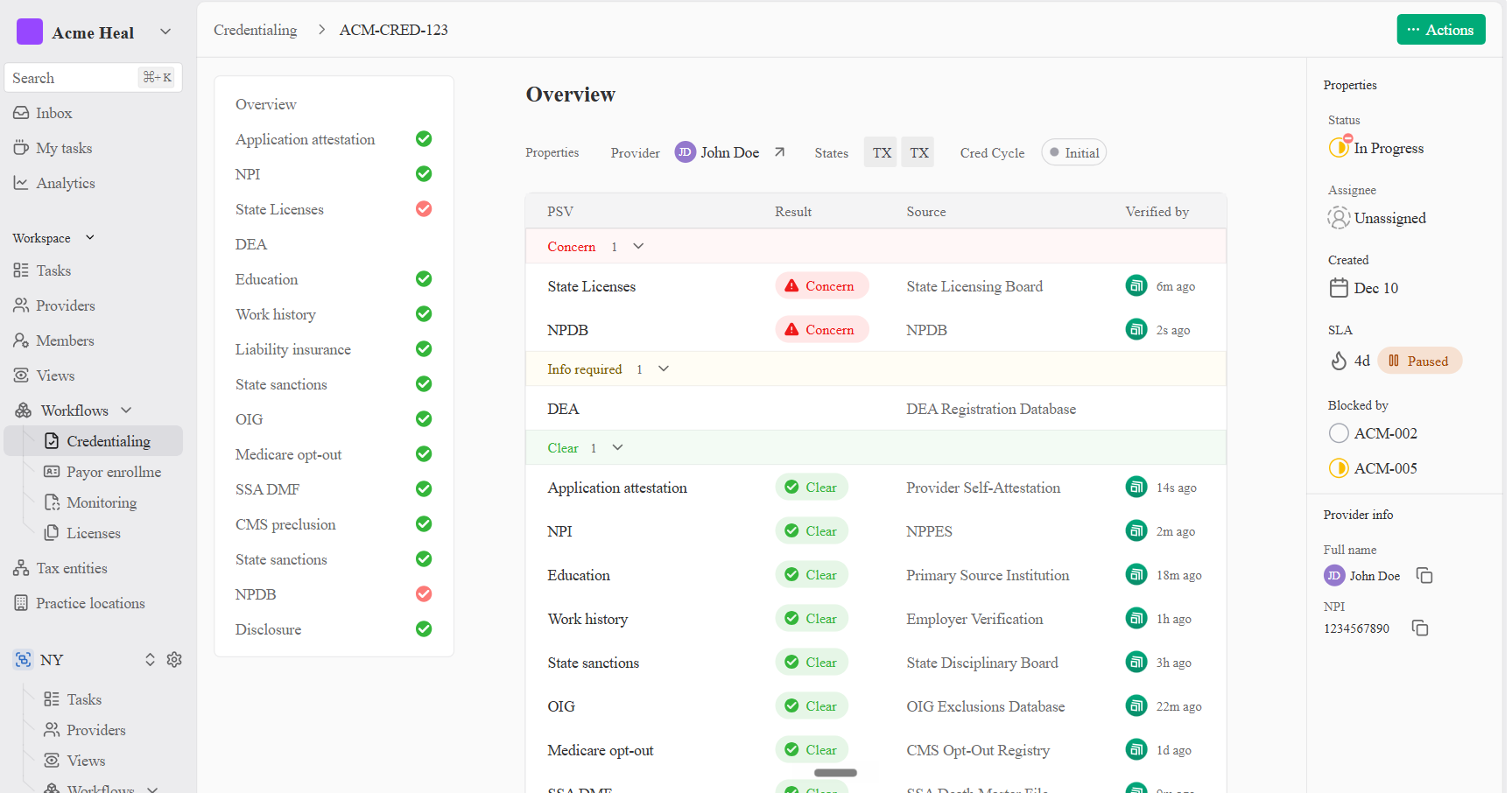
Symplr is the enterprise incumbent for healthcare provider data. The company says 9 of 10 U.S. hospitals and 400+ U.S. health plans use its solutions. Its suite covers credentialing, privileging, enrollment, and recredentialing on the provider side, as well as provider network management on the payer side. Symplr reports 60 percent shorter onboarding through unified workflows.
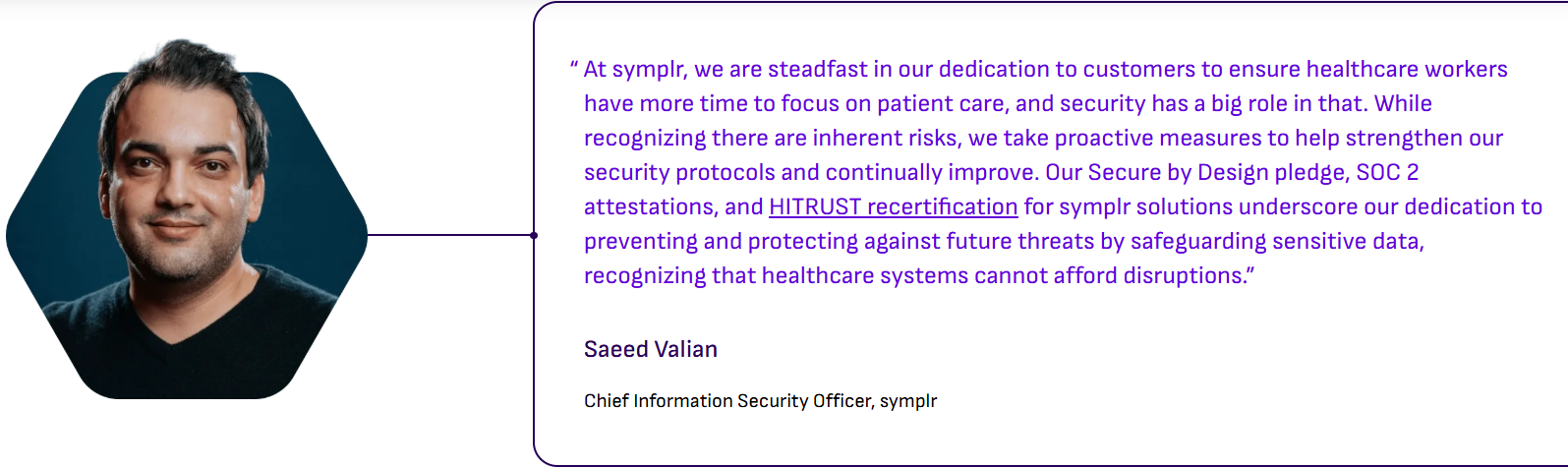
Incredable is flat-fee credentialing software that keeps each provider's record, documents, and payer enrollments in one profile across every facility you run. It's built for multi-site groups, FQHCs, and surgical centers, and it was previously called Ready Doc. Customers include Tri-State Community Healthcare and Alliance Medical Ministry.
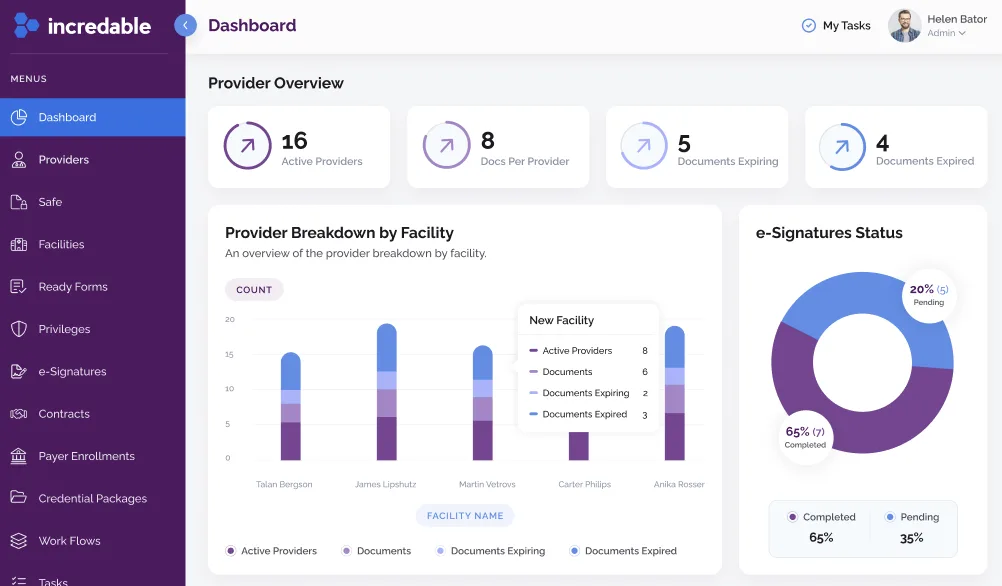
MD-Staff is a long-standing credentialing platform from Applied Statistics & Management (ASM). Used by 3,000+ facilities for more than 40 years, the system runs 5M+ annual verifications. It centers on hospital and health-system credentialing, privileging, and roster reporting, with the Aiva AI engine running PSV underneath the roster.
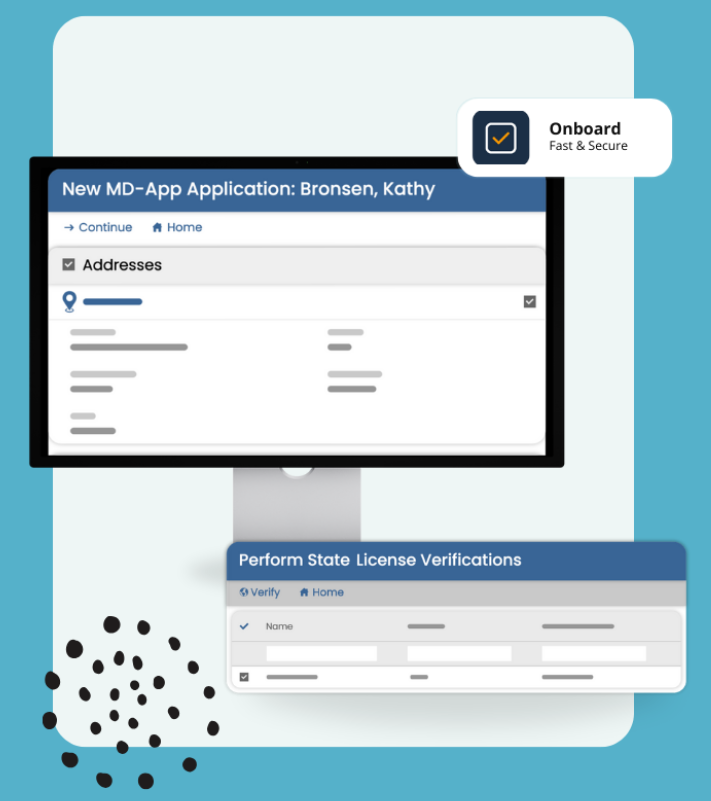
CertifyOS is built primarily for health plans. It positions itself as a unified provider data foundation rather than a credentialing service and reports a 75 percent reduction in re-credentialing costs, 50 percent fewer roster mismatches, and 10x faster onboarding, with 8 of the 10 publicly listed U.S. health plans as clients. Roster Management is one of its core products, sitting alongside Credentialing, Licensing, and Monitoring. Our CertifyOS comparison covers where it fits.
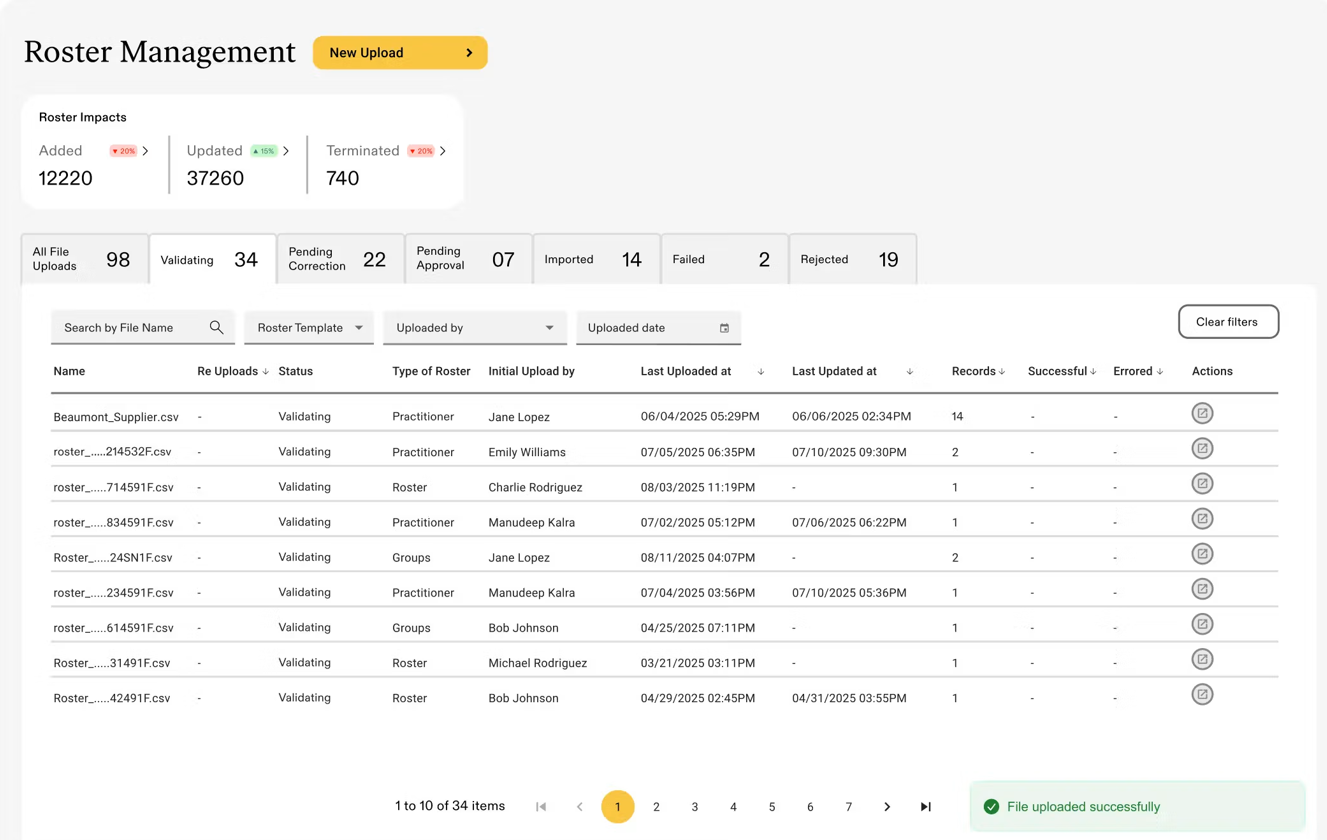
Andros is a provider network management platform built for health plans and large provider networks. The Arc platform combines recruiting, contracting, credentialing, and ongoing roster monitoring. Andros says it has built 200+ networks in all 50 states, performs 300,000 credentials annually, and holds NCQA CVO certification at the strictest level available. Two out of three of its applications require no provider input because the roster autofills from a repository of 8 million providers.

QGenda bridges the two meanings of roster management. Known for clinician scheduling, its ProviderCloud suite adds a credentialing roster, payer enrollment, and ongoing monitoring across 4,500+ healthcare organizations. The platform ties credentialing status to the schedule, so a cleared provider becomes schedulable at once, and an expiring credential flags the schedule before it disrupts care. QGenda reports onboarding up to 50 percent faster.

Roster management lives or dies on six capabilities. Treat these as your evaluation rubric.
Every provider’s credentialing, enrollment, licensing, and document history should live in a single record, all visible at once. If answering “Is this provider ready to bill?” requires opening three tools, the roster is fragmented.
The roster should reflect today, not last week. Credentialing ops, enrollment decisions, and scheduling all gate on current status, and static lists go stale within days.
The platform should pull directly from state boards, NPDB, OIG, SAM.gov, and CAQH, and store a timestamped record of every check. Under NCQA’s 2025 standards, exclusion and license checks must run monthly, and each one needs a documented date and source.
Licenses, DEA registrations, board certifications, and CAQH attestations all expire on different cycles. The roster should surface every deadline automatically and assign the next action, because a single missed expiration can pull a provider out of network.
Data should move both ways: bulk uploads from CAQH, spreadsheets, or APIs on intake, and payer-format roster files on export. Without bidirectional flow, every new payer relationship or multi-state expansion adds manual work.
Credentialing, payer enrollment, and licensing each have their own primary sources, timelines, and payer rules. A roster tool built only for one will struggle the moment you ask it to manage the other two.
Start with the problem on your desk. The right tool closes the specific gap costing you time, revenue, or compliance risk.
If providers are on the payroll but not billing, the problem is speed. Credentialing and enrollment are stuck, and the roster does not reconcile the two. You want a tool that moves a provider from roster entry to billable in-network in days. Assured is built for that case, with 48-hour credentialing and one roster across the lifecycle.
If your roster has crossed fifty providers and the spreadsheet is breaking, the problem is scale. License renewals get missed, and new hires get lost in the gap between credentialing, enrollment, and licensing. You want one source of truth that handles all three. Assured, Incredable, and MD-Staff are the provider-side options. Pick based on whether you mainly need flat-fee pricing across many facilities (Incredable), enterprise privileging depth (MD-Staff), or the fastest end-to-end motion (Assured)
If you are a health plan ingesting rosters from delegated entities in different formats, the problem is data standardization at scale. CertifyOS and Andros are built for that work. CertifyOS leans into API-first delivery; Andros pairs roster consolidation with network development.
If a delegated audit is on the calendar and your files are not NCQA-ready, the problem is audit risk. NCQA-certified CVOs matter here. Assured, CertifyOS, Andros, and Symplr all carry it. The differentiator is how the roster surfaces the audit trail.
If credentialing clears but providers still cannot be scheduled, the problem is the handoff between systems. QGenda is the only tool here that natively ties credentialing roster status to clinician scheduling. Match the tool to the bottleneck, then check the at-a-glance table above to confirm fit.
Roster management software falls into two categories that share one name. For shift scheduling, compare Deputy and When I Work. For keeping provider data accurate across credentialing, enrollment, and licensing, the seven platforms above are your shortlist.
For most scaling provider organizations, the decision comes down to speed and consolidation. That is where Assured is built to win. We keep your entire provider roster in one place, and we credential in 48 hours. See how Assured clears the bottleneck.
Check out our reviews on the best credentialing software platforms and best tools for credentialing telemedicine providers.
No. Scheduling software builds staff shift rotas. Provider roster management keeps healthcare provider data accurate across credentialing, enrollment, and licensing.
It is the system of record for provider data. It tracks credentialing, enrollment, and licensing status in one place and flags items that are due to expire before they lapse.
Some do. Assured, CertifyOS, and Andros support delegated rosters. Assured is NCQA-certified across all 11 verification elements, which reduces audit friction.
It depends on your buyer type. Assured leads for scaling provider organizations that need credentialing, enrollment, and licensing in one fast roster.

Assured Health, Inc.
333 Seventh Ave, Suite 1701
New York, NY 10001





.jpeg)